


Are you publishing the same few pieces of content for every lead, then wondering why you keep getting tire-kickers instead of homeowners ready to sign a $100K kitchen remodel?
That approach costs you twice. It brings in the wrong inquiries, and it leaves serious buyers without the proof they need to trust you with a major project. A few Facebook posts, a basic gallery, and vague website copy about "quality craftsmanship" will not carry a high-ticket sale.
Content works like a jobsite tool kit. Each piece has a specific job. One type helps you show up in local search. Another proves your process and craftsmanship. Another helps a homeowner move from curious to confident after they contact you.
The best remodeler content is not a random mix of blogs, videos, and photos. It is a system built around business goals. If you want more design-build leads, stronger close rates, and bigger project sizes, your content needs to support that outcome at every stage.
HubSpot's State of Marketing continues to rank blog content among the top channels marketers use to generate results. But a blog by itself will not win premium remodeling work. You need the full system.
This guide covers 10 content types that matter for remodelers specifically. Not generic brands. Not DIY influencers. Remodelers who want better-fit leads, fewer price shoppers, and more of the kitchen, bath, addition, and whole-home projects that grow the business. It is a practical toolbox tied to clear outcomes, and it is the same kind of connected content system we build at Constructo.
Table of Contents
- 1. Before & After Project Galleries
- 2. Educational Blog Posts, Guides & Downloadable Resources
- 3. Video Testimonials & Case Studies
- 4. Local SEO Content
- 5. How-To Videos & Educational YouTube Content
- 6. Email Nurture Campaigns & Newsletters
- 7. Google Ads Landing Pages & Ad Copy
- 8. Social Media Content
- 9. Client Success Stories & Detailed Case Studies
- 10. Google Business Profile Optimization & Posts
- Top 10 Content Types Comparison
- Your Blueprint for Content Marketing Success
1. Before & After Project Galleries
If you remodel homes, your work should do the selling before your sales call starts.
A strong before and after gallery helps a homeowner say, “They can do my kind of project.” That matters more than a generic services page. A kitchen homeowner wants to see kitchens. A bath prospect wants to see baths. A family planning an addition wants proof you can handle layout changes, finishes, and the mess that comes with a real build.
Start with great photos. Not phone pictures with bad lighting and a crooked angle. Use clean, bright, professional images that show the room before, during, and after.
Here’s what that can look like on the page:
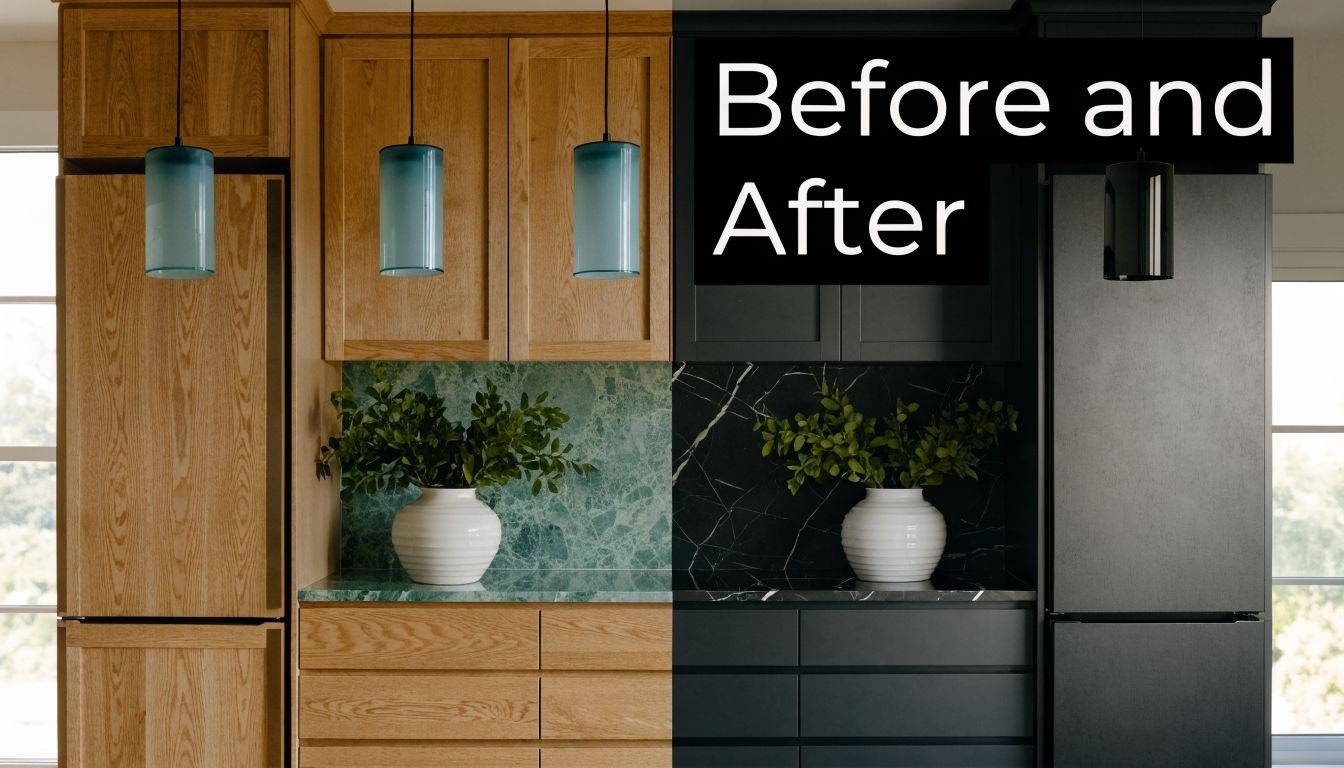
What to include in each gallery
Don’t just dump photos into a grid. Build each project like a simple story.
- Show the problem first: Explain what wasn’t working. Small kitchen. Poor storage. Bad layout. Old finishes.
- Show the solution clearly: Tell them what you changed. New cabinet layout, larger island, better lighting, custom storage, updated materials.
- Show who the project fits: Label projects by room type, style, and service area so the right homeowner can find them.
A Houzz-style portfolio is useful because it lets people browse visually. Your own website should go one step further and connect each gallery to an inquiry form, service page, or consultation offer.
Practical rule: If a prospect can’t tell the scope, style, and quality of a project in under a minute, the gallery isn’t doing its job.
How galleries support the full system
This type of content isn’t just for looks. It helps your website, your ads, your sales process, and your follow-up emails. One finished kitchen can become a gallery page, an Instagram carousel, a Google Business Profile post, and the visual proof inside a proposal.
Update your gallery often. Fresh work signals an active business. Old photos with no dates make people wonder whether you’re still doing that level of work.
2. Educational Blog Posts, Guides & Downloadable Resources
What does a homeowner search before they trust you with a $100K kitchen?
Usually, it is not your company name. It is a question. "How much will this cost?" "Do I need permits?" "How long will my kitchen be unusable?" "What is the best countertop for a busy family?" If your site answers those questions better than the next remodeler, you get the call.
This content works best when you treat it like a sales tool, not a publishing habit. Good articles and guides pre-qualify leads, calm nervous buyers, and shorten the sales conversation. They help the homeowner understand the project before your estimator ever walks through the door.
For remodelers, the best topics come straight from the friction points in the buying process. Start with the questions that stall deals, create sticker shock, or make homeowners delay the project.
The blog topics remodelers should prioritize
Build your library around pages that match clear business goals.
- Cost guides: “Kitchen Remodel Cost Guide for [City Name]” helps attract homeowners who are actively budgeting for a real project.
- Decision guides: “Quartz vs. Granite for Busy Family Kitchens” helps prospects choose materials and move toward a signed scope.
- Process guides: “What Happens During a Bathroom Remodel” reduces fear around demolition, scheduling, and daily disruption.
- Local guides: “Permit Rules for Home Additions in [County or City]” helps you rank for local searches and proves you know the rules in your market.
Longer articles usually perform better when the topic deserves it. A shallow 400-word post will not win a search for kitchen remodel cost in a competitive city. Write the page that answers the question. Cover price ranges, scope drivers, material tiers, timeline factors, and common mistakes. Give the homeowner enough detail to feel informed, then give them a clear next step.
Use downloadable resources with a purpose
A guide or worksheet should support the sale.
Offer a downloadable budget planner, remodeling checklist, or planning guide when it helps you identify serious prospects. If the resource saves the homeowner time, helps them organize decisions, or makes a spouse-to-spouse conversation easier, asking for an email makes sense. If it is a short checklist with obvious points, publish it on the page and skip the form.
A simple system works well. Publish the full article for search. Add a polished PDF version for people who want to save it, print it, or share it with a partner. That gives you both visibility and lead capture without hiding your best information.
Good written content answers the question, reduces fear, and points to the next step.
At Constructo, we treat this content as part of a full marketing system. One strong cost guide can rank in search, support Google Ads traffic, feed your email nurture, and help your sales team handle pricing objections with more confidence. That is the difference between random blogging and content that helps you book better-fit remodeling jobs.
3. Video Testimonials & Case Studies
A homeowner can read your claims and still hesitate. They believe other homeowners faster.
That’s why video testimonials work so well for remodelers. A real client standing in a finished kitchen carries weight your copy can’t match. They show relief, pride, and confidence. That’s what a nervous buyer wants to see before spending serious money on their home.
Keep these videos short and natural. Don’t script every line. Give the client a few prompts, then let them answer in their own words.
A simple setup works best:
- What problem did you want solved?
- What was it like working with our team?
- What do you love most about the finished space?
Later, you can turn one longer interview into several shorter clips for your site, social media, ads, and email follow-up.
Here’s the kind of visual that fits this format:

What makes testimonial content believable
Bad testimonial videos feel forced. Good ones feel specific.
Ask clients about one challenge, one fear they had before hiring you, and one thing that stood out during the project. When they mention communication, cleanliness, timeline management, or problem-solving, the next prospect hears what they care about most.
Use the finished project as the background whenever possible. The space becomes proof while the client talks.
Where to use them
Put your best testimonial video on:
- your homepage
- the matching service page
- proposal follow-up emails
- remarketing ads
- your Google Business Profile media set
A written quote is fine. A homeowner speaking from their completed remodel is much stronger.
4. Local SEO Content
Want more homeowners in your area to find you before they find the remodeler down the street?
Then stop treating local SEO like a batch of cloned city pages. If your page for Naperville looks exactly like your page for Hinsdale with one town name swapped out, Google sees thin content and homeowners see lazy marketing. Neither one trusts it.
Local SEO content should help you win a specific job in a specific place. A kitchen remodeling page for one suburb should support your goal of landing larger kitchen projects there. A bathroom remodeling page for another town should answer the concerns homeowners in that market have, show proof from nearby work, and make it easy to contact you.
What a strong local page actually needs
Build each page around one service and one service area. That keeps the page focused and gives it a real chance to rank for searches that lead to qualified calls.
A strong page usually includes:
- A clear service-plus-location focus: Use page titles and headings like “Kitchen Remodeling in Elmhurst” or “Home Additions in Glen Ellyn.”
- Proof from that area: Feature nearby projects, client quotes, before-and-after photos, or details about the kinds of homes you work on there.
- Useful local context: Mention the neighborhoods, home styles, permit realities, or project priorities homeowners in that town care about.
- A direct next step: Add a contact form, phone number, and CTA tied to that service, not a generic “learn more.”
This content works best as part of a system. Your city pages, service pages, Google Business Profile, review strategy, and project content should all reinforce the same message. Same markets. Same services. Same proof.
Skip thin pages and build authority instead
One strong page beats ten weak ones.
Start with the cities that already produce good leads or high-ticket jobs. If you want more $100K kitchen remodels, create a page for that service in the towns where those projects are realistic. Then support that page with nearby project galleries, client stories, and educational content that answers budget and planning questions.
For a practical framework, read this guide on optimizing your remodeling website for local search. If you want supporting video ideas you can use on those pages, review these video content ideas to attract remodeling clients and boost your content with video ideas.
That is how local SEO starts pulling real weight. It stops being a pile of pages and starts acting like a lead system.
5. How-To Videos & Educational YouTube Content
Some homeowners would rather watch than read. Give them that option.
How-to videos are one of the most useful types of content for content marketing because they let you teach and sell at the same time. A short video about countertop choices, bathroom layout mistakes, or what to expect in pre-construction helps people understand the process before they ever contact you.
This format is also easier to repurpose than most remodelers think. One video can live on YouTube, on a service page, inside an email, and as shorter clips on Instagram or Facebook.
The best remodeler video topics
Start with questions your estimator, designer, or project manager hears every week.
- Decision videos: “How to choose between painted and stained cabinets”
- Budget videos: “What changes the cost of a kitchen remodel”
- Expectation videos: “What happens before demo starts”
- Mistake videos: “Common bathroom remodel planning mistakes”
If you need inspiration beyond your own FAQs, this article on video content ideas to attract remodeling clients is a good starting point, and you can also boost your content with video ideas.
Keep the format simple
You do not need a polished TV production to start. You do need clear audio, good lighting, and one clear point per video.
Open fast. Tell the viewer what they’ll learn in the first few seconds. Then explain it in plain language, the same way you would in a kitchen during an estimate.
A remodeler openly discussing a material choice often beats a slick video full of drone shots and no substance.
6. Email Nurture Campaigns & Newsletters
Most leads don’t sign a contract right away. They think. They compare. They talk to a spouse. They wait until the timing feels right.
If you don’t follow up well, you lose good opportunities to a competitor who stays visible longer. That’s why email nurture matters. It keeps the conversation going without forcing your sales team to manually chase every lead.
A good sequence feels helpful, not pushy. It answers the next question at the right time.
What to send after a lead comes in
A simple flow works best.
- Welcome email: Remind them who you are and what happens next.
- Education email: Send one useful piece about budget, timeline, or planning.
- Proof email: Share a project gallery, testimonial, or case study.
- Action email: Invite them to book a call, reply with questions, or request a consultation.
Your CRM matters. If someone called after hours, missed-call text-back and follow-up automation can stop warm leads from going cold. If someone downloaded a kitchen guide, your next email should speak to kitchen planning, not general remodeling.
What a newsletter should actually do
Your newsletter doesn’t need to be fancy. It needs to be useful.
Send project spotlights, design tips, short homeowner education, and seasonal reminders. A monthly email is enough for many remodelers if the content is strong and relevant.
Send the kind of email a homeowner would forward to their spouse. That’s the test.
Past clients should get a different version. They’re a referral source, not a cold lead. Keep them engaged with recent work, team updates, and helpful home improvement ideas so your company stays top of mind.
7. Google Ads Landing Pages & Ad Copy
Paid traffic is expensive when it lands on the wrong page.
If you run Google Ads for kitchen remodels and send that click to your homepage, you’re making the lead work too hard. They clicked for one thing. Give them that one thing. A landing page should match the ad, answer the question fast, and make the next step easy.
This content is tighter than a blog post and more focused than a service page. No wandering. No mixed offers. No menu full of distractions.
What the page needs above the fold
The top of the page should do three jobs right away.
- Repeat the offer clearly: If the ad promised a kitchen consultation, say that at the top.
- Show the right proof: Add matching kitchen photos, review snippets, or project examples.
- Make contact easy: Use a short form and a clear phone button.
Strong ad copy follows the same rule. Match search intent. A homeowner searching for high-end bathroom remodeling should not land on a page talking about roofing, handyman services, and deck repairs.
Write for the buyer, not for yourself
Most remodelers talk about themselves too early. Years in business. Quality craftsmanship. Family-owned. Licensed and insured. Those things matter, but they are not the first thing the homeowner cares about.
Lead with the homeowner’s problem. Better layout. Better storage. Better function. Better finish quality. Then support that promise with proof.
If your ad and page work together, your sales team gets cleaner leads because the page pre-qualifies interest before the call starts.
8. Social Media Content
Social media won’t replace your website, your Google presence, or your sales process. But it does keep your brand visible where homeowners already spend time.
For remodelers, the best social content is visual, simple, and local. Before and after carousels. Short jobsite clips. Team introductions. Material tips. Client reactions. These posts help people remember your name long before they fill out a form.
Not every post needs to “go viral.” It needs to make the right homeowner think, “These people do beautiful work in my area.”
What to post each week
A basic content mix keeps things balanced.
- Project proof: Finished kitchens, baths, additions, and outdoor spaces
- Behind the scenes: Demo day, install details, punch list moments, design selections
- Education: Small tips about layouts, finishes, budget planning, and common mistakes
- Human content: Team spotlights, client moments, local community involvement
Short video matters here because it catches attention fast. If you want a platform-level look at short-form format differences, review these insights from Klap on short videos.
Keep the posts tied to business goals
Your Instagram feed isn’t a scrapbook. It should support your pipeline.
Tag locations. Mention project types. Use captions that connect the visual to a homeowner need. A beautiful island photo is stronger when the caption explains how the new layout improved traffic flow, storage, and family use.
Social media works best when it pushes people back into your main system. Your website, your lead form, your gallery pages, and your Google Business Profile should be easy to find from every profile.
9. Client Success Stories & Detailed Case Studies
Want more high-value remodels instead of more low-intent leads? Publish case studies that prove how you handle real projects, real constraints, and real client decisions.
A photo gallery gets attention. A case study helps a homeowner justify calling you. That matters for bigger jobs, where the client is comparing process, communication, and problem-solving as much as finishes and style.
For remodelers, this content has a clear job. It should help you sell the work you want more of. If you want $100K kitchen projects, build case studies around kitchens with layout issues, structural constraints, budget decisions, and a finished result that improved daily life.
Here’s a visual that fits the case study process side of content creation:
A simple case study structure
Keep it tight, useful, and specific.
- The starting problem: What was not working in the home? Tight layout, poor storage, dated finishes, bad lighting, traffic flow issues, or an addition that needed to tie into the existing house
- The client goal: What did the homeowner want? More entertaining space, better function for a growing family, aging-in-place features, higher-end finishes, or a clearer budget plan
- Your plan: Show the design direction, build sequence, material choices, and how you handled constraints such as permits, lead times, structural issues, or lived-in remodeling
- The result: Show the finished space, explain what changed in day-to-day use, and include a client quote if you have one
Skip vague praise. Specifics sell.
A strong case study explains why the island moved, why the wall came down, why custom storage mattered, and how the final layout solved the homeowner’s original frustration. That kind of detail builds trust faster than broad claims about quality.
Why this content closes better
Case studies do more than show finished work. They pre-answer sales questions.
A homeowner reading a detailed kitchen project can see how you make decisions, how you communicate tradeoffs, and how you guide the job from problem to plan to result. That lowers friction before the first consultation.
This content also strengthens the rest of your marketing system. A case study can feed your sales calls, email follow-up, project gallery pages, and even your Google Business Profile strategy for contractors by giving you better project stories, better photos, and better proof.
Build your library around the jobs you want next. More kitchens. More additions. More whole-home remodels. Your best case study should do one thing well: remove doubt from the buying decision.
10. Google Business Profile Optimization & Posts
How many high-intent leads are you losing before they ever reach your website?
For a lot of remodelers, the answer is more than they realize. A homeowner searches "kitchen remodeler near me," sees three local options, and makes a shortlist from those profiles alone. If your Google Business Profile looks stale, thin, or neglected, you lose trust before the first click.
Your profile is part of your sales process. It helps you win map-pack visibility, prove you do the kind of work homeowners want, and give prospects enough confidence to call.
What to keep current
Start with the parts homeowners use to judge you:
- Project photos: Upload recent kitchens, baths, additions, and whole-home remodels. Prioritize clean finished shots and in-progress photos that show craftsmanship.
- Posts: Publish updates on completed projects, planning advice, seasonal demand, and timelines for upcoming starts.
- Services and business details: Keep service categories, service areas, hours, and contact information accurate.
- Q&A: Add clear answers to common questions about estimates, lead times, permits, design-build process, and occupied homes.
- Review responses: Reply to every review in a professional voice that shows how you communicate.
Consistency matters here. You do not need to post every day. You do need a profile that looks active this month, not abandoned last year.
Use posts to support revenue goals
Google Posts are not filler. Use them to move homeowners toward the jobs you want more of.
If you want more $100K kitchen remodels, post finished kitchen photos, short captions about layout improvements, and planning tips for cabinet lead times, appliance selections, or structural changes. If you want more additions, post project milestones, zoning considerations, and before-and-after exterior shots. Match the content to the revenue target.
That is the primary job of this channel. It is not "staying visible." It is showing the right work to the right local prospect at the right moment.
For a stronger setup, follow this guide on Google Business Profile strategy for contractors. Then connect your profile to your review request process, service pages, project galleries, and contact flow so every piece supports the next step.
A good profile gets attention. A managed profile helps you book better-fit consultations faster.
Top 10 Content Types Comparison
| Content Type | Implementation Complexity | Resource Requirements | Expected Outcomes | Ideal Use Cases | Key Advantages |
|---|---|---|---|---|---|
| Before & After Project Galleries | Medium, curation + layout | Professional photography, editing, periodic updates | Increased trust, higher close rates, social shares | High-value remodel showcases, ads landing pages, social posts | Visual proof of quality; SEO via images; cost-effective impact |
| Educational Blog Posts, Guides & Downloadable Resources | Medium–High, research + SEO + design | Skilled writers, designers, SEO tools, gated forms | Sustainable organic traffic, lead capture, authority | Local SEO pillar, lead magnets, long-term nurturing | Long shelf-life; repurposable; builds thought leadership |
| Video Testimonials & Case Studies | Medium, scheduling, filming, editing | Video crew/equipment, client coordination, releases | Strong social proof, 2–3x conversion uplift, shareable assets | Homepage, landing pages, Google Local Services, ads | Emotional credibility; high conversion impact; multiplatform |
| Local SEO Content (Location-Specific Pages) | Medium, content + citations + maintenance | SEO expertise, GBP management, review generation | Map Pack rankings, high-intent local leads | Market exclusivity, service-area targeting, local campaigns | Direct local visibility; lower cost-per-lead when optimized |
| How-To Videos & Educational YouTube Content | Medium–High, production + channel growth | Camera/editing, scripting, consistent publishing cadence | Long-term discovery, channel authority, referral traffic | Top-of-funnel education, YouTube search capture, embeds | High discoverability; sustained traffic; repurposable clips |
| Email Nurture Campaigns & Newsletters | Medium, segmentation + automation setup | CRM (GoHighLevel), copywriter, templates, list growth | Improved lead-to-client conversion, high ROI, measurable | Lead nurturing, missed-call follow-up, past-client reengagement | Cost-effective, automatable, highly measurable |
| Google Ads Landing Pages & Ad Copy | Medium–High, testing + analytics | Conversion copywriter, designer, A/B testing, analytics | Higher ad conversion, lower CPA, rapid measurable ROI | Paid search lead capture, limited-time offers, retargeting | Directly improves Quality Score and campaign ROI |
| Social Media Content (Instagram, Facebook, TikTok Reels) | Medium, consistent content calendar | Regular content creation, scheduling tools, basic editing | Brand awareness, engagement, site and ad traffic | Local brand building, short-form promotion, UGC amplification | High organic reach potential; low-cost production options |
| Client Success Stories & Detailed Case Studies | High, interviews, research, production | Writer, photographer/videographer, client cooperation | Persuasive proof, better sales conversations, backlinks | Complex/high-budget projects, sales enablement, proposals | Deep credibility; addresses specific prospect objections |
| Google Business Profile Optimization & Posts | Low–Medium, setup + frequent updates | Time for GBP management, photos, review responses | Improved Maps visibility, immediate local clicks, bookings | Local discovery, appointment driving, quick updates | Free local presence; direct search result placement |
Your Blueprint for Content Marketing Success
You do not need to build all 10 types of content for content marketing this week.
You do need to stop posting random things and hoping they somehow turn into better jobs. That’s what wastes time. Good content works when each piece has one clear job and connects to the next step in the system.
Start with the pieces that offer the most impact. For most remodelers, that means a strong before and after gallery, a handful of local service pages, and a small group of useful blog posts built around real homeowner questions. Those three pieces alone can make your website more trustworthy and more visible in search.
Then layer in proof. Add testimonial videos. Publish one detailed case study. Clean up your Google Business Profile. Build a simple email follow-up sequence so leads don’t disappear after the first inquiry. Once those pieces are working together, your marketing starts acting like a system instead of a pile of disconnected tasks.
That’s the fundamental shift.
A homeowner planning a major kitchen or bath project is not looking for “content.” They’re looking for confidence. They want to know you understand their project, their worries, their timeline, and the level of finish they expect. Every page, video, gallery, email, and profile update should help answer that concern.
Written content is still foundational for that system. As noted earlier, blogs continue to rank among the top content formats for ROI, which is one reason they remain such a smart base layer for remodelers. From there, your visuals, videos, local pages, and follow-up content help move that person from curious to ready.
If you want a simple rule, use this one: build content that helps a homeowner find you, trust you, and contact you. If a piece doesn’t do one of those jobs, it probably doesn’t need to be made.
And if you want help building the whole machine, not just a few isolated pieces, that’s where a focused partner matters. Constructo doesn’t treat content like decoration. It gets built into Local SEO, Google Ads, website conversion, CRM follow-up, and sales support so the whole system works together.
If you want another perspective on how content supports brand building over time, this piece on authentic growth through content is a useful companion read. Then come back to the practical version that matters most for your business. Build the right tools. Use them in the right order. Keep them working together.
If you want a partner to build this content system for you, Constructo Marketing helps remodelers become Local Famous, rank better in Google Search and Maps, capture better-fit leads, and follow up faster with a CRM system that keeps opportunities from slipping away. If your goal is more qualified kitchen, bath, addition, or outdoor living projects, Constructo can help you turn your website, content, ads, and local presence into one clear growth engine.