


Most advice about seo for home builders is built for clicks, not contracts. You’ve heard the junk before. Post more on social media. Dance on Reels. Boost a few posts. Buy leads. Hope for the best.
That advice fails because home building and remodeling are not impulse buys. A homeowner doesn’t hire you the way they order a pizza. They research, compare, stalk your reviews, inspect your photos, and decide whether they trust you with a major project. If your business doesn’t show up when they search, or if your site looks sloppy when they do find you, you lose before the first call.
A real SEO system works more like a jobsite plan. First, claim the ground. Then build the structure. Then create a clean path from interest to signed project. If you stop at “getting traffic,” you’re only doing half the job.
Table of Contents
- Why Most Marketing Advice for Builders is Wrong
- Claim Your Digital Storefront on Google
- Build a Website That Works as Hard as You Do
- Find High-Value Projects with Smart Keywords
- Become the Most Trusted Builder in Your Market
- Turn Website Clicks into Signed Contracts
- Measure and Scale Your System with Automation
Why Most Marketing Advice for Builders is Wrong
The worst marketing advice builders get is also the most common. “Just be active online.”
That sounds nice. It also ignores how homeowners buy. They don’t wake up and say, “I hope a remodeler posts a carousel today.” They go to Google when the pain is real. Leaky roof. Cramped kitchen. No room for a growing family. They search with intent.
Builders don’t need more noise
A lot of agencies sell activity because activity is easy to fake. They’ll hand you reports full of impressions, reach, and vague brand buzz. Meanwhile, your phone stays quiet or the leads that do come in are tire-kickers asking for the cheapest option.
That’s why generic contractor marketing falls apart. Most agencies don’t understand your sales cycle, your project sizes, or the fact that one solid local project can be worth far more than a pile of junk leads.
If you want the blunt version, start with this breakdown of what contractors get wrong about digital marketing and how to finally get it right. It addresses the exact trap most builders fall into. They chase tactics before they build a system.
SEO is the slab, not the paint
Good SEO is not blogging for the sake of blogging. It’s not stuffing “custom home builder” onto every page and hoping Google gets confused enough to reward you.
SEO is the foundation that supports everything else:
- Local visibility: You show up when someone nearby is ready to hire.
- Trust building: Your reviews, pages, and project proof support the sale before you ever speak.
- Lead quality: Search intent filters out a lot of low-fit traffic.
- Long-term control: You’re less dependent on paid ads and referral swings.
Practical rule: If your marketing plan starts with social media content calendars before it fixes Google visibility, the plan is upside down.
There’s another shift builders can’t ignore. Search is changing. Google is surfacing more direct answers, summaries, and AI-generated results. That means your content needs to be structured clearly, answer real buyer questions, and support optimizing for AI Overviews, not just old-school blue-link rankings.
The real goal is not traffic
Traffic is not the goal. Signed contracts are the goal.
That changes how you should think about seo for home builders. You don’t need to “go viral.” You need to show up in your market, look trustworthy, answer the right questions, and move serious homeowners into a process you can track.
Most marketing advice stops at attention. Smart builders build a machine that turns attention into booked consultations, follow-up, estimates, and profitable work.
Claim Your Digital Storefront on Google
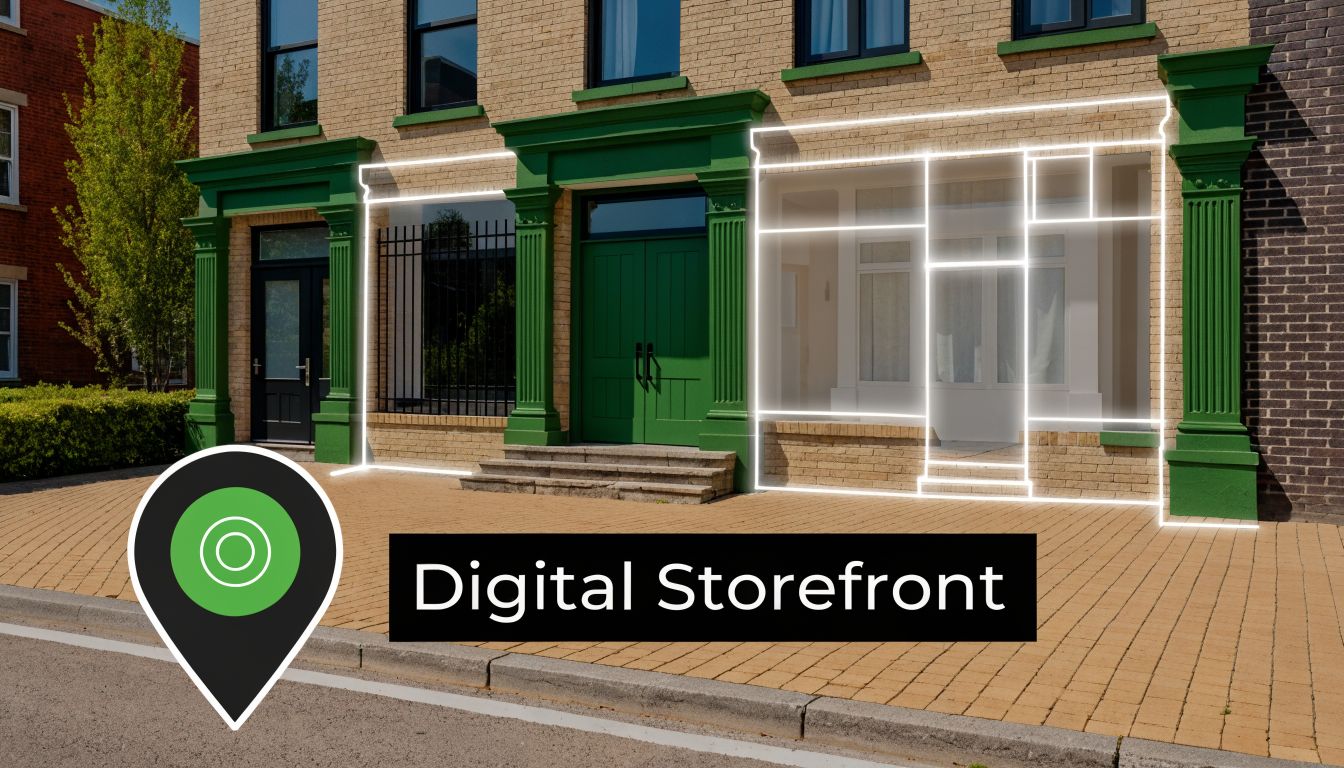
Your Google Business Profile is your digital storefront. Treat it like the front entrance to your business, because for many homeowners, that’s exactly what it is.
In 2025, 46% of all Google searches have local intent, and 80% of US consumers search for local businesses weekly, with 32% doing so daily, according to BusySeed’s local search analysis for home services. If you build or remodel homes, local search is not optional. It’s where high-intent demand lives.
Start with the basics and get them right
Most builders rush to redesign the website while their Google profile is half empty. That’s backwards.
Your profile needs accurate core information first:
Business name and contact details
Use the business name you operate under. Keep your phone number, hours, and contact details current.Primary and secondary categories
Pick categories that match what you sell. If you focus on remodeling, don’t hide behind a vague label that confuses Google and homeowners.Service areas
List the towns, neighborhoods, and communities you serve. Be specific.Business description
Write plain English. Say what you do, where you do it, and who you help.
A simple next step is using a detailed Google Business Profile checklist for remodelers so nothing important gets skipped.
Photos do selling work
Homeowners judge with their eyes. If your photos are outdated, dark, random, or full of jobsite clutter, your profile is working against you.
Upload photos that prove craftsmanship:
- Completed kitchens and baths: Show finished work, not only rough framing.
- Exterior additions and outdoor living: Help buyers picture their own project.
- Before and after shots: These tell a story fast.
- Team and process photos: Give the business a real face.
Don’t dump fifty mediocre photos. Add strong photos consistently and keep them fresh.
Your Google profile should answer one silent question fast. “Can I trust this company with my home?”
Reviews need a system, not wishful thinking
Most builders ask for reviews when they remember. That’s why they don’t get enough of them.
You need a repeatable process. Ask at the right moment, usually when the client is happiest. Make it easy. Send the direct link. Respond to every review, good or bad, like a professional adult.
A good review strategy does three things at once:
| What it does | Why it matters |
|---|---|
| Builds trust | Homeowners use reviews to reduce risk |
| Improves visibility | Google uses profile completeness and engagement as local signals |
| Increases conversion | More proof means more calls from serious prospects |
Don’t treat one profile like enough
A lot of service-area builders act like one generic profile covers the whole market. It doesn’t. If you serve multiple towns, your profile content, photos, service descriptions, and review generation need to reflect that footprint.
That doesn’t mean gaming the platform. It means being organized. Your Google Business Profile should reflect where you work and what kinds of projects you’re known for.
If you want the fastest local SEO win, this is it. Before ads. Before blogs. Before fancy branding. Claim the storefront and run it like it matters.
Build a Website That Works as Hard as You Do
Your website is your digital model home. If it’s slow, confusing, or broken on mobile, people won’t stick around long enough to admire your work.
This part isn’t glamorous, but it matters. Technical SEO functions as the foundational prerequisite for all ranking improvements, and Google adjusts rankings downward when pages take too long to load. Google also uses mobile-first indexing, meaning it primarily evaluates the mobile version of your site, as explained in Verse.ai’s technical SEO guidance for home builders.
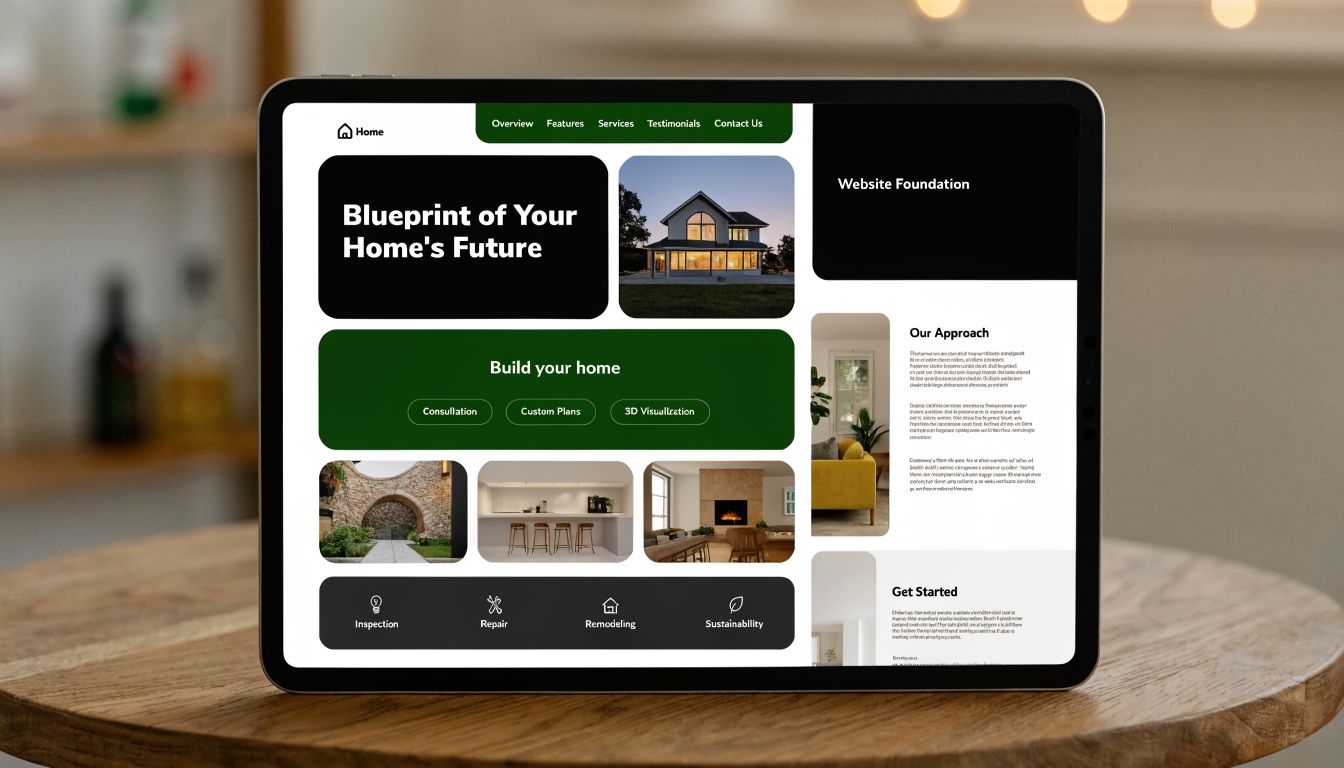
Your digital foundation has three parts
Think of your site like a house. If the slab is cracked, nothing above it matters much.
Here are the essentials:
- Speed: Heavy image galleries and bloated code slow pages down. Compress images, trim junk scripts, and keep pages lean.
- Mobile usability: Buttons need to be easy to tap. Text needs to be readable. Menus need to make sense on a phone.
- Security: Use HTTPS. If your site looks unsafe, both Google and homeowners will hesitate.
A lot of builders have beautiful sites that perform terribly. Big hero videos. Fancy animations. Endless sliders. They look expensive and sell poorly.
The floor plan should be obvious
A good site structure is like a clear floor plan. People should know where to go without thinking.
If you offer several services, each one needs its own page. If you serve several towns, each important area needs its own page. Don’t bury that information inside one vague “Services” page and one generic “Areas We Serve” paragraph.
Here’s a basic structure that works well:
| Page type | Purpose |
|---|---|
| Homepage | Explain who you are and what type of work you do |
| Service pages | Rank for services like kitchen remodeling, home additions, roofing |
| Location pages | Rank for town-specific searches |
| Portfolio or project pages | Show proof and process |
| Contact page | Make the next step easy |
For builders who need a stronger sales-focused layout, this guide on how to design a remodeling website that converts visitors into leads is worth reviewing.
Common technical mistakes that kill performance
Most underperforming contractor sites have the same problems.
- Weak internal linking: Important pages are hard for users and Google to find.
- Duplicate location content: Town pages say the same thing with only the city name swapped.
- Hidden service detail: The site talks about the company but barely explains the actual work.
- Messy navigation: Visitors can’t find portfolio examples, service info, or contact options fast enough.
If your website makes people hunt for basic information, they won’t hunt. They’ll leave.
Keep the design simple enough to sell
You don’t need a trendy site. You need a site that helps a stressed homeowner feel safe taking the next step.
That means clear headlines, clean navigation, fast pages, obvious service categories, and visible trust signals. Good technical SEO doesn’t just help rankings. It makes the whole sales process easier.
A website should carry some of the load for your team. If it can’t explain what you do, where you work, and why someone should call you, it’s not working hard enough.
Find High-Value Projects with Smart Keywords
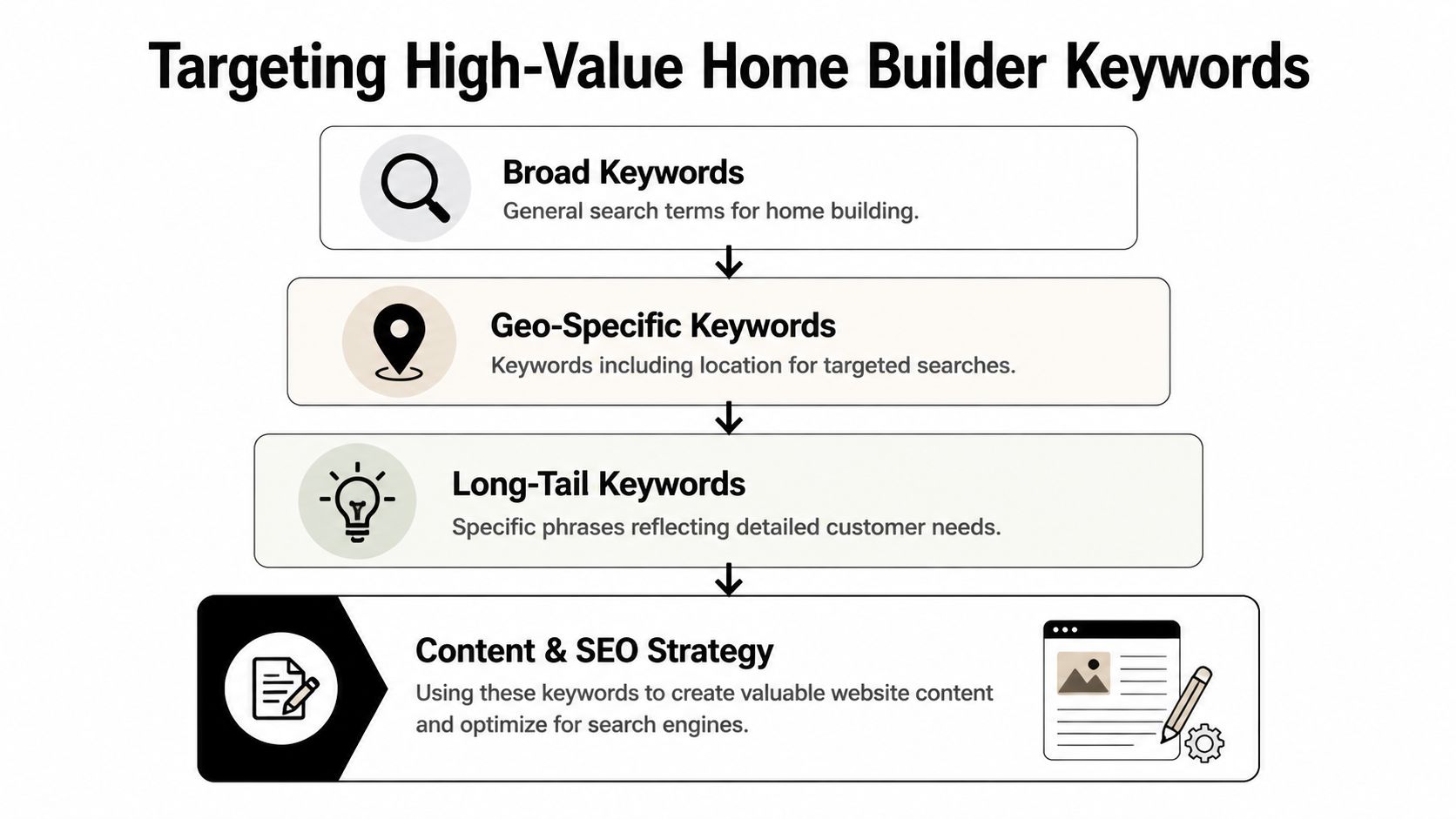
A lot of builders waste time chasing broad keywords because broad feels important. It isn’t. Broad usually means crowded, vague, and expensive in terms of effort.
If you want better leads, stop trying to rank for the biggest phrase in the room. Go after the phrase your ideal client types when they’re looking for your kind of work in your kind of market.
Broad keywords are bait for the wrong fight
According to Padula Media’s home builder keyword data, the keyword difficulty for “home builder” is 90%, while “Minneapolis home builder” drops to 43% difficulty. That’s the point in one line. Narrowing the keyword makes the ranking fight easier while keeping local buying intent.
Local service businesses don’t need random national visibility; they need homeowners in specific places looking for specific services.
Here’s the difference:
| Keyword type | What happens |
|---|---|
| Broad term | More competition, weaker fit, harder to rank |
| Geo-specific term | Better local intent, clearer service match |
| Long-tail term | Stronger buyer context, easier content targeting |
Fish where the good clients are
Think of keywords like bait. If you throw the same bait into every pond, don’t act surprised when you catch junk.
A high-value keyword usually includes some mix of these signals:
- Service intent: kitchen remodeler, custom home builder, home addition contractor
- Location intent: city, neighborhood, region
- Project intent: luxury, design-build, whole home, custom
- Question intent: cost, timeline, process, permits, design options
That gives you more useful targets like these:
- custom home builder in your city
- kitchen remodeler in your service area
- design-build home addition contractor near a specific town
- bathroom remodel cost in your market
Those phrases are less flashy than “home builder.” They’re also far more useful.
Build pages around real searches
Keyword research is not a spreadsheet game. It’s a page strategy game.
If a phrase matters, give it a home. That usually means:
- A focused service page
- A matching location page if geography matters
- Portfolio examples tied to that service
- Supporting FAQ content that answers pre-sale questions
Padula Media also notes that firms should organize around 20+ core keywords with dedicated service-area pages. That’s a practical target for a serious local contractor, not a content farm.
Don’t write one giant page that tries to rank for everything. Build one clear page for one clear job.
Good keyword strategy sounds like your buyers
Builders often write for themselves. Homeowners search differently.
They don’t search “premium residential construction solutions.” They search normal phrases. Your page titles, headings, image captions, and body copy should reflect that. Use plain English. Say what the service is. Say where you do it. Show the work.
The best seo for home builders doesn’t try to outsmart search intent. It lines up with it. That’s how you attract fewer junk clicks and more serious inquiries.
Become the Most Trusted Builder in Your Market
Google trusts businesses the same way people do. It looks for proof that other people vouch for you.
That proof shows up in reviews, local mentions, directory consistency, project photos, and references from other websites. If your site is your model home, authority is the word-of-mouth that gets people to walk through the door.
Reviews are reputation in public
The local map pack captures 40 to 50 percent of local search clicks, according to Boulder SEO Marketing’s analysis of contractor local search. That’s a huge chunk of local attention, and many contractors blow it by leaving their profiles incomplete or inactive.
If you serve multiple neighborhoods, your review strategy can’t be random. It needs a simple operating system.
Try this:
- Ask at project milestones: Don’t wait months and hope the client remembers.
- Mention the service naturally: A review that references the actual work is more useful than “great company.”
- Reply to every review: Show professionalism and consistency.
- Match reviews to service areas: If you work across several towns, build review volume that reflects that footprint.
Citations still matter because consistency matters
A citation is just your business information listed elsewhere online. Simple concept. Important detail.
If one site lists your company one way, another site lists a different phone number, and a third uses an outdated address, trust drops. Homeowners get confused. Search engines get mixed signals.
Here are the places worth cleaning up:
| Citation source | Why it helps |
|---|---|
| Major business directories | Reinforces business identity |
| Local chamber or community sites | Builds local relevance |
| Supplier and partner sites | Adds industry trust |
| Association listings | Supports legitimacy |
Local mentions beat generic links
A lot of builders hear “backlinks” and think they need some mysterious SEO hack. They don’t. They need relevant mentions from real local and industry sources.
Good places to earn them include:
- Suppliers and vendors: Ask to be featured in project spotlights.
- Local publications: Share an interesting project story or community involvement.
- Trade associations: Maintain current profiles and participation.
- Community organizations: Sponsorships and local partnerships can create natural visibility.
A local mention from a real business partner is usually worth more to a builder than a random link from a site nobody reads.
Authority has to be maintained
You can’t build trust once and coast forever.
Photos get old. Reviews slow down. Listings drift. Categories become outdated. A builder who wants strong local SEO needs a maintenance habit. Monthly profile checks. Fresh project photos. Consistent review requests. Directory cleanup when business details change.
That work isn’t glamorous, but it compounds. The builders who look alive online usually get more consideration before the first phone call.
Turn Website Clicks into Signed Contracts
Traffic without conversion is wasted motion. If homeowners land on your website and don’t feel confident enough to contact you, the SEO did its job and the website failed.
This is the part too many SEO guides ignore. They obsess over rankings, then hand visitors to a site that looks pretty but sells nothing.
Your website is not a brochure
For high-ticket services, design has a job. It must reduce fear.
According to Comrade Web’s analysis of seo for home builders, most SEO advice ignores how website design affects conversions for high-ticket services, even though for firms pursuing $75K–$300K projects, client confidence and visual proof of craftsmanship are primary conversion drivers.
That should change how you build pages.
A good conversion page answers these silent questions fast:
- Do they do the kind of work I want?
- Have they done it well before?
- Do they work in my area?
- Do I trust these people in my home?
- What happens if I contact them?
An open house has to feel right
Getting someone to your website is like getting them to an open house. That alone doesn’t make them buy.
They need reassurance. Direction. Proof.
Here’s what every serious builder page needs:
Strong project photography near the top
Don’t hide the proof below generic text.A clear next step
“Schedule a Consultation” works better than vague contact language.Trust markers
Testimonials, awards, process summaries, and review snippets reduce hesitation.Visible contact options
Phone number, form, and service area details should be easy to find.Page-level relevance
A kitchen remodeling page should look and read like a kitchen remodeling page, not a company bio with one stock photo.
Friction kills good leads
A lot of builders lose leads because the website creates tiny annoyances that stack up.
| Friction point | What the visitor feels |
|---|---|
| Too much text before proof | “I still don’t know if they do good work” |
| Weak CTA | “I’m not sure what to do next” |
| Hard-to-find phone number | “This feels like work” |
| Generic stock imagery | “This doesn’t feel real” |
One smart move is to study adjacent industries that also need trust-heavy lead capture. For example, this guide on Algomizer for real estate professionals is useful because it shows how digital lead generation works when credibility and response flow matter just as much as visibility.
If your website looks polished but doesn’t answer objections, it’s decoration, not sales infrastructure.
The best pages feel calm and obvious
You don’t need manipulative tricks. You need clarity.
Show the work. Explain the process. Set the expectation. Ask for the consultation. Repeat that pattern across service pages, project pages, and landing pages.
That’s how clicks turn into conversations worth having. And conversations are what turn ranking wins into signed contracts.
Measure and Scale Your System with Automation
Most builders don’t need more marketing chaos. They need a control panel.
That’s what a CRM does. It gives you one place to track leads, follow-up, job opportunities, and pipeline movement so nothing slips through the cracks when you’re busy running projects.
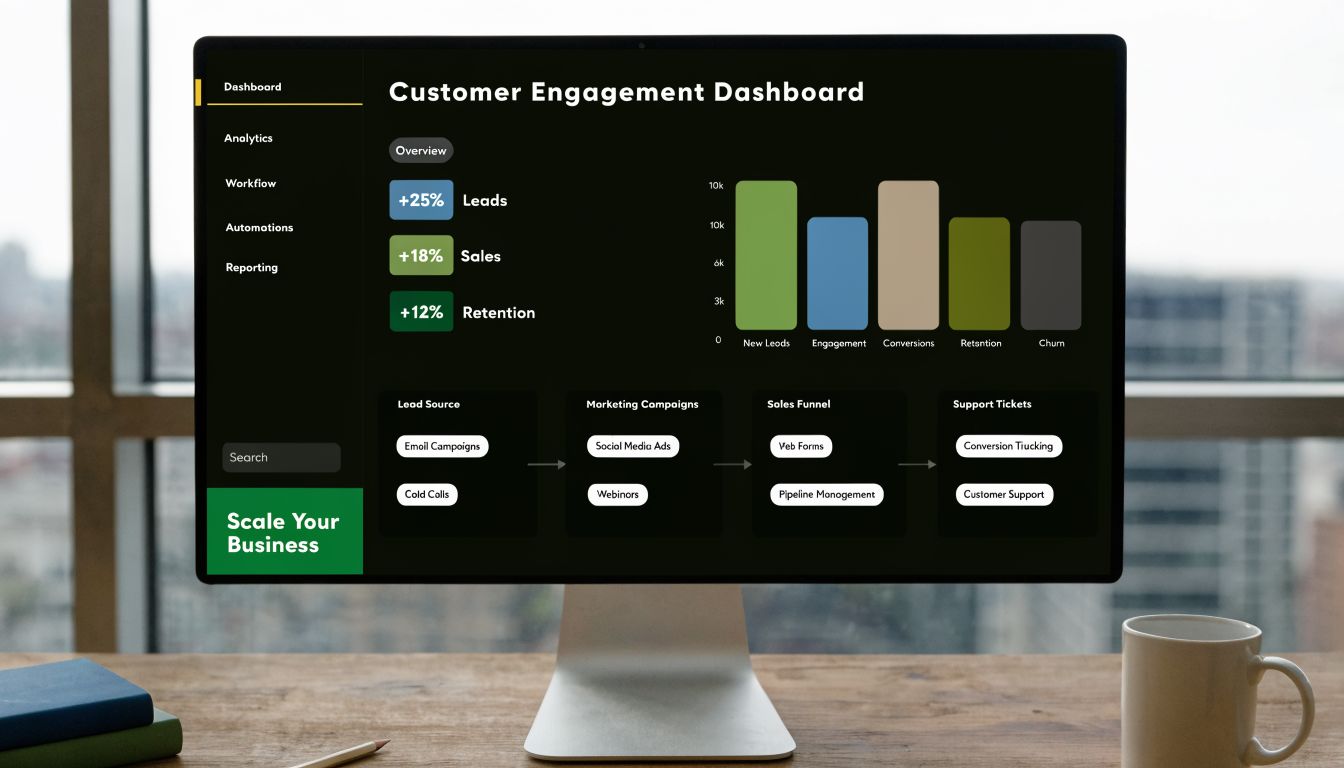
SEO without a CRM leaks money
A lot of builders think the sale ends when the form comes in. It doesn’t. That’s where the sales process starts.
If someone calls while your team is tied up, what happens next? If a prospect fills out a form on Friday night, do they sit there until Monday? If an estimate goes quiet, does anyone follow up automatically or does it live in someone’s memory?
Those gaps kill deals.
A CRM fixes the handoff between marketing and sales by organizing:
- Lead source tracking: You can see whether the inquiry came from Google Business Profile, organic search, ads, or referrals.
- Contact records: Every call, form, note, and conversation lives in one place.
- Pipeline stages: New lead, consultation booked, estimate sent, follow-up needed, won, lost.
- Automated reminders: Your team gets prompted instead of guessing.
Use automation for speed, not spam
Good automation makes your business feel responsive. Bad automation feels robotic.
Start with practical workflows:
| Automation | What it does |
|---|---|
| Missed-call text back | Replies fast when you can’t answer |
| New lead confirmation | Tells the prospect you got the request |
| Follow-up reminders | Helps the team stay consistent |
| Review request trigger | Prompts happy clients at the right time |
For builders who also want cleaner downstream admin, it helps to understand automating contract workflows, because marketing isn’t the only place where delays create friction. Sales, approvals, and signed paperwork need systems too.
Watch the dashboard like a builder watches gauges
You don’t need twenty complicated reports. You need a few numbers and statuses that tell you whether the machine is healthy.
Consider the dashboard in a truck. You’re not staring at every sensor all day. You’re checking the ones that tell you if something important is wrong.
Focus on questions like these:
- Which pages and channels create qualified consultations?
- Which service areas produce the best project opportunities?
- How fast does your team respond to new inquiries?
- How many leads stall after the first contact?
- Which jobs close, and where did they come from?
A connected system matters more than isolated tactics. A company like Constructo Marketing uses local SEO, paid search, website strategy, and a CRM layer together so the lead path can be tracked and follow-up can be automated instead of improvised.
Scale by standardizing the boring stuff
The builders who grow cleanly do one thing better than everyone else. They make the routine repeatable.
That means:
- SEO brings in the right local demand.
- The website turns attention into inquiries.
- The CRM captures every lead.
- Automation keeps the conversation moving.
- Reporting shows what’s worth doing more of.
The goal is not to create more admin. The goal is to stop relying on memory, sticky notes, and luck.
When your system works, you stop guessing which marketing is working. You stop losing leads because nobody replied fast enough. You stop treating every month like a fresh emergency.
That’s the true value of seo for home builders. It shouldn’t just get you found. It should help you build a business that runs with more control, better follow-up, and less waste.
If you want help building that kind of system, Constructo Marketing works with remodelers and home service contractors on local SEO, conversion-focused websites, Google visibility, and CRM-backed follow-up so your marketing doesn’t stop at the click.