


Bad builder marketing advice usually fails for one reason. It treats every tactic like a separate job.
That is how builders end up wasting money on scattered posts, broad ads, bought leads, and website changes that never connect. It is the marketing version of showing up to a framing job with a pile of tools and no plan set. Activity goes up. Good opportunities do not.
Builders chasing $75,000 to $300,000 projects need a tighter system. The goal is not more leads. The goal is better-fit leads. Homeowners with a real project, a realistic budget, and the intent to hire are worth far more than a full inbox of price shoppers. In custom building and remodeling, one poor-fit inquiry can eat up hours in calls, site visits, estimating, and follow-up.
This article lays out eight marketing power tools that work together. Each one does a specific job. One helps you get found in local search. Another helps you turn traffic into inquiries. Another helps you follow up fast enough to stay in the running. Used as a set, they form a practical marketing blueprint instead of a random list of ideas.
Budget still matters, but structure matters more. Builders often spend a modest share of revenue on marketing, and monthly budgets vary by competition, sales goals, and backlog, as noted by Audience Town on home builder marketing data. The harder problem is knowing which effort influenced a signed contract months later.
That is why the system matters. A strong Google Business Profile strategy for contractors brings in local intent. Search content helps you show up earlier in the buying cycle. Tools like this GEO checker help you see how your content appears in AI-driven search results. Ads, website pages, CRM follow-up, video, reviews, and referral channels then carry the same message through the rest of the sales process.
Good builder marketing works like a job site. Every tool has a purpose, and the work gets easier when the sequence is right.
Table of Contents
- 1. Local SEO & Google Business Profile Domination
- 2. AI-Driven SEO Content Strategy
- 3. Strategic Google Ads Campaigns for Qualified Leads
- 4. Conversion-Focused Website Design
- 5. CRM-Driven Lead Nurturing & Automation
- 6. Video Marketing & Virtual Project Tours
- 7. Client Testimonial & Case Study Marketing
- 8. Referral & Strategic Partnership Programs
- Builders Marketing Ideas: 8-Point Comparison
- Your Marketing Blueprint for the Next 12 Months
1. Local SEO & Google Business Profile Domination
Your map listing is your digital yard sign. When someone searches for a builder or remodeler nearby, Google often shows the map before it shows websites. If your Google Business Profile is weak, stale, or half-filled out, you're telling Google and homeowners the same thing. You're probably not paying attention.
A strong profile helps you show up where buying intent is highest. These are not casual browsers. These are people typing service-plus-location searches because they want help now, or soon.
Here’s the visual most builders already understand.
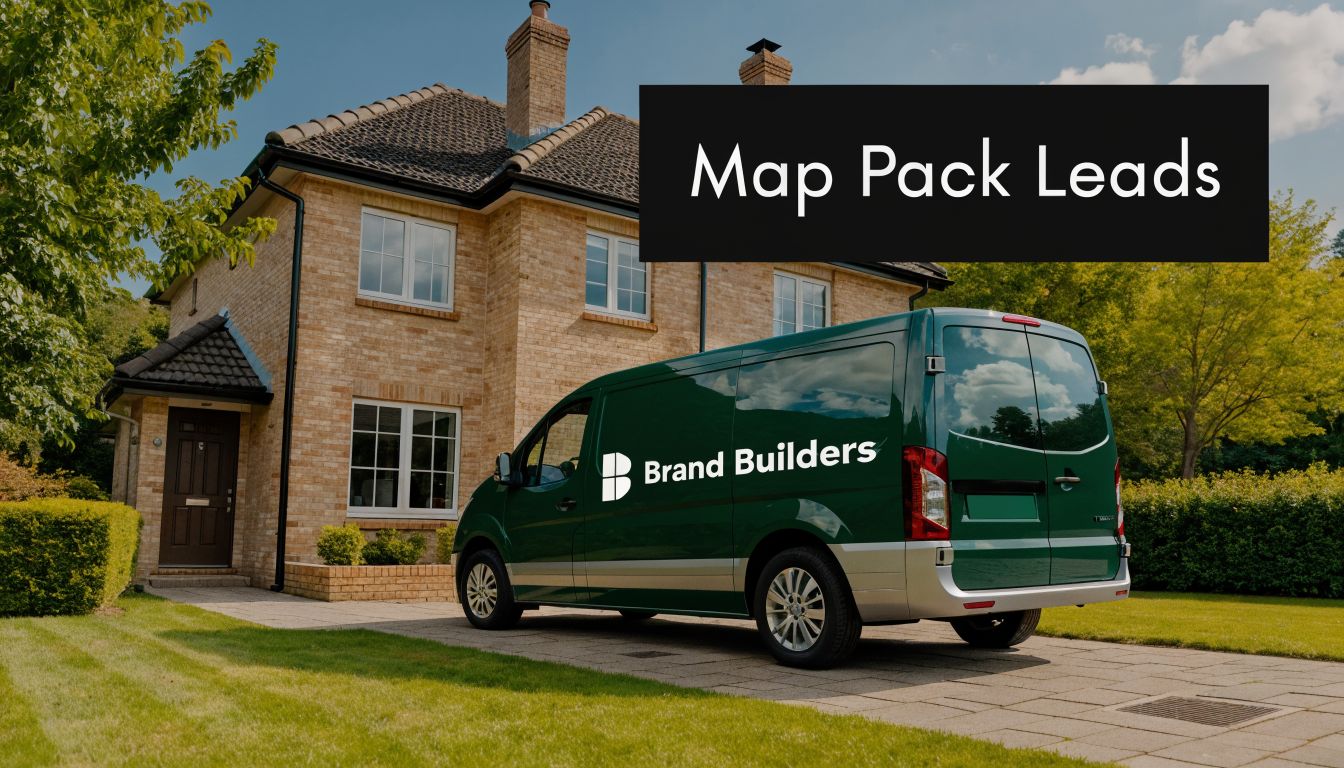
Your map listing is your digital yard sign
A good profile has complete services, clean categories, current hours, real project photos, and recent reviews. It should match your website and everywhere else your business appears online. That consistency makes it easier for Google to trust your company details.
If you want a builder-specific walkthrough, this Google Business Profile guide for contractors is a useful starting point.
Practical rule: Treat your profile like a jobsite sign on the busiest road in town. If the sign is crooked, faded, or missing half the phone number, fewer people call.
Simple moves that raise trust
Don't overcomplicate this. Start with a weekly rhythm.
- Add fresh project photos: Post real photos from finished work, in-progress work, and clean detail shots that show craftsmanship.
- Ask for reviews right after a good handoff: The best time is when the client is happy and the dust is gone.
- Use posts to answer buyer questions: Short updates about service areas, timelines, or current project types can help.
- Check how your business appears in AI search: Tools like this GEO checker help you see whether your company details are understandable in newer search environments.
What doesn't work? Stock photos, long gaps with no activity, and generic descriptions that sound like every other contractor in town. Local SEO works when it looks real, current, and specific.
2. AI-Driven SEO Content Strategy
A lot of builder content fails for one simple reason. It talks like a brochure instead of answering the questions buyers ask. Homeowners don't search for "quality craftsmanship and superior service." They search for things like kitchen remodel cost, timeline for an addition, or whether they can live in the house during construction.
That’s where AI can help. Not by replacing your judgment, but by helping you organize content around real search behavior and clear structure.
Write for humans and machines
For 2026, builders need a combined approach that blends traditional SEO with AI optimization, including schema markup and content structures that AI tools can interpret, according to ECI Solutions on new home marketing tips for 2026. In plain English, your site needs to be easy for both people and machines to read.
That means fewer fluffy intros and more direct answers. Use clear headers. Break content into small chunks. Put key facts where search engines and AI assistants can find them.
A page about kitchen remodeling shouldn't bury the basics. It should quickly answer service area, project type, process, timeline expectations, and what happens next.
Topics that pull in better leads
The best content for builders usually sits in three buckets:
- Cost content: Budget ranges, what changes price, and what homeowners should plan for.
- Process content: Design-build steps, permits, selections, communication, and scheduling.
- Location content: Service pages for the towns and neighborhoods you prefer to win.
A weak article chases traffic. A strong article helps a homeowner decide whether you're the right builder.
What doesn't work is pumping out generic blog posts with no local angle, no project photos, and no clear next step. AI makes bad content faster too. Always fact-check outputs, add real project context, and tie each page to a real service you sell.
3. Strategic Google Ads Campaigns for Qualified Leads
Google Ads can bring leads fast, but it can also burn cash fast. The difference usually isn't the platform. It's whether you aim at the right searcher and send them to the right page.
Good builder campaigns don't try to reach everyone. They focus on the homeowner who is already raising a hand. Someone searching for "design build home addition contractor" is very different from someone searching for "cheap kitchen ideas."
Buy intent, not random clicks
Ads work best when each service has its own campaign. Kitchen remodeling should not share the same ad group, keywords, and landing page with roofing, bathrooms, and decks. That's like using one blueprint for four different houses.
The message has to match the search. If someone clicks an ad for bathroom remodeling, they should land on a bathroom page with bathroom photos, bathroom language, and a simple contact option.
Builders who want a contractor-specific look at paid traffic can review this page on pay-per-click advertising for contractors.
What separates good campaigns from expensive ones
The biggest mistake is chasing lead volume without looking at lead quality. That's especially dangerous for firms pursuing larger remodeling projects. As noted in this analysis of a lead quality gap in construction marketing, a smaller pool of qualified leads can outperform a bigger pool of weak leads when close rate and project value are stronger.
That idea changes how you should run ads.
- Use qualifiers in your copy: Mention project type, location, and process so the wrong lead filters out early.
- Track calls and forms properly: If you can't tell which campaign produced a real consultation, you can't improve it.
- Send traffic to focused pages: Home pages are too broad for most paid campaigns.
- Add negative keywords: This blocks searches that don't fit your business.
What doesn't work is "set it and forget it." Ads need weekly attention. Search terms drift. Costs shift. Homeowner behavior changes.
4. Conversion-Focused Website Design
A good-looking builder website can still bleed revenue.
Plenty of sites have sharp branding, strong photography, and polished copy, but they leave homeowners unsure about one basic thing: "Am I in the right place, and what should I do next?" For builders chasing larger projects, that confusion is expensive. High-value clients do more checking before they reach out. They compare firms, review past work, and look for signs that your process is organized.
Your website needs to do more than look professional. In this 8-part marketing system, it works like the jobsite foreman for your digital leads. It guides the visit, answers questions in the right order, and moves the prospect toward a serious inquiry.
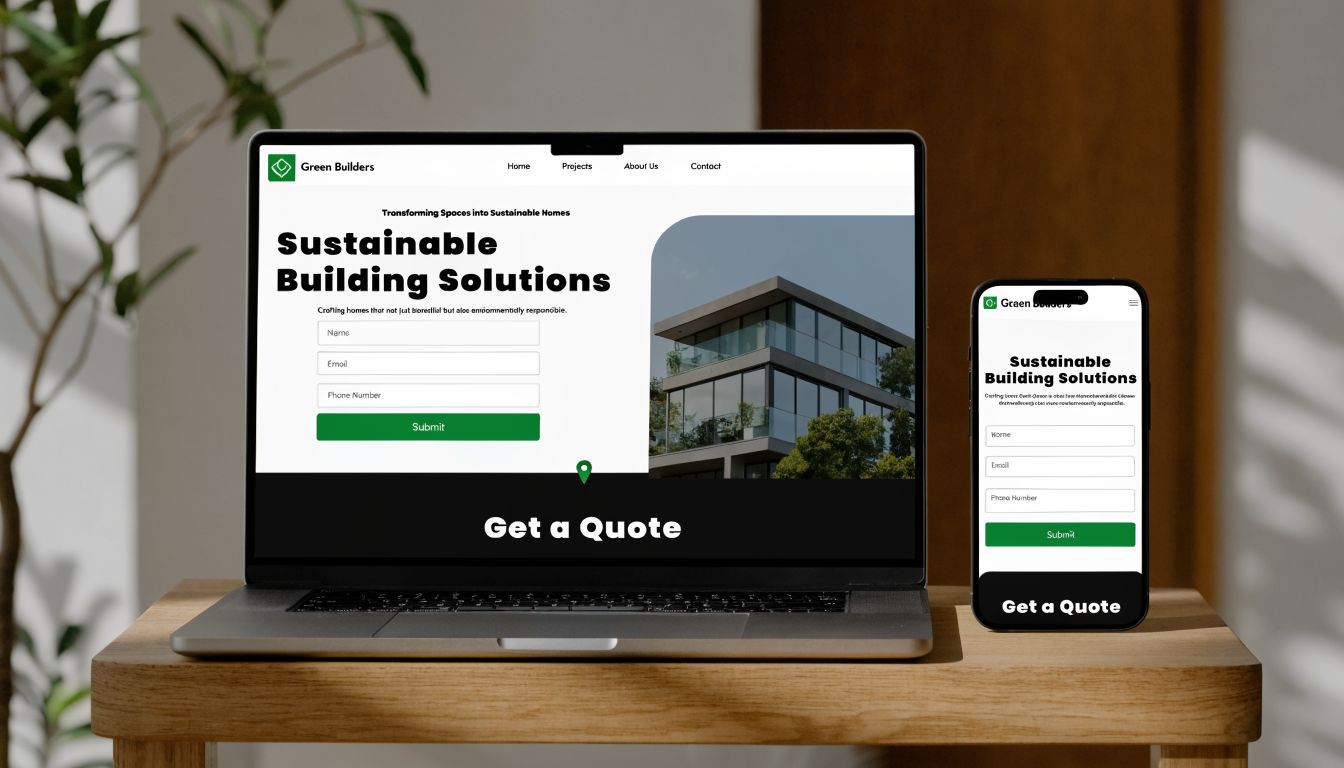
Your website has one job: turn interest into inquiry
Builders often treat the website like an online brochure. That leaves too much work for the visitor. A conversion-focused site works harder. It helps a homeowner decide, "This builder does my kind of project, in my area, at the level I'm looking for."
That matters because custom homes, additions, and major remodels rarely close from a single visit. People come back. They review photos, read testimonials, check service pages, and compare your process to another builder's process. Your site has to hold up across all of those visits.
If you want to see how that looks in practice, review these builder website designs.
What a builder site needs to communicate fast
The first screen should answer three questions without making someone scroll around and guess:
- What do you build? Use clear service categories like custom homes, whole-home remodels, additions, or kitchen remodeling.
- Where do you work? List the service area plainly.
- What should the visitor do next? Offer one clear action, such as request a consultation or schedule a call.
After that, the site needs to keep reducing doubt. Real project photos matter more than stock images. A simple process section helps serious buyers understand how you work. Reviews and case studies placed near forms or call buttons give people one more reason to reach out.
Good websites remove friction
The best builder websites feel easy to use. They load quickly, work cleanly on mobile, and make contact options obvious. That sounds basic, but it is where a lot of firms lose leads. If a prospect has to hunt for your phone number, pinch around a gallery on their phone, or read vague headline copy, you are adding friction right when trust is still fragile.
Overdesign is a common mistake. Fancy animations, autoplay video, and clever taglines often get in the way. A builder website should feel like a solid set of plans. Clear, organized, and built for function first.
For high-value projects, simple usually wins.
5. CRM-Driven Lead Nurturing & Automation
The lead form is not the finish line. It's the starting line. A lot of good opportunities die because no one replies fast enough, no one follows up enough, or nobody knows where the prospect stands.
A CRM earns its keep. It operates as a job board for your sales pipeline. Every lead has a place, a status, and a next action.
Fast follow-up wins more jobs
Builders often spend real money to generate interest, then lose that lead in the handoff. That waste hurts even more when marketing budgets are tied closely to revenue. If most builders are working within a limited percentage of revenue for marketing, every missed callback costs more than it looks on paper, as noted earlier.
A good CRM helps your team move quickly. It can trigger a text after a missed call, send a follow-up email after a form fill, and remind someone on your team to make the personal call.
Follow-up is where many marketing systems break. The ad worked. The website worked. The phone rang. Then nobody carried the ball.
Automation should support people, not replace them
Automation is for speed and consistency. Sales still needs a human voice. The message should sound like a contractor who understands the project, not a robot pretending to care.
A simple setup usually works best:
- Immediate acknowledgment: Confirm the inquiry and set expectations.
- Short qualification step: Ask about project type, location, and timing.
- Task reminders for staff: Calls, estimate follow-up, and dormant lead check-ins.
- Pipeline review every week: Clean out dead leads and identify stalled deals.
What doesn't work is stuffing every lead into the same drip campaign. A kitchen remodel prospect and a custom home prospect do not need the same follow-up. Segment by service, budget fit, and urgency.
6. Video Marketing & Virtual Project Tours
Builders already create content worth watching. They just don't always record it. Demo day, framing progress, cabinet install, tile detail, final reveal. Those are not boring moments to a homeowner. They are proof that you know what you're doing.
Video helps because it shrinks uncertainty. People don't only want to see the finished kitchen. They want to see how you work, how clean the site is, how your team communicates, and what quality looks like up close.
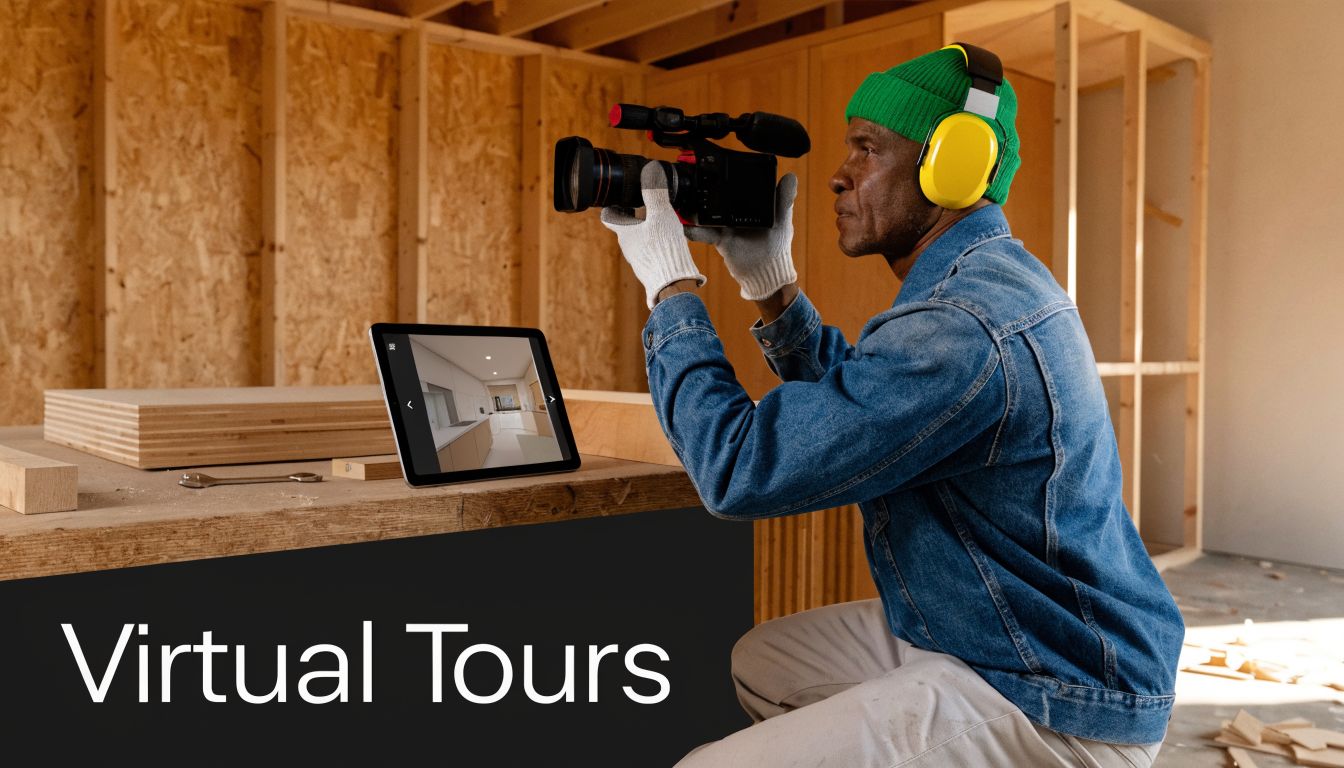
Show the job, don't just say you're good
A short project walkthrough often does more than a long paragraph of sales copy. When a superintendent explains why the layout changed, or a designer points out storage improvements, homeowners can picture the value more clearly.
Virtual tours help too, especially for larger renovations and custom builds. They give busy prospects a way to experience your work without coordinating a site visit.
Keep the camera work simple. Good light, clean audio, and a steady phone are enough for most builders to start.
Easy video formats builders can actually maintain
Don't wait for a full production crew. Start with repeatable formats that fit your schedule.
- Before-and-after walkthroughs: Fast, visual, and easy to understand.
- Milestone clips: Demo, framing, finish carpentry, final reveal.
- Answer videos: Short responses to common questions about budget, process, or timeline.
- Client reaction moments: Genuine responses after completion carry a lot of trust.
If a prospect can hear your team explain a project clearly, they start trusting you before the first meeting.
What doesn't work is making every video a commercial. Homeowners respond better to useful, honest footage than polished hype. Show the work. Narrate clearly. End with a clear next step.
7. Client Testimonial & Case Study Marketing
A builder can say "we do quality work" all day long. That won't land the same way as a homeowner explaining why they trusted you, how the process felt, and what changed in their house after the job was done.
Testimonials build trust. Case studies build trust with context. Together, they help future clients see the outcome and the path.
Proof beats promises
The best testimonial is specific. Not "great team, highly recommend." Better is "they helped us rework the kitchen layout, kept communication clear, and the finished space functions better for our family."
Case studies go one step further. They show the starting problem, the design or construction decisions, and the final result. That helps future buyers compare their situation to a real project instead of guessing.
This is especially useful for higher-value remodeling work, where homeowners need confidence in both craftsmanship and process.
What to include in every case story
Keep the format simple and repeatable. One strong case study is better than ten thin ones.
- The homeowner's problem: Outdated layout, no storage, poor flow, aging materials.
- Your solution: Design changes, material choices, structural work, or phased planning.
- Project visuals: Before photos, progress photos, and polished after shots.
- Client voice: Short quote or video clip in plain language.
- Clear next step: Invite the reader to book a consultation for a similar project.
What doesn't work is writing case studies like award submissions. Skip the jargon. Use normal language. Builders understand this instinctively on-site. Show the issue, show the fix, show the result.
8. Referral & Strategic Partnership Programs
Word of mouth is still one of the strongest marketing ideas for builders. But too many companies treat it like weather. They hope it happens. They don't build a system that makes it easier.
A good referral program is simple. People know who to send, how to send them, and what happens next.
Word of mouth works better when you build a system around it
Past clients usually want to help if they had a good experience. They just need a reminder and an easy path. That can be a short email, a printed card at project closeout, or a thank-you page with clear instructions.
You can also make referrals easier by giving clients language they can forward. A short note about who you help, the areas you serve, and what kind of projects you take is often enough.
The best partners already talk to your future clients
Some of the best referrals don't come from past clients. They come from adjacent professionals. Architects, interior designers, real estate agents, cabinet showrooms, and specialty suppliers all speak with homeowners before construction starts.
A partnership works when both sides benefit. That might mean shared educational events, co-branded guides, or project spotlights that feature both companies.
One example of a branding support asset for professional partners is using polished profile photos. Something like an ai headshot generator can help partners or team members refresh public-facing profiles used in referral outreach.
What doesn't work is chasing every possible partner. Start with a few who already serve your type of client and share your standards. A smaller network of real relationships beats a giant list of loose contacts.
Builders Marketing Ideas: 8-Point Comparison
| Item | Implementation Complexity | Resource Requirements | Expected Outcomes | Ideal Use Cases | Key Advantages |
|---|---|---|---|---|---|
| Local SEO & Google Business Profile Domination | Low–Medium (setup + ongoing maintenance) | Weekly content/photos, citation management, GBP tools/automation | Improved local visibility, more Map-pack leads over weeks–months | Local service businesses targeting nearby homeowners | High "near me" visibility, cost-effective, builds trust with reviews |
| AI-Driven SEO Content Strategy | Medium (tool integration + editorial workflow) | AI/SEO subscriptions, content editors, analytics tools | Faster content production, increased organic traffic and topical authority | Scaling content programs, multi-location SEO, topical coverage | Data-driven topic targeting, speeds creation, ensures on-page consistency |
| Strategic Google Ads Campaigns for Qualified Leads | Medium–High (setup, continuous optimization) | Ad budget, PPC specialist, conversion tracking/landing pages | Immediate visibility and lead volume, measurable ROI | Quick lead acquisition, competitive/high-intent markets | Fast results, precise geo/keyword targeting, granular budget control |
| Conversion-Focused Website Design | Medium (design, development, testing) | Design/dev cost, high-quality imagery, CRO tools | Higher lead conversion rates, stronger credibility | Sites needing better UX and lead capture | Improves lead capture, enhances trust, acts as 24/7 salesperson |
| CRM-Driven Lead Nurturing & Automation | Medium–High (integrations, workflow build) | CRM subscription, integration work, content for automations | Faster follow-up, higher close rates, clearer pipeline visibility | Businesses with steady leads needing reliable follow-up | Ensures consistent outreach, automates nurture, provides KPI tracking |
| Video Marketing & Virtual Project Tours | Medium (production and editing effort) | Camera/editing gear or vendor, hosting, distribution channels | Higher engagement, longer dwell time, social reach uplift | Visual-heavy projects (renovations), social and YouTube campaigns | Highly engaging proof of work, boosts SEO and shareability |
| Client Testimonial & Case Study Marketing | Low–Medium (coordination and production) | Client coordination, interview/video or writing resources | Greater trust and improved conversion, reusable content | Trust-building, competitive differentiation, sales enablement | Powerful social proof, differentiates on outcomes, supports SEO |
| Referral & Strategic Partnership Programs | Medium (program design and management) | Incentives, partner outreach, tracking (CRM) | Higher-quality referred leads, sustained network-driven growth | Local networks, realtors, designers, trade partnerships | Pre-qualified leads, higher close rates, strengthens local network |
Your Marketing Blueprint for the Next 12 Months
These eight ideas work best as one system, not eight disconnected chores. That's the part many builders miss. They try one tactic for a month, don't see magic, then move on. Marketing doesn't work like that. It's closer to building a house. The foundation matters, the sequence matters, and sloppy handoffs create problems later.
Start with the pieces that affect trust and visibility first. For many builders, that means dialing in Google Business Profile, tightening up the website, and fixing follow-up. Those three changes alone can make the rest of your marketing work harder because more prospects find you, trust you, and hear back from you.
Then add the channels that create demand and proof. Google Ads can bring in near-term opportunities. AI-driven SEO content can build long-term visibility. Video, testimonials, and case studies help homeowners picture themselves working with you. Referral systems and strategic partnerships expand reach without making your brand feel louder or cheaper.
Keep the focus on qualified work, not vanity metrics. The key question isn't how many clicks, likes, or even raw leads came in. Instead, the question is whether your marketing is bringing in the kind of homeowner you want, for the kind of project you want, in the places you want to work. That standard will save you a lot of wasted effort.
Attribution is still a challenge in builder marketing, especially with long buying cycles and multiple touchpoints. That's why community-level tracking, clean lead sources, and CRM discipline matter so much. If you don't know what influenced the sale, you'll keep guessing about where to spend next.
If you want outside help, use a partner that understands the difference between lead volume and good-fit opportunities. Constructo Marketing is one option built around that integrated approach for remodelers, combining local SEO, AI-driven SEO, Google Ads, websites, and CRM support into one system. If you stay in-house, the same rule applies. Build the machine one part at a time, and make sure each part connects to the next.
A helpful way to think about it is this. Your website is the showroom. Your Google profile is the sign on the road. Ads are the switch that turns on immediate traffic. SEO is the long-term route that keeps traffic coming. Your CRM is the foreman making sure nothing gets dropped. Testimonials and video are the proof that your team does what it says. Referrals are the neighbors talking after they see the finished job.
If you want to sharpen the bigger strategy around optimize home builder marketing, keep your eye on integration. That's what turns scattered tactics into steady growth.
If you'd like help building a connected system instead of juggling disconnected tactics, talk with Constructo Marketing. They focus on remodelers who want better-fit local leads, stronger follow-up, and marketing built around real project value.