


Your phone rings while you're on a ladder. You can't answer. A homeowner leaves a voicemail about a leak over the kitchen. By the time you call back that night, they've already booked an inspection with someone else.
That's how most roofing companies lose leads. Not because they can't do the work. Because their system has holes in it.
If you want to learn how to get roofing leads, stop thinking in random tactics. Think like a roofer. A roof system works because the decking, underlayment, flashing, ventilation, and shingles all work together. Lead generation is the same. Your Google profile, website, ads, follow-up, and reputation have to connect. If one part fails, water gets in.
Table of Contents
- Start Here Your Digital Foundation
- Get Found by Homeowners on Google
- Run Google Ads That Bring In Calls
- Turn Your Website Into a Lead Magnet
- Automate Your Follow-Up So No Lead Is Lost
- Build a Reputation That Gets You Referrals
Start Here Your Digital Foundation
Most roofers want more leads when the underlying problem is simpler. Homeowners can't call a business they can't trust in ten seconds. Before you spend a dollar on marketing, fix your foundation.
Your Google Business Profile is your sign on the digital main road. Your website is your front door. If the sign is wrong or the front door sticks, people move on.
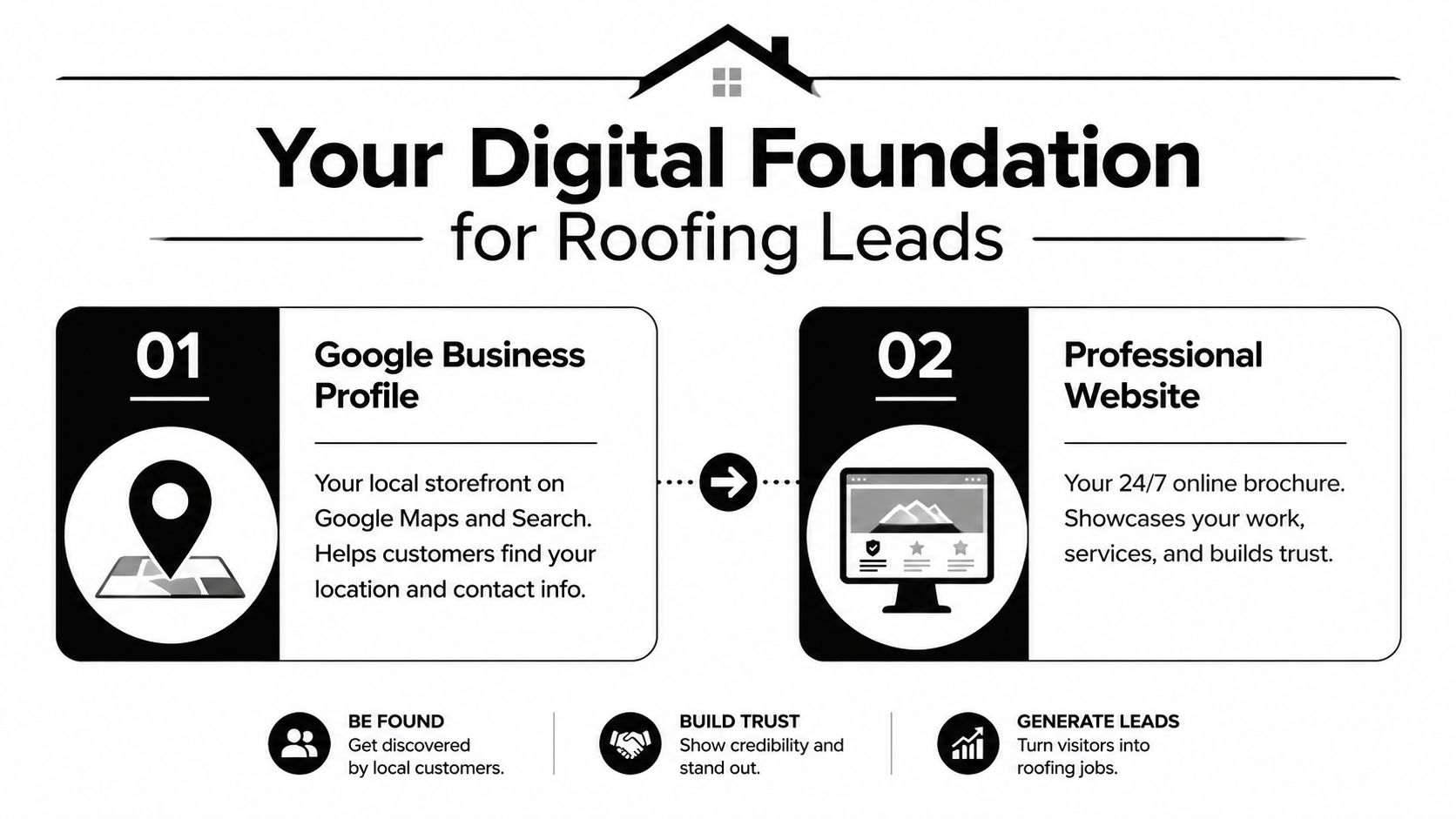
Treat your Google profile like your yard sign
Pull up your Google Business Profile and check the basics first. I mean the boring stuff. Boring stuff makes money.
Use this checklist:
- Business name: Match your real business name everywhere. Don't stuff extra keywords into it.
- Phone number: Use one main number that somebody answers.
- Hours: Set real hours. If you take weekend calls, show it.
- Service areas: List the towns you serve.
- Photos: Add job photos, truck photos, crew photos, and office photos if you have one.
A homeowner searching for a roofer isn't doing a deep investigation at first. They're scanning. They want to know if you're local, real, active, and easy to contact.
Practical rule: If your Google profile looks abandoned, homeowners assume your service is too.
Your website only needs to do three jobs
A roofing website doesn't need to win design awards. It needs to make a stressed homeowner feel safe enough to call.
Three things belong above the fold:
- A clear headline that says what you do and where you do it.
- A phone number people can tap on mobile.
- Proof that you're legit, like project photos, reviews, or badges.
Fancy animation won't save a weak site. Clean beats clever.
If a homeowner lands on your site after spotting a water stain on the ceiling, they don't want to play hide-and-seek. They want answers. Show roofing services clearly. Show the areas you serve. Show real work.
Speed and accuracy matter behind the scenes too
Once somebody calls, your office and estimating process need to keep up with your marketing. That's why tools that tighten up estimating and proposal flow matter. If you want a cleaner handoff from lead to quote, take a look at Exayard roofing estimating software. It's a practical example of how contractors can reduce friction after the lead comes in.
A weak foundation wastes every future marketing dollar. A strong one makes everything else work better.
Here's the simple test. Search your company name on your phone. If the first impression looks confusing, outdated, or thin, fix that before you chase more traffic.
Get Found by Homeowners on Google
If your business doesn't show up when someone types "roofer near me," you're invisible at the exact moment they need you.
Local SEO earns its keep through this process. SEO sounds technical, but it isn't magic. It's just putting the right signs on the right roads so homeowners can find you.
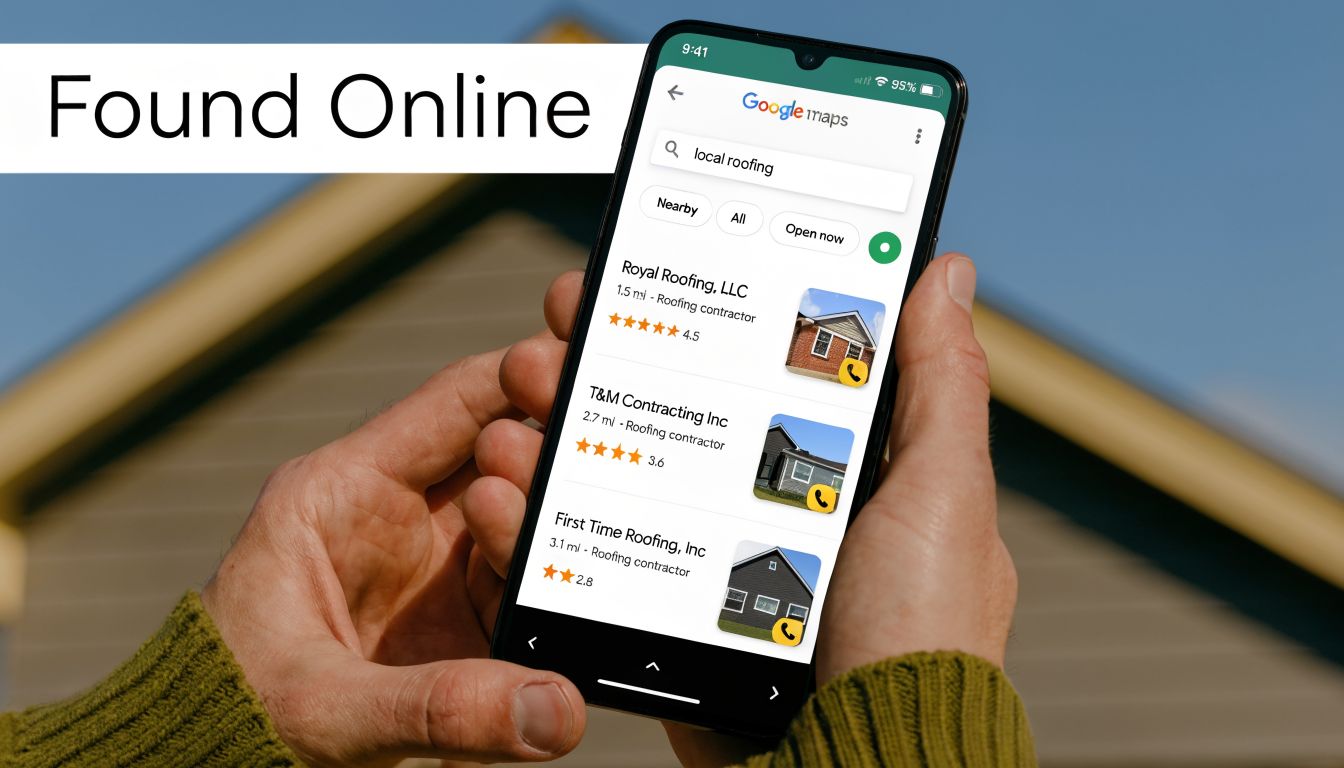
Think of keywords like road signs
A keyword is the phrase a homeowner types into Google. Good roofing keywords usually have a service and a place tied together.
Examples look like this:
- Roof repair plus city name
- Roof replacement plus city name
- Storm damage roofer plus city name
- Emergency roof leak repair plus city name
You don't need to sound clever. You need to sound searchable.
Put those phrases in normal places on your site. Your page title. Your service pages. Your photo captions. Your copy. Don't jam them in like you're stuffing a dumpster. Write like a human and keep it clear.
Google wants proof that you're local
Google's map results reward local signals. That means your business info has to match across the web. Same name. Same phone. Same website. Same service area.
You also need location proof on your own site. Add pages for your main services and your main towns. If you work in five core markets, give each one a proper page with real content and real project references.
A well-optimized profile matters too. If you need a step-by-step walkthrough, use this Google Business Profile optimization checklist for remodelers. Even though it's written for remodelers, the same local search rules apply to roofing.
The map pack is like the top row of trucks parked at the supply house. The companies in front get the first look.
Photos do more selling than most roofers realize
Homeowners don't know how to judge roofing craftsmanship from a shingle bundle. They judge what they can see.
Upload photos that make your business feel active and trustworthy:
| Photo type | Why it matters |
|---|---|
| Crew on site | Shows you're a real local company |
| Before and after shots | Helps homeowners see the result |
| Close-ups of details | Signals care and professionalism |
| Branded trucks | Builds recognition |
| Storm damage examples | Matches urgent search intent |
A dead profile with two blurry pictures feels risky. An active one feels established.
Reviews help Google and humans at the same time
Reviews aren't just reputation. They're search fuel and trust fuel in one place.
Ask every happy customer for a review while the experience is still fresh. Make it easy. Text them the review link. Don't overcomplicate it with a giant survey.
Most roofers overthink local SEO. You don't need tricks. You need consistency. Clear services, local pages, accurate listings, fresh photos, and steady reviews. That's how you get found by homeowners already looking for help.
Run Google Ads That Bring In Calls
SEO is the long game. Google Ads are how you jump to the front of the line.
When a storm rolls through and a homeowner suddenly has water coming in around a vent pipe, they aren't browsing for fun. They're looking for help right now. Paid search puts your company in front of that person while the urgency is hot.
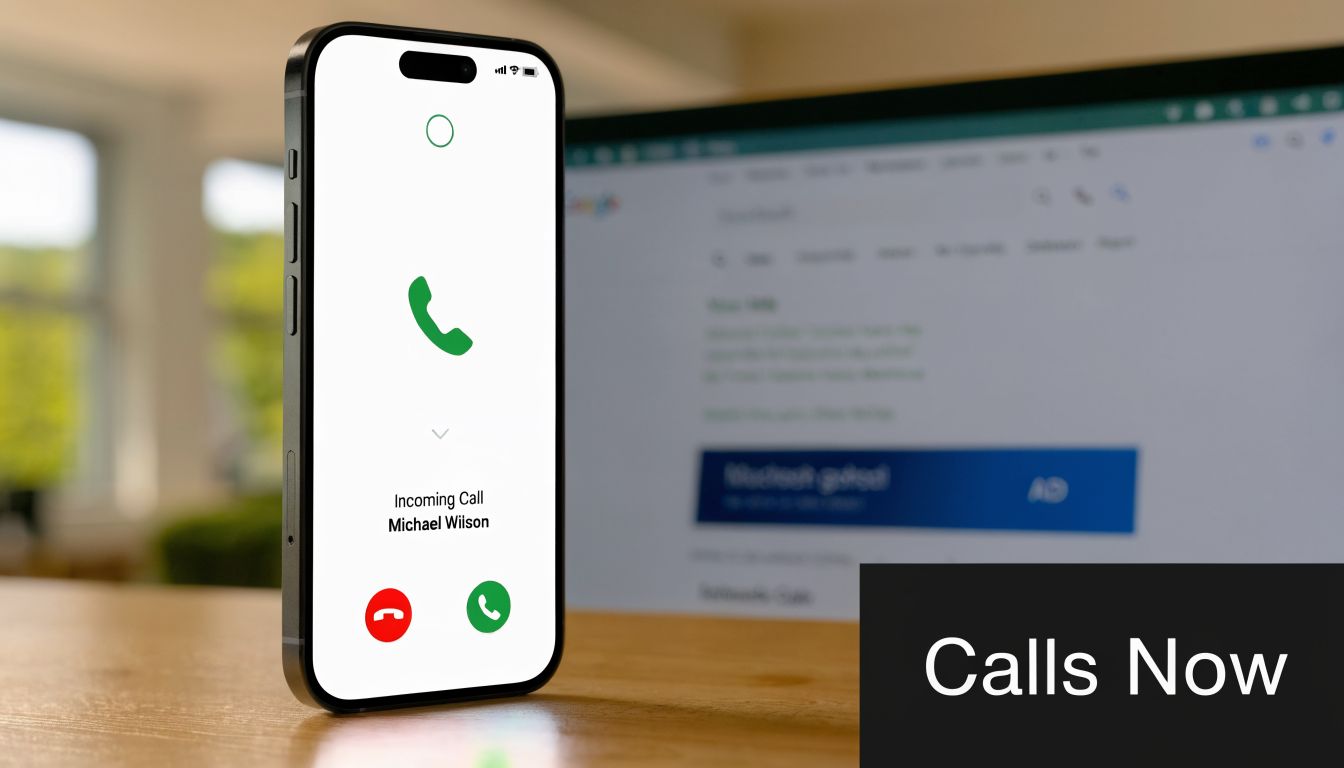
Start with the highest-intent targets
Most contractors waste ad money by aiming too wide. Don't advertise to everybody. Advertise to people who are most likely to need a roof.
BatchData notes that data-driven targeting allows you to focus on high-intent properties, such as homes with roofs over 15 years old or homes in recent storm-damage zones. The same source says the residential roofing market makes up nearly 60% of total revenue and is projected to grow at 7.35% annually through 2030.
That tells you two things. First, there is demand. Second, broad targeting is lazy. Aim where the need is most likely.
Two ad types matter most
For roofers, I like a simple split.
Local Services Ads sit at the top and are built for inbound leads. These are the ads many homeowners recognize as the top local contractor listings.
Traditional Google Ads let you control keywords, landing pages, service areas, and messaging. They give you more control when you want to push roof repair, replacement, or storm work in specific places.
Here's the plain-English difference:
| Ad type | Best use |
|---|---|
| Local Services Ads | Capture urgent local calls |
| Traditional Google Ads | Control message, targeting, and landing page experience |
If your market is competitive, you may need both. One catches demand at the top. The other lets you shape the pitch.
Don't send paid traffic to a sloppy page
A lot of roofers light money on fire. They pay for the click, then send people to a generic homepage with too many options and not enough direction.
Use a dedicated landing page for each main service. If somebody searched roof leak repair, the page should talk about roof leak repair. Not siding. Not gutters. Not your company softball team.
Your landing page should have:
- One clear service offer: Match the search intent.
- One clear call to action: Call now or request an inspection.
- One clear service area: Reassure them you work in their town.
- Visible trust markers: Reviews, project photos, and certifications.
If you want to understand the structure behind contractor paid search, this guide on pay-per-click advertising for contractors is worth your time.
A good Google ad is like putting a yard sign in the exact driveway where the roof is leaking.
Keep your budget tight and your targeting tighter
Don't start broad just because Google suggests it. Start with the jobs you want most. Focus on service areas you can service well. Write ads that sound like a roofer wrote them, not a software company.
The best ad account isn't the one with the most clicks. It's the one that brings in phone calls from homeowners who are your ideal clients.
Turn Your Website Into a Lead Magnet
A homeowner visits two roofing websites in ten minutes.
The first one loads with a giant video, tiny text, and a menu packed with junk. No phone number at the top. No clear service area. The photos look like stock images. The homeowner backs out.
The second site gets right to it. Big phone number. Simple headline. Real roof photos. A short list of services. A clear form. That company gets the call.
That's how websites win or lose leads.
Make the stressed homeowner feel safe fast
A leaking roof puts people on edge. They aren't in the mood to decode your site.
Put the important stuff where people can see it immediately:
- Your phone number at the top
- A button to request an estimate
- Real photos of your work
- Proof that others trust you
- A short explanation of what happens next
That last one matters more than most roofers realize. If the homeowner knows the next step is a call, inspection, and quote, they relax. Confused people don't convert.
Your best salesman is often a photo gallery
Roofing is visual proof. A homeowner may not understand flashing details, but they do understand clean lines, neat job sites, and obvious before-and-after improvement.
Use real photos from your jobs. Label them by service and town when it makes sense. Show replacements, repairs, storm work, and problem areas you fixed.
Then add trust markers around those photos. Reviews. Certifications. Financing options if you offer them. Warranty language if it's part of your process. Keep it simple and believable.
If your website makes a homeowner work hard to trust you, they'll hire the roofer whose site doesn't.
Build pages for action, not just information
A lot of contractor websites read like brochures from twenty years ago. Nice enough. Useless under pressure.
Every important page should push toward one action. Call. Fill out the form. Request an inspection. Don't make people choose between twelve different buttons.
If your current site feels boxed in, using structured layouts can help. These WordPress landing page templates by Exclusive Addons are a practical example of cleaner page design when you want a more focused service page without reinventing the wheel.
Keep your form short. Name, address, phone, email, and what they need. That's enough to start the conversation. More fields don't make the lead better. They just make completion less likely.
A lead magnet website isn't fancy. It's clear, fast, and easy to trust.
Automate Your Follow-Up So No Lead Is Lost
The roofing company that responds first usually gets the conversation. The company that waits loses it.
You can't answer every call while you're on a roof, in a truck, or sitting with a customer. That's why automation matters. Not because it's trendy. Because it plugs the biggest leak in your sales bucket.

Fast response beats good intentions
A missed lead doesn't care that you were busy. They just know somebody didn't answer.
EagleView reports that exclusive leads can close at rates of 40-60% with rapid response systems. The same source says a missed-call text-back feature can capture up to 40% of missed call opportunities, and that responding in under 5 minutes is critical.
That's the clearest argument for automation you'll ever need.
Your CRM is your digital office assistant
Think of a CRM like the best office manager you've ever had. It never forgets. It never sleeps. It never says, "I meant to call them back."
Here's what a good follow-up setup should do:
Send an instant text when you miss a call
Something simple works: "Hey, this is Mike from ABC Roofing. I missed your call and will call you back shortly. Are you looking for a roof estimate?"Create a lead record automatically
Name, phone, source, service request, and notes should land in one place.Trigger a short follow-up sequence
Text, email, and call reminders should happen without you chasing sticky notes.Assign the lead to a real human
Automation should support your team, not replace the conversation.
If you're sorting this out, a guide on CRM software for builders can help you understand what these systems should do in a contractor business.
Build a simple sequence and stick to it
Most roofers quit too early. One missed call, one voicemail, and they move on. That's lazy follow-up.
A basic sequence works better:
| Timing | Action |
|---|---|
| Immediately | Missed-call text-back |
| Soon after | Personal call back |
| Later that day | Short follow-up text or email |
| Next touch | Helpful reminder to schedule |
Don't make the messages robotic. Make them useful and short.
Field note: Automation isn't about sounding automated. It's about making sure every lead hears from you quickly.
If you want a plain-language primer on why this matters in sales generally, this article on unlocking growth with automation gives a good overview.
A good system keeps the ball moving while you're working. That's the whole point. You don't need more leads if your current leads are falling through the cracks.
Build a Reputation That Gets You Referrals
The cheapest lead is the one your happy customer sends you.
Referrals aren't just nice to have. They're the strongest proof that your business delivers what it promises. When a homeowner tells a neighbor, friend, or family member to call you, you've skipped a giant chunk of the trust-building process.
JobNimbus found that customer referrals account for 36% of all roofing leads, making them the top source. That same survey shows referrals beat channels like social media advertising and search engine advertising.
Reviews are the bridge between good work and new calls
Here's how the loop works.
You do a clean job. You communicate well. You finish strong. Then you ask for a review while the customer still feels the relief of having the problem solved.
That review does two jobs. It helps the next homeowner trust you online, and it makes the past customer more likely to remember and recommend you later.
Build a repeatable review funnel
Don't leave reviews to chance. Make it part of your closeout process.
Use a basic system like this:
- At job completion: Ask in person if they're happy.
- Right after that: Text the review link.
- If they don't respond: Send one polite reminder.
- When they leave a review: Thank them personally.
Short. Clean. Repeatable.
A five-star review is a digital version of a neighbor pointing across the street and saying, "Use that roofer."
Reputation compounds when the system is consistent
A lot of roofing companies wait for referrals like they're waiting on the weather. That's a mistake. You can't force word-of-mouth, but you can build the conditions that create it.
Do better work than promised. Make the job site look organized. Answer questions clearly. Finish with a professional handoff. Then ask for the review and the referral.
That creates a loop. Good experience leads to review. Review leads to trust. Trust leads to calls. Calls turn into more customers who can refer you again. That's how you build a business that isn't addicted to chasing every lead from scratch.
If you want help building the full system, not just one disconnected tactic, Constructo Marketing helps contractors become locally dominant with Google visibility, conversion-focused websites, paid traffic, and CRM automation that keeps leads from slipping away. If your goal is steady, qualified roofing leads instead of random spikes, they're worth talking to.