


You know this job. You can build a gorgeous kitchen, solve ugly field problems, and keep a crew moving. Then a project still goes sideways because the homeowner thought “done” meant one thing, your PM meant another, and nobody nailed it down early enough.
That's the problem. Not bad craftsmanship. Not bad clients. Bad expectation systems.
If you're tired of surprise change requests, “just checking in” texts at night, and final walk-throughs that turn into courtroom drama, you don't need to become softer. You need a tighter process for managing client expectations. Envision it as a set of jobsite plans for communication, approvals, and trust. No plans, no surprise when people start building different things in their heads.
Table of Contents
- Why Most Remodeling Projects Go Sideways
- Win the Project and Set the Rules Upfront
- Onboard Your Client with a VIP Welcome
- Communicate Through the Dust and Delays
- Finish Strong and Create a Fan for Life
- Measure Your Success with Client Happiness KPIs
Why Most Remodeling Projects Go Sideways
A homeowner says they want a “simple kitchen refresh.” You hear paint, counters, lighting, and maybe flooring. They hear better storage, cleaner trim details, maybe a few electrical upgrades, and a faster timeline than reality allows. Nobody is lying. You're just standing on two different sets of assumptions.
That gap is where projects start to rot.
At first it looks small. One missed update. One unclear allowance. One “I thought that was included.” Then the job gets noisy. The client gets tense. Your team gets defensive. You start spending more time explaining than building.
Most remodeling conflict starts long before the first demo day. It starts when a vague promise survives the sales process.
This is why managing client expectations isn't fluff. It hits the business hard. Zendesk reports that 73% of consumers will switch to a competitor after multiple bad experiences. In remodeling, those bad experiences usually aren't one giant disaster. They're a stack of small trust failures: unclear scope, delayed updates, broken promises, or silence when something slips.
The real cause is no operating system
A lot of owners blame the client. Sometimes the client is difficult. Fine. But if the same kinds of problems keep showing up across different jobs, the client isn't the pattern. Your process is.
Think about it like framing a house without a layout. The crew might work hard all day, but if the lines are wrong, the whole thing drifts. Client communication works the same way. If you don't define what happens, when it happens, and how decisions get approved, people fill in the blanks themselves.
Here's what that usually looks like:
- Scope drift: Small requests sneak in because nobody defined what's out of scope.
- Timeline fantasy: The client heard best case. You meant probable case.
- Approval chaos: Selections, revisions, and field decisions live in texts, calls, and memory.
- Role confusion: The client doesn't know whether to call the owner, PM, designer, or lead carpenter.
- Stress multiplication: One communication miss creates three more.
If your project pipeline management system is organized before the sale but turns messy after the contract, you're setting yourself up for avoidable pain.
Build an expectation playbook
You don't need charm. You need a repeatable playbook.
That playbook should tell every client:
- What you're building
- What you're not building
- How updates happen
- How changes happen
- What happens when reality changes
That's it. Simple. Firm. Repeatable.
A great remodeler without a communication system is like a great carpenter without a tape measure. Skilled, but slower, messier, and more likely to fight preventable problems.
Win the Project and Set the Rules Upfront
The sales phase is where most owners get loose because they're trying to win the job. That's backwards. The way you win the right job is by showing the client that your process is calm, clear, and controlled.
A board game works because everybody agrees on the rules before the first move. Remodeling should work the same way.
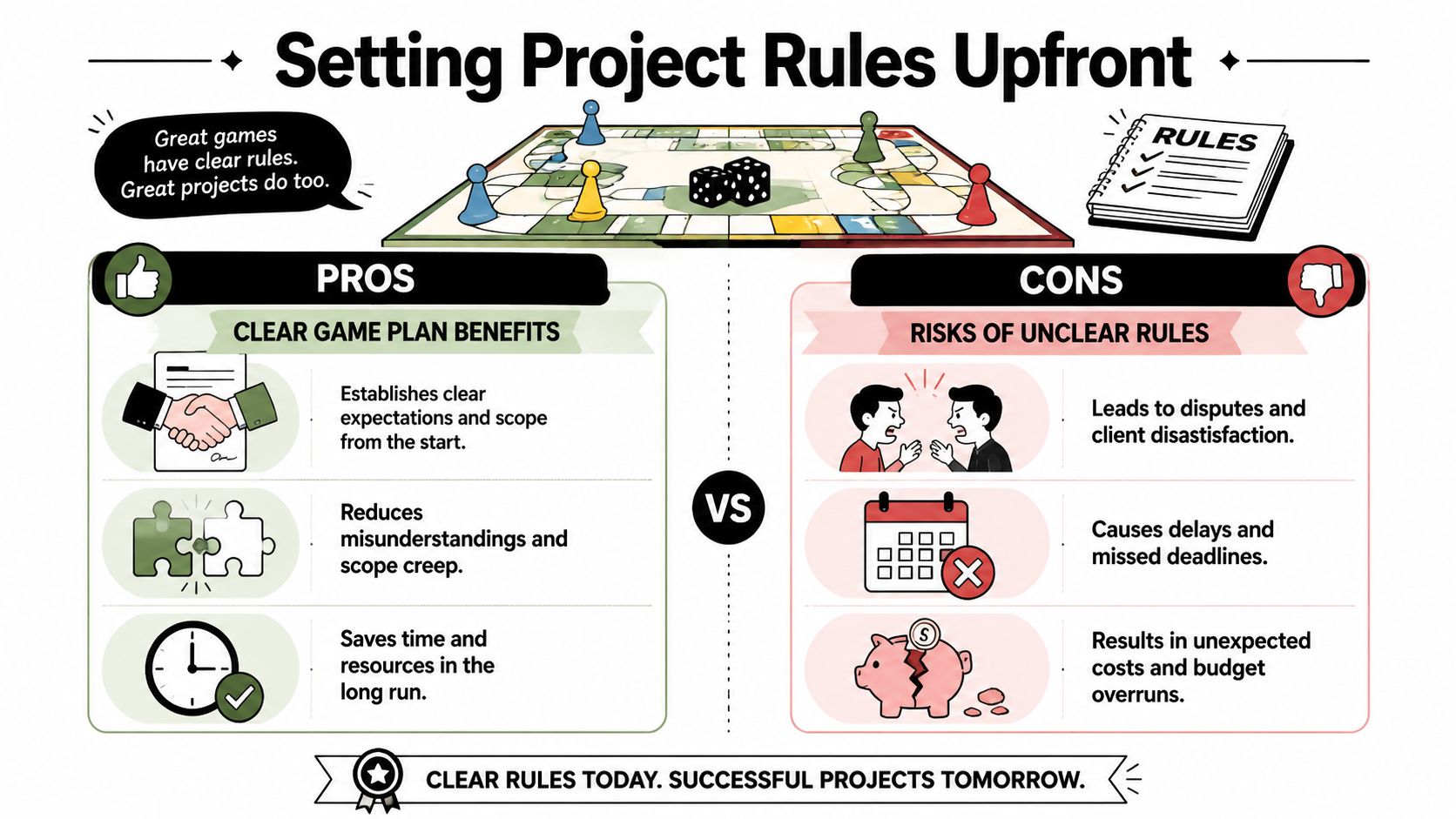
Sell clarity, not hope
Stop trying to sound easygoing. Easygoing in sales often becomes painful in production.
One rule matters more than most here. ManyRequests recommends giving time estimates in ranges such as “6-8 weeks” rather than a single deadline. That's smart because remodeling is full of variables. Materials slip. Hidden conditions show up. Inspectors don't always move on your schedule.
Use language like this in the sales meeting:
- On timeline: “The construction window is usually a range, not a single date. I'd rather give you an honest window than a pretty promise.”
- On budget: “We can build toward your target budget, but choices drive cost. If selections move up, the price moves up.”
- On communication: “You will not need to wonder what's happening. We'll tell you when updates come and who sends them.”
- On decisions: “If something changes, we document it before we build it.”
Those lines aren't slick. Good. Slick creates distrust. Clear creates relief.
Use no-surprises contract language
Your contract shouldn't read like a trap. It should read like instructions.
Include plain-English clauses that answer the questions clients ask after they've already forgotten asking them.
| Clause | Plain-English example |
|---|---|
| Scope of work | “This agreement includes demolition, framing, electrical work as listed, plumbing work as listed, drywall, finishes, and installation of owner-approved selections shown in the proposal.” |
| Exclusions | “This agreement does not include work outside the rooms listed, repairs for concealed damage discovered after demolition, or upgrades not written in this agreement.” |
| Timeline window | “Project timing is estimated within a working range and may change due to material delays, hidden conditions, weather, inspections, or client-driven changes.” |
| Communication | “Primary communication happens through the client portal and scheduled update messages. Field staff won't approve scope, cost, or schedule changes on site.” |
| Change orders | “Any added, removed, or revised work requires written approval before work proceeds.” |
Practical rule: If a sentence matters later, write it down now.
Scripts that stop future arguments
Use these in consults and proposal reviews.
When a client asks for certainty you can't realistically give
“Anybody can give you a perfect date on day one. The better question is whether they have a process when the job changes.”
When a client keeps saying ‘small thing’
“Small in size doesn't always mean small in labor, sequencing, or cost. We'll price it properly so you can choose clearly.”
When a spouse or stakeholder isn't aligned
“I want both decision-makers hearing the same thing at the same time. It saves everyone frustration later.”
Put your rules into your tools
Many remodelers falter: they say the right words, then fail to lock them into systems.
At minimum, your CRM or project tool should trigger:
- A signed-contract checklist with scope, exclusions, and communication preferences
- A kickoff task for assigning the main point of contact
- A change-order template that your team uses every single time
- A reminder sequence for selections, approvals, and upcoming milestones
If the rule lives only in your head, it's not a rule. It's a wish.
Onboard Your Client with a VIP Welcome
The handoff from sales to production is where confidence either gets stronger or falls apart. A lot of firms treat this like paperwork. Bad move. The client just made a big emotional and financial decision. They need reassurance that your company runs a real process.
Think first day of school. The kid doesn't need a speech on educational philosophy. They need a schedule, a map, and to know which adult to ask for help.

A solid workflow starts before the official kickoff. Contractor Accelerator advises defining scope, timeline, and responsibilities in a client pre-kickoff meeting, then converting that into written milestones, a formal communication plan, and a change-control process. That's exactly right. Say it. Write it. Then put it in motion.
What goes in the welcome packet
Your welcome packet doesn't need to be fancy. It needs to be useful.
Include these pieces:
- Who's who: Owner, project manager, designer, lead carpenter, office contact. Include what each person handles.
- How to communicate: Tell them where updates happen. Client portal, email, scheduled call, or text for urgent field issues.
- Project roadmap: A simple milestone list in plain English. Selections, permits, demo, rough-ins, inspections, install, punch list.
- Decision deadlines: Show when the client must approve materials, layouts, fixtures, and finish details.
- Jobsite rules: Access hours, pets, parking, dust expectations, bathroom use, and how valuables should be protected.
- Change-order process: One page. Short. Clear.
- Billing schedule: Dates or milestone triggers, with plain wording on when invoices go out and when payment is due.
A client should be able to read that packet and think, “These people have done this before.”
One smart move is to store all of this inside a CRM built for builders, so the same onboarding steps happen every time instead of depending on memory.
Run a real pre-construction meeting
Do not let this become a rambling chat at the kitchen island.
Use an agenda. Follow it. End with clear next actions.
Recap the project in simple words
“We are remodeling these spaces. These are the major deliverables. These are the main exclusions.”Confirm responsibilities
Who approves selections. Who opens the house. Who answers daily questions. Who signs change orders.Walk the timeline
Not as a fantasy. As a sequence. Explain what can delay the sequence.Review communication rhythm
Tell them when they'll hear from you, even if there's no dramatic update.Explain the friction points before they happen
Noise, dust, hidden damage, lead times, access issues, inspection waits.
A calm kickoff prevents panicked mid-project conversations.
Simple language beats impressive language
A lot of remodelers lose clients with industry jargon. Don't say “procurement delay” if “your tile hasn't arrived yet” works better. Don't say “owner-furnished material coordination issue” if “we're waiting on the faucet you ordered” says it faster.
Clients don't need more words. They need fewer surprises.
When onboarding is done right, you've already handled half the arguments that usually show up in the middle of the job.
Communicate Through the Dust and Delays
During the project's midpoint, trust gets tested. Demo opens a wall. Something ugly shows up. A delivery slips. The homeowner is living in noise and dust, and now they're nervous. At this point, weak companies often go silent because they don't want to bring bad news.
That silence is what makes small problems feel huge.
A good project manager should think like a pilot. When there's turbulence, passengers don't need less communication. They need more. Not drama. Not excuses. Clear updates.

Set a communication rhythm
Don't update clients only when they ask. That makes them chase you, and once clients start chasing, they assume something's wrong.
Use a standard weekly update. Friday works well because it closes the loop and sets up the next week.
A simple format:
Subject: Weekly Project Update for the Smith Kitchen
What got done this week
Cabinets delivered. Electrical rough completed. Drywall patched in pantry.What's next week
Tile install starts Monday. Countertop template scheduled Wednesday. Paint touch-ups after that.What we need from you
Final faucet finish approval by Tuesday. Confirm hardware selection in portal.Known issues
One outlet location changed after wall conditions were opened. Revised drawing attached for approval.What this means for timing
No change to current milestone sequence, or explain clearly if there is one.
That's enough. Short. Predictable. Easy to scan.
Use automation for the boring parts
You should not be typing every reminder from scratch. That's admin drag.
Set up your CRM to handle routine communication like:
- Selection reminders
- Upcoming payment notices
- Missed-call text-back
- Appointment confirmations
- Internal reminders when a client hasn't approved something
- Scheduled weekly update prompts for the PM
Automation should do the repetitive work. Your people should handle judgment, empathy, and problem-solving.
Clients forgive delays more easily than they forgive confusion.
Handle while-youre-here requests without drama
Every remodeler knows this one.
You're halfway through a bathroom and the client says, “While you're here, can you also swap this vanity light in the hallway?” Then it becomes baseboard in the bedroom, then a closet shelf, then “Can we just add heated floor too?”
If you say yes casually, you train the client to believe all requests are free, fast, and frictionless.
Use a script like this:
“Happy to look at it. Since it wasn't included in the original scope, we'll put it through the change-order process so you know cost, timing, and any effect on the schedule before we do the work.”
That line is firm without being rude.
Then follow a simple process:
| Situation | Response |
|---|---|
| Client asks on site | Acknowledge it. Don't price it verbally. |
| PM reviews request | Check labor, material, sequencing, and schedule effect. |
| Office sends change order | Put it in writing with scope, price, and timing impact. |
| Client approves | Only then schedule the work. |
Don't hide bad news
When a delay happens, say it early.
Use this pattern:
- What happened
- Why it matters
- What you're doing
- What decision, if any, the client needs to make
Example:
“The shower glass is delayed from the supplier. That pushes installation back. We're adjusting the sequence so our team can keep moving on trim and paint. No action needed from you today. I'll confirm the updated install date as soon as the supplier does.”
That kind of update lowers heat because it shows control.
Finish Strong and Create a Fan for Life
The project isn't finished when your crew leaves. It's finished when the client feels complete, informed, and cared for. A lot of good remodelers blow this part because they're already mentally on the next job.
That's a mistake. The closeout is where memory gets formed.
If the end feels sloppy, the client remembers the whole project as sloppier than it was. If the end feels organized and respectful, small bumps from the middle lose power.
Control the punch list
Do not let the punch list turn into an endless suggestion box.
At substantial completion, walk the project with a written list. Agree on what belongs on it. Set a deadline for adding final items. Make it clear that new requests after that point are warranty items, service items, or new work, not punch-list additions.
Use wording like this:
- At walkthrough: “Today we're capturing incomplete or corrective items tied to the contract scope.”
- For deadlines: “Please send any final punch items by the agreed date so we can close this efficiently.”
- For extras: “That's a good request, but it's outside punch-list work. We can quote it separately.”
That protects your margin and your sanity.
Give them a closeout binder they'll actually use
This can be digital, physical, or both. What matters is that the client can find what they need without hunting you down six months later.
Include:
- Warranty information
- Care and maintenance instructions
- Appliance and fixture manuals
- Finish schedules and paint colors
- Final approved plans if applicable
- Subcontractor or vendor contacts if your process allows it
- Service request instructions
This isn't just admin. It signals professionalism. It tells the client you didn't vanish after collecting final payment.
A clean closeout tells the client, “We finish what we start.”
Ask for reviews and referrals at the right moment
Don't ask too early. Don't ask a month later when life has moved on. Ask when the punch list is done, the space looks great, and the client is relieved.
Keep it simple.
Review ask
“We're glad you're happy with the project. Reviews help future homeowners feel confident hiring us. Would you be willing to leave a Google review and mention what the process was like?”
Referral ask
“If you know anyone planning a remodel and you think they'd value this kind of experience, we'd appreciate an introduction.”
If you want a stronger long-term payoff from that reputation, it helps to understand how Google reviews support local visibility.
One more thing. Make the ask easy. Send the review link. Don't make the client search for it. Don't send a novel. One short message, one clear action.
Measure Your Success with Client Happiness KPIs
A job can finish on schedule, look great, and still leave a client irritated. That irritation shows up later. A slow final payment. A weak review. No referrals. A warranty call loaded with frustration.
If you do not measure client experience, your team will keep blaming personalities instead of fixing the process. You know how to inspect framing, tile layout, and punch work. Apply that same discipline to the client side of the job.
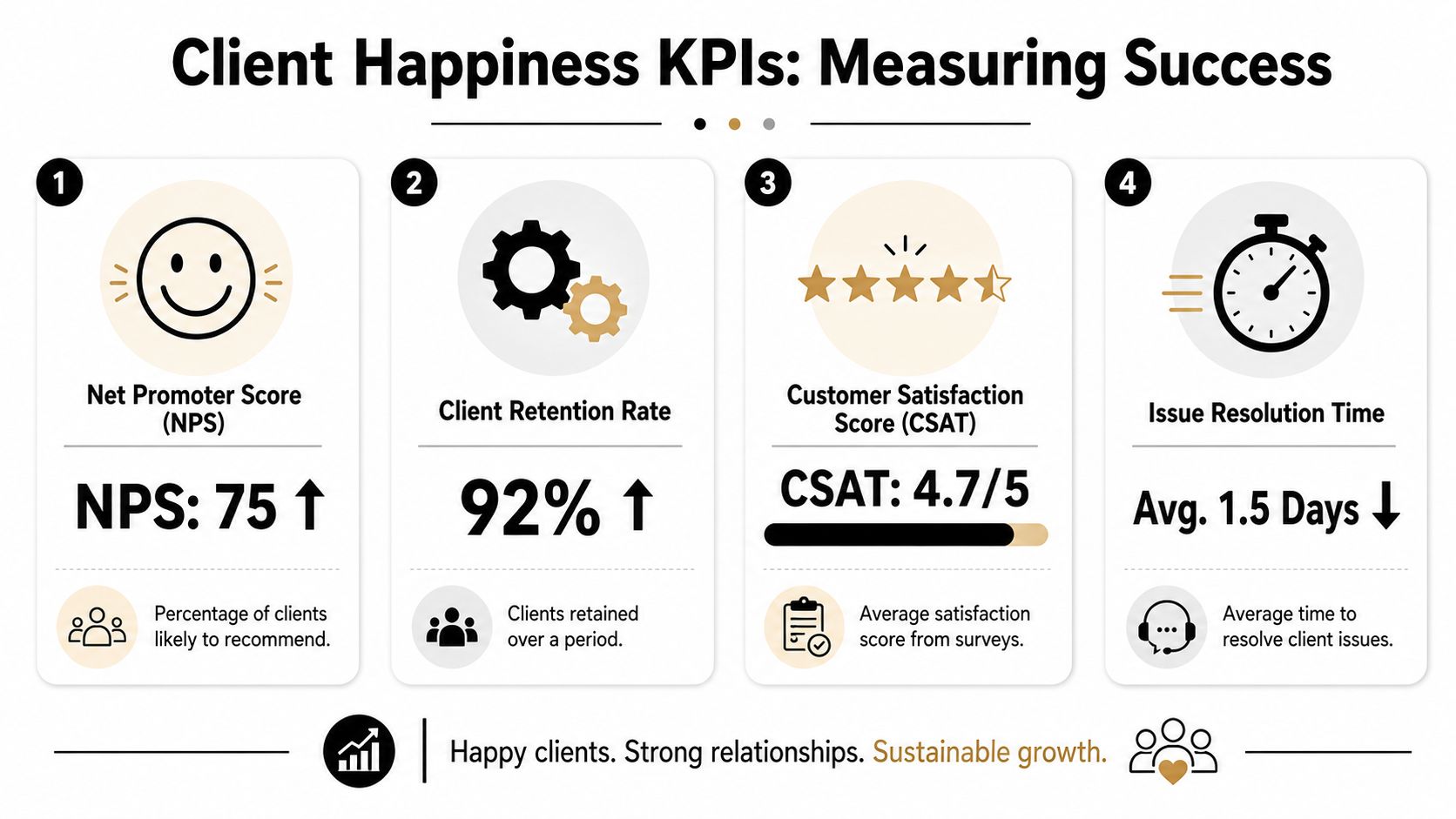
This section is not about chasing fluffy “customer satisfaction” scores. It is about catching trust problems early enough to protect margin, prevent scope creep, and tighten your process. The right KPIs show you where clients got confused, where your team got loose, and where your systems need better guardrails.
Track the signals that expose friction
Start with a short scorecard your PM can update without a meeting. If a metric takes too much work to track, you will stop tracking it.
Unbilled change work
Extra work completed before a signed approval means your field team is making promises your process did not authorize.Time to final payment
A slow close usually points to punch list drift, billing confusion, or unresolved client concerns.Positive reviews per completed project
This shows whether a finished job turned into visible proof of a good experience.Referrals per completed project
Referrals tell you the client trusted your company enough to put their name on it.Issue resolution time
Measure how long it takes from client complaint to documented resolution. Long gaps usually mean nobody owns the problem.Change order approval speed
If approvals stall, your scope documents are unclear or your sales handoff was sloppy.
Build a one-page scorecard
Keep it simple. One page. One owner. Monthly review.
| KPI | What it tells you | What bad results usually mean |
|---|---|---|
| Unbilled change work | Whether your scope control holds in the field | Team members are saying yes before paperwork is signed |
| Time to final payment | Whether your closeout process is clean | Punch items, invoices, or expectations are still unresolved |
| Review rate | Whether clients felt good enough to say it publicly | Weak finish, weak follow-up, or no review request |
| Referral rate | Whether trust survived the stress of the remodel | Good craftsmanship, but a stressful process |
| Resolution time | Whether your team handles concerns fast | No clear owner, poor follow-up, or weak CRM tasking |
| Change order approval speed | Whether clients understand added cost and time | Vague scope descriptions or poor proposal formatting |
Do not stop at the number. Tie each KPI to a system.
If issue resolution time is too long, set up CRM automation that creates a task, assigns an owner, and sends the client a confirmation message the same day. If unbilled change work keeps showing up, add a contract clause and a field rule that no extra work starts without written approval. If reviews are weak, use a closeout workflow that triggers the review request as soon as the punch list is marked complete.
That is how trust becomes operational. Scripts, clauses, reminders, ownership.
Ask one hard question every month: Where did the expectation break?
Not who messed up. Where did the process allow confusion?
That question gets you to the fix faster. Maybe the estimate left too much open to interpretation. Maybe the superintendent gave a verbal yes. Maybe the client never saw the revised schedule in writing. Whatever the answer, you can tighten it.
Good remodelers do not win on craftsmanship alone. They win by building a process that makes clients feel informed, protected, and clear on what happens next.
If you want help building the systems behind that, from CRM automation and missed-call text-back to lead flow, local visibility, and stronger sales process, talk to Constructo Marketing. They work with remodelers who want more than leads. They want a business that runs cleaner, closes better, and creates a better client experience from first call to final review.