


You're probably doing some marketing already. A few Facebook posts. A website refresh from a year ago. Maybe some Google Ads that sent clicks but not many real appointments. Maybe your office manager answers some calls, misses others, and follows up when there's time.
That's the problem.
Most remodeling companies don't have a marketing problem. They have a system problem. The parts don't connect. The website doesn't help the ads. The ads don't match the service area. The Google Business Profile isn't tied to a review process. Leads come in, then sit there.
Marketing for remodeling contractors gets a lot easier when you stop treating it like a bag of random tactics and start treating it like a jobsite. Every part has a place. Every part has to connect. If the framing is off, the cabinets won't fit. If the marketing system is off, the leads won't turn into jobs.
Table of Contents
- Why Your Marketing Feels Broken and How to Fix It
- The Blueprint Who You Build For and Why It Matters
- Your Digital Showroom A Website That Converts Visitors to Leads
- Be the First Call Dominating Local Search and Google Maps
- Capture Ready to Buy Homeowners with Google Ads
- The Command Center Automating Your Lead Capture and Follow Up
- The Scoreboard Measuring Real Results and Scaling Your System
Why Your Marketing Feels Broken and How to Fix It
Most remodelers don't fail at marketing because they're lazy. They fail because they were sold separate parts instead of a working machine.
A website company sells a pretty site. An ad company sells clicks. Somebody else says you need social media every day. None of those things are automatically wrong. They just don't help much when they live alone.
That approach made more sense when homeowners relied more on referrals and offline research. But 78% of homeowners research contractors online before contacting anyone, and 63% of remodeling leads originate from mobile devices, according to remodeling marketing statistics compiled here. If your online presence is patchy, slow, or confusing, you're losing before the phone rings.
Practical rule: If your marketing pieces don't hand the homeowner from one step to the next, you don't have a system. You have clutter.
Consider this:
- SEO is the sign on the road.
- Google Ads is the fast lane for people ready now.
- Your website is the showroom.
- Your CRM is the front desk and clipboard.
- Your follow-up is the salesperson who calls back.
If one part breaks, the whole machine gets weak.
A lot of contractors keep asking, “Which one tactic works best?” That's the wrong question. The better question is, “Where is the leak?” Sometimes the leak is traffic. Sometimes it's trust. Sometimes it's follow-up. Very often, it's all three.
The fix is simpler than the jargon makes it sound. Build one connected system. Pick the jobs you want. Show the right work. Get found locally. send paid traffic to the right pages. Catch every lead. Follow up fast. Measure real numbers, not vanity.
That's how marketing for remodeling contractors starts feeling less like guesswork and more like production.
The Blueprint Who You Build For and Why It Matters
A good remodel starts before demo. Marketing works the same way. If you don't know who you want, what makes you different, and where you want to work, every dollar gets spread too thin.
The market is big enough to tempt you into chasing everything. But broad positioning usually creates weak marketing. The U.S. residential remodeling market was valued at USD 527.36 billion in 2023 and is projected to grow, while 91% of consumers read online reviews, 40% consult directories, 56% seek pricing info online, and 40% decide on just one local contractor after digital vetting, based on this residential remodeling market analysis. In a crowded space, “we do great work” is not a strategy.
Pick the homeowner you actually want
Don't describe your customer like this: homeowners in our area.
That says nothing.
Describe them like you'd describe a project. Older home in an established neighborhood. Busy family. Wants a kitchen that fixes layout, storage, and flow. Budget matches your process. Values design guidance. Doesn't want handyman pricing.
A few examples of better targeting:
- Design-build kitchen clients who want planning help, not just labor
- Bathroom remodel clients in higher-value neighborhoods where trust and cleanliness matter
- Addition clients who need a contractor strong in communication and project management
When you know the homeowner, your message gets sharper fast.
Say what makes you different in plain English
Your differentiator should be easy enough for a kid to understand.
Bad example: “We provide exceptional craftsmanship and customer service.”
Good example: “We help families redesign outdated kitchens so they work better every day, and we guide the project from design to final walk-through.”
That's clearer. It tells people what you do, for whom, and how.
Homeowners don't reward vague branding. They reward clarity.
A strong position often comes from one of these angles:
| Angle | What it sounds like |
|---|---|
| Process | Design-build, guided selections, clear communication |
| Project type | Kitchens, baths, additions, outdoor living |
| Homeowner type | Busy professionals, aging-in-place clients, historic homes |
| Area | Specific towns, neighborhoods, or a tight service radius |
Draw your service map smaller
A lot of contractors think a bigger map means more opportunity. Usually it means weaker focus.
If you work everywhere, your reviews, project photos, local pages, and ad targeting get muddy. A tighter service area helps your Google presence feel more relevant and helps your crews stay efficient too. That's not just a marketing win. That's an operations win.
Your blueprint should answer three simple questions:
- Who do we want?
- Why should they choose us?
- Where do we want to build?
If you can't answer those in one short paragraph, don't spend more on ads yet.
Your Digital Showroom A Website That Converts Visitors to Leads
Your website shouldn't act like an online brochure. It should act like your best salesperson on a Tuesday night when nobody in the office is answering the phone.
Here's the visual most contractors need to keep in mind.
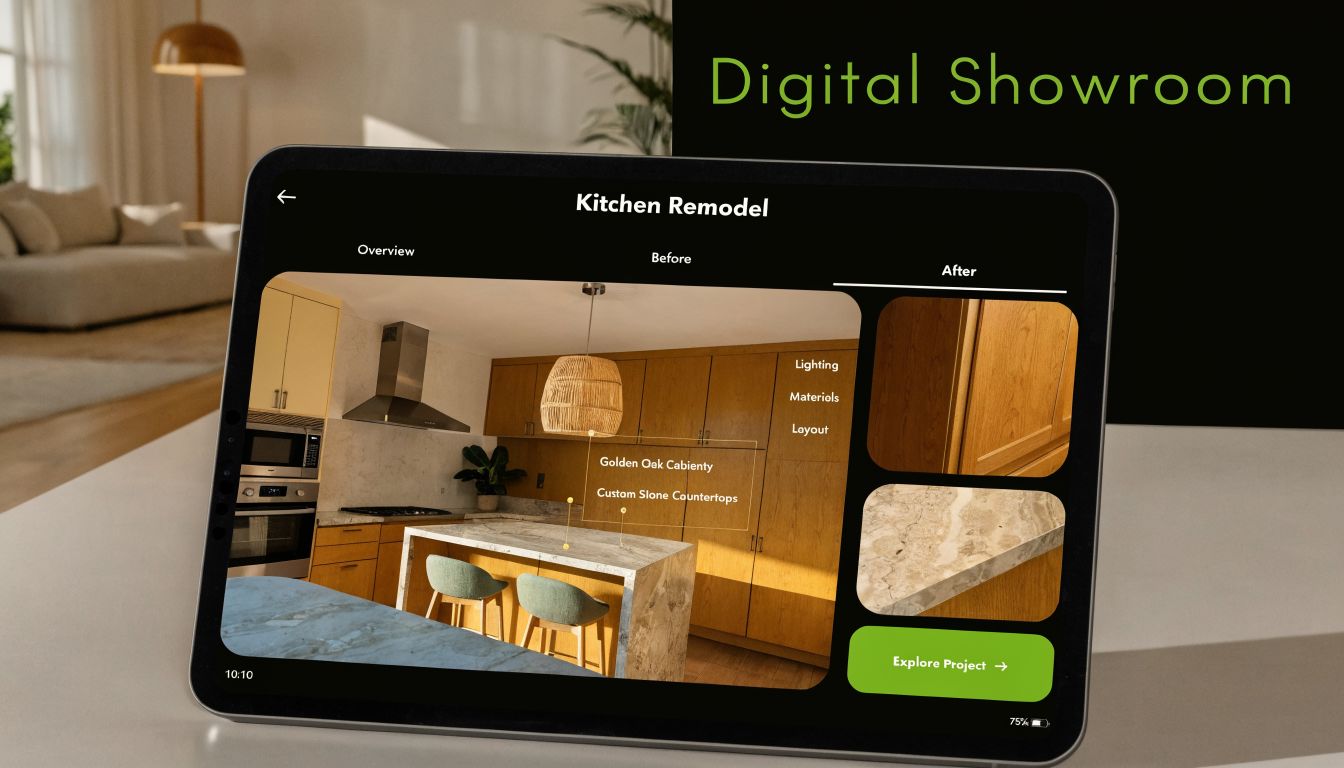
A good website acts like a sales rep
A homeowner lands on your site after searching, clicking an ad, or checking your Google listing. They are not thinking about your logo. They're asking fast questions in their head.
Do these people do the kind of work I want?
Can I trust them in my house?
Do they work in my area?
What happens if I contact them?
A weak website makes the visitor work too hard. The menu is cluttered. The photos are old. The service pages are vague. The contact form is buried. It might look “nice,” but it doesn't move anyone forward.
A strong website feels like a clean showroom. It guides the visitor room by room. It shows the best work first. It answers basic objections. It gives a clear next step. If you want a deeper breakdown of that idea, this guide on turning your website into your best salesman is a useful companion.
What your website must include
The simple version is this. Show proof, build trust, make action easy.
- Project galleries that feel real. Use clear before-and-after photos, finished-room images, and project writeups that explain what changed.
- Service pages with a job to do. Don't lump kitchens, bathrooms, additions, and whole-home remodels into one generic page.
- Reviews and testimonials near decision points. Don't hide them on one lonely page.
- Easy contact paths. Phone, short form, and clear calls to action.
- Local relevance. Mention the towns and neighborhoods you serve naturally.
One good extra move is to publish planning content homeowners already need. A resource like smart remodeling planning for homeowners helps show the kind of practical guidance serious prospects look for before they ever reach out.
A pretty website that doesn't guide action is like a showroom with the lights on and nobody at the front desk.
There's also a difference between traffic and fit. You don't need everybody. You need the right homeowners to feel, within seconds, that they found the right company.
That means fewer stock phrases and more specifics. Say what kind of remodels you take on. Show the level of finish. Explain how your process works. Tell them what the first conversation looks like. Calm people down.
Because that's really what a high-converting website does. It reduces uncertainty.
Be the First Call Dominating Local Search and Google Maps
When someone types “kitchen remodeler near me,” they aren't asking the internet for a lecture. They want a short list they can trust.
That's what local SEO is about. Not tricks. Not stuffing city names everywhere. It's about making Google confident that you are a real remodeling company, in a real place, doing real work for real homeowners nearby.
This matters most in the map results and local listings.
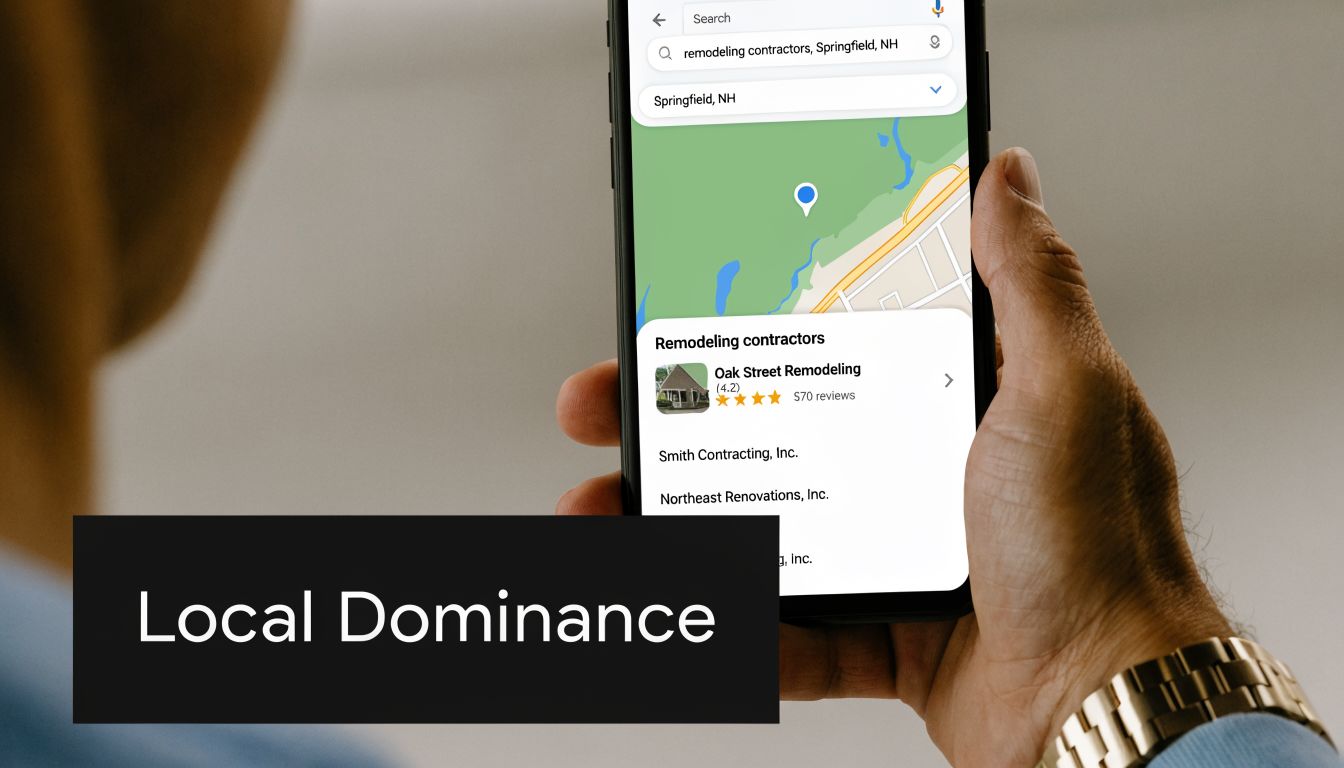
Your Google Business Profile is street frontage
If your website is the showroom, your Google Business Profile is the sign on Main Street.
A neglected profile sends bad signals. Few photos. Incomplete services. Old reviews. No recent activity. That doesn't mean you're a bad remodeler. It means you look inactive.
A strong profile usually includes:
- Complete business details so Google and homeowners understand what you do
- Fresh project photos that show the kind of remodels you want more of
- Consistent review generation so trust keeps building
- Service descriptions that match the work you want
- Regular attention instead of setting it once and forgetting it
For remodelers who want a hands-on checklist, this Google Business Profile optimization checklist for remodelers is a practical place to start.
A useful way to think about local visibility is to compare it to how specialty trades present niche work. This example of Van Dyke Outdoors building services shows how focused service intent and clear local relevance can make an offer easier to understand.
Local pages should sound local
A lot of contractors build “city pages” by swapping in a town name and calling it done. Google is smarter than that, and homeowners are too.
A better local page sounds like a company that works there. It mentions project types common to the area. It shows photos from nearby jobs. It speaks to the housing stock and homeowner concerns in that market.
Here's a simple comparison:
| Weak local page | Strong local page |
|---|---|
| Generic paragraph with city swapped in | Specific language about neighborhoods and project types |
| Same photos used everywhere | Local project photos when possible |
| Vague service list | Clear focus on target remodels |
| No trust signals | Reviews, process, and local examples |
Google Maps visibility is earned by relevance and proof, not by clever wording alone.
Good local SEO is slow compared with ads. That's normal. But it compounds. Every review, photo, and local project page adds another trust signal. Over time, that makes your business easier to find and easier to choose.
Capture Ready to Buy Homeowners with Google Ads
SEO is the long game. Google Ads is the fast lane.
That doesn't mean Google Ads is easy money. It means it can put you in front of homeowners who already know what they want and are searching for it right now. Used well, it's one of the clearest ways to drive lead flow for high-value projects. Used badly, it becomes an expensive lesson.
The difference usually comes down to focus.
Broad ads waste money
A lot of remodeling companies run ads like this. One campaign. All services mixed together. Generic keywords. Traffic goes to the homepage.
That setup sounds simple. It's also where budgets get chewed up.
For remodeling ads, structured campaigns by project type, dedicated landing pages that convert at 15-25% versus 2-5% for a homepage, and a cost-per-booked-job benchmark of $1,500-$3,000 for $75K+ projects can support 3-5x ROI in competitive markets. The lesson isn't “run more ads.” The lesson is “build tighter campaigns.”
Separate kitchen from bath. Separate additions from whole-home remodels. Match the ad to the page. Match the page to the homeowner's intent.
If you want a plain-English overview of how paid search works in this space, pay-per-click advertising for contractors breaks it down well.
Clicks are not the goal
Contractors get in trouble when they chase cheap clicks instead of qualified appointments.
A better way to judge ads is by asking:
- Did this keyword reflect real buying intent?
- Did the landing page match the search?
- Did the lead fit our project size and service area?
- Did we respond fast enough to turn interest into a conversation?
A homepage is usually too general for paid traffic. A kitchen ad should land on a kitchen page. A bathroom ad should land on a bathroom page. The page should show the right photos, the right process, the right service area, and one clear next step.
Here's the basic ad logic that tends to work:
- Choose the right service line. Start with your most profitable remodel category.
- Use high-intent search terms. Focus on homeowners looking for a contractor, not just browsing ideas.
- Send them to a matching page. Don't make them hunt.
- Screen for fit. Use the page copy and form to attract serious prospects.
- Track booked consultations, not just form fills.
Google Ads can absolutely work in marketing for remodeling contractors. But only when the ad account, landing page, and follow-up process are built as one chain. If one link is weak, the whole thing underperforms.
The Command Center Automating Your Lead Capture and Follow Up
A homeowner submits your form at 12:14 p.m. By 12:20, they have already contacted two other contractors.
That small window decides a lot of jobs.
Lead generation gets all the attention, but follow-up is where the system either holds together or falls apart. If the website, call tracking, ads, and inbox all feed into different places, leads get missed, callbacks get delayed, and nobody has a clean view of what happened. Contractors feel this as “marketing isn't working” when the underlying problem is a broken handoff.
That is why I call the CRM the command center. It is the box in the middle of the machine. Every lead should land there first. Every call, form, text, voicemail, and appointment should be visible there. If one part of marketing brings in demand and another part handles sales, the command center is the wiring that keeps both sides connected.
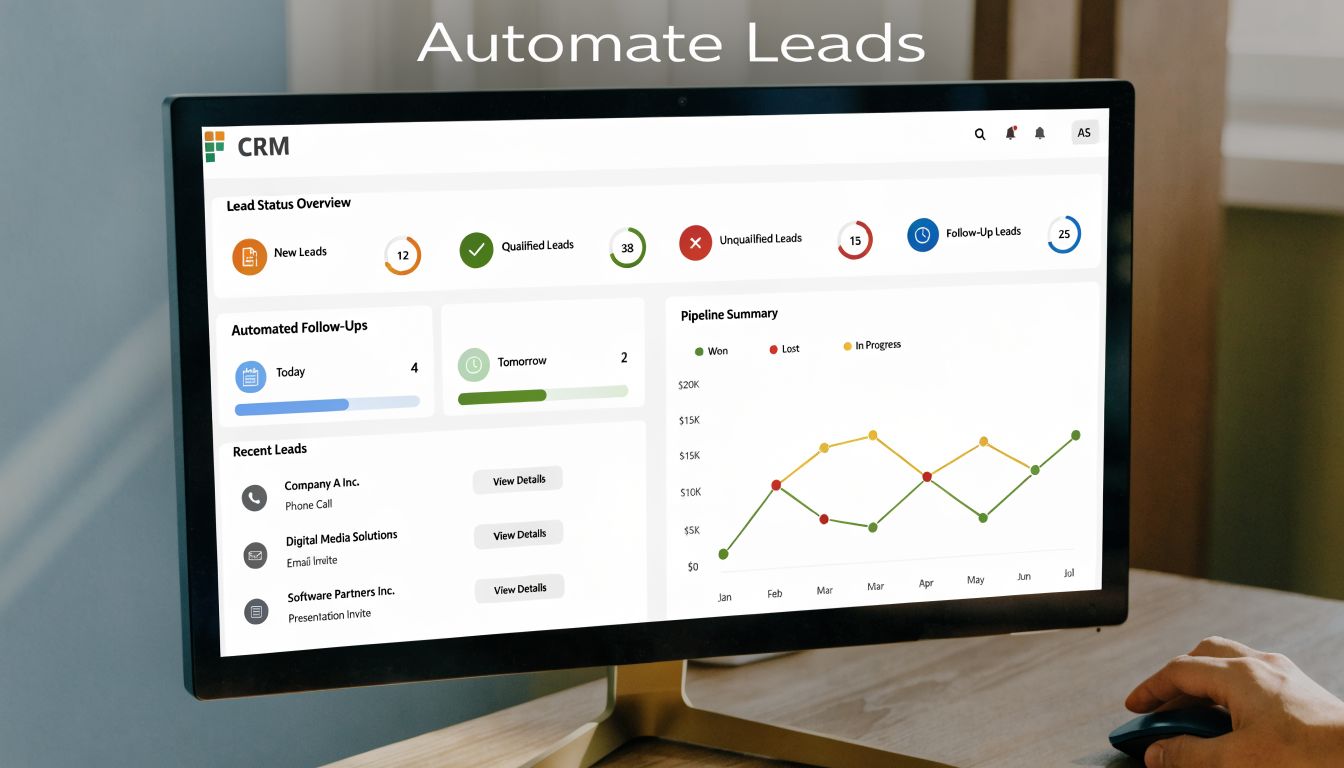
Speed matters because homeowners judge the whole company by the first response
According to this remodeling marketing guide, 78% of homeowners hire the first contractor who responds, a 5-minute response time converts 8 times higher than slower follow-ups, and most contractors lose up to 80% of their leads due to poor follow-up.
Those numbers are harsh, but the logic is simple. A slow reply feels like future frustration. Homeowners assume the way you handle the first inquiry is the way you will handle change orders, schedule updates, and punch-list items later.
A good command center removes that doubt fast.
What the command center should handle without anyone touching it
Automation is not there to replace your office manager or salesperson. It is there to cover the minutes and hours when people are busy, on a jobsite, driving, or off the clock.
At a minimum, the system should:
- Capture every lead in one place from forms, calls, Google lead forms, and paid campaigns
- Send an instant confirmation so the homeowner knows the request came through
- Text back missed calls when nobody can answer live
- Tag the lead source and service type so you know where it came from and what they want
- Assign a clear status like new, contacted, qualified, booked, or closed
- Trigger follow-up reminders so no prospect sits untouched for days
- Store every conversation so the next person who picks it up has context
Here is a simple version of that workflow:
| Lead event | What should happen |
|---|---|
| Form submitted | Instant text or email confirmation |
| Call missed | Automatic text-back |
| New lead created | Team notification |
| No reply after first contact | Timed follow-up reminder |
| Consultation booked | Calendar and pipeline update |
The first job of automation is making sure no good lead gets forgotten.
The trade-off is straightforward. A simple setup is easier to manage, but it may only cover forms and missed calls. A more connected setup can route leads by service, trigger different follow-up sequences, and report by source, but it takes more planning up front. That planning is worth it if you want to know which campaigns produce booked consultations instead of just names in a spreadsheet.
This is also why isolated tools create so much drag. One platform runs ads. Another captures forms. Another logs calls. Another sends emails. Another tracks appointments. Every handoff adds a chance for delay or confusion. Put those parts in one system and the machine runs cleaner.
A lot of remodeling companies do not need more leads first. They need tighter plumbing between lead capture, response, qualification, and booking. Fix that, and the marketing you already paid for starts producing more appointments.
The Scoreboard Measuring Real Results and Scaling Your System
Monday morning. The phone rang all week, the website got traffic, the ad platform shows clicks, and everyone feels busy. Then you ask a simple question. Which channel produced qualified leads that turned into signed jobs? If nobody can answer fast, the system is not under control.
You wouldn't trust a framer who never checks level. Marketing needs the same discipline.
Start with the math
Growth gets clearer when you work backward from the work you want.
Based on this remodeler revenue roadmap, a $2.5M revenue goal with an $85K average project requires 30 jobs a year. At a 33% close rate on qualified leads, that means 90 qualified leads annually, or about 7-8 per month. The same source says firms that track this math instead of vanity metrics often see 20-30% lead volume growth in 3-6 months.
That example matters because it forces precision. “We need more leads” is too loose to manage. “We need 8 qualified leads a month to support our revenue target” gives you something to build around.
If your average job size or close rate is different, the process stays the same. Start with revenue. Back into jobs. Back into qualified leads.
What to watch every week
Keep the scoreboard short enough that your team will use it. Five numbers is usually enough.
Track these:
- Qualified leads. People who fit your service, area, budget range, and project type.
- Booked appointments. A direct check on response speed and front-end sales discipline.
- Lead source. The place the opportunity started, such as Google Maps, organic search, ads, or referrals.
- Cost per qualified lead. A cleaner way to judge spend than raw click cost.
- Closed jobs by source. The number that connects marketing to revenue.
Here's a practical layout:
| Metric | Why it matters |
|---|---|
| Qualified leads | Measures fit, not noise |
| Booked appointments | Shows whether leads are turning into real sales conversations |
| Cost per qualified lead | Helps compare channels on lead quality, not volume alone |
| Closed jobs | Ties effort to signed work |
| Revenue by source | Shows what deserves more budget |
One warning here. Cheap leads can be expensive if they waste estimator time. I've seen contractors pause SEO because ads produced leads faster, then realize six months later that the cheaper booked jobs were coming from organic search and Maps all along. Speed matters. So does margin. The scoreboard helps you judge both at the same time.
The whole machine either works or breaks based on these critical functions. Your positioning attracts the right homeowner. The website turns interest into inquiries. SEO and Google Maps keep you visible. Ads add demand on top. The CRM keeps leads from leaking out. The scoreboard shows which part needs adjustment, like checking each tool in the shop instead of guessing why the cut is off.
Marketing for remodeling contractors works best as one connected system. Separate tactics create partial results and muddy reporting. A joined-up setup gives you a clear path from click to call to consultation to contract.
If you want outside help building and managing that kind of connected system, Constructo Marketing works with remodeling contractors on local visibility, lead handling, and KPI tracking for high-value residential projects.