


Your Website Is Your Best Salesperson. Is It Doing Its Job?
Think about your favorite tool on the jobsite. It does one simple thing well, every time. A good website should work like that. It should show your work, answer basic questions, and help the right homeowner call you without you chasing them around.
Too many remodeler websites are like a rusty hammer. They exist, but they don't help much. They look nice enough, then just sit there while homeowners bounce, forget your name, or call the company with the clearer message.
That matters in a big market. The U.S. residential remodeling market hit USD 527.36 billion in 2023 and is projected to reach USD 716.18 billion by 2030. There's a lot of work out there, but homeowners still have to find and trust you first.
If you're helping clients with a big project like planning your kitchen remodel, your website should make that decision feel easy and safe.
Let's get to it. Here are 7 top websites for remodelers, plus the simple lesson each one teaches.
Table of Contents
- 1. Constructo Marketing
- 2. Builder Funnel
- 3. Contractor Growth Network
- 4. Blue Corona
- 5. Contractor Gorilla
- 6. Webrunner Media
- 7. Footbridge Media
- Top 7 Remodeler Website Providers: Comparison
- Your Turn Build a Website That Brings You Great Jobs
1. Constructo Marketing
Want a website that helps you book larger remodeling jobs instead of collecting random tire-kicker calls? Constructo Marketing is built for remodelers who want kitchens, additions, baths, and outdoor living projects from serious homeowners.
That focus matters. A remodeling company needs a different website strategy than a handyman, roofer, or general home services shop. The pages need to show trust, process, craftsmanship, and project fit fast. If a homeowner cannot tell what you do, who you serve, and how to contact you in a few seconds, they leave.
Constructo builds websites as part of a full lead system. The site, local SEO, Google Ads, and CRM are connected so you can see where leads come from and what happens after the call or form fill. That matters because getting a lead is only half the job. The other half is not losing it. If you want to see how that system fits into a bigger lead generation plan for contractors, start there.
Why it works
A good remodeling website should guide people clearly. It should show the right services, the right photos, the right proof, and a clear next step. Constructo gets that part right.
Their websites usually put strong project images, clear service pages, and visible calls to action front and center. That works for a simple reason. Homeowners act a lot like kids in a grocery store. If the signs are clear, they know where to go. If everything is messy, they give up.
Constructo also connects the website to follow-up tools, including a whitelabeled CRM and missed-call text-back automation. That fixes a problem many remodelers create for themselves. You miss one call while you're on a jobsite, and that lead often calls the next company on the list.
A website without follow-up is a broken bucket. You keep pouring leads in, and they keep leaking out.
I also like that Constructo covers the parts many agencies skip. Plenty of firms can make pages look nice. Fewer can help you set up the plumbing behind the walls so inquiries get tracked, answered, and moved toward an estimate. Their guide on how to design a remodeling website that converts visitors into leads explains that approach well.
Another smart choice is their one-remodeler-per-market model. If your agency works with your direct competitor across town, you are both paying to fight over the same clicks and calls. That is dumb. Constructo avoids that conflict.
Best fit
Constructo is a strong fit for design-build firms and established remodeling companies that care about lead quality, job size, and close rate. If you want a cheap brochure site, look elsewhere. If you want a site tied to real sales follow-up, this is the kind of setup worth paying for.
Here's the plain-English version:
- Main strength: Website, SEO, Google Ads, and CRM are handled together.
- Smart advantage: Market exclusivity helps protect your local pipeline.
- Owner benefit: You get coaching, reporting, and clearer numbers, not just new page designs.
- Watch-out: Pricing is not public, and they may already serve your market.
Client feedback points to website quality, responsiveness, and better visibility in search. That is what you want to hear. Pretty design is nice. Better jobs are better.
2. Builder Funnel

Builder Funnel is a strong choice if you want your website to act like a teacher before it acts like a closer. Their style leans into content, authority, and long-term inbound marketing for remodelers and custom builders.
That works well for bigger-ticket projects. Homeowners spending real money usually don't call after seeing one pretty picture. They read, compare, and think. Builder Funnel builds websites that support that longer decision path.
What Builder Funnel gets right
Here's the biggest proof point. In a Builder Funnel case study, a remodeler focused on $75K to $300K kitchen and bath projects reached a 4.2x ROI on digital marketing spend within 18 months. That same case study says the company grew from 12 qualified leads per month to 58 per month, and digital-channel revenue went from $180K annually to $1.47M in closed deals.
That didn't happen because of one magic button. It came from local SEO, Google Ads, and a conversion-focused website redesign working together. This is the key takeaway. Good websites for remodelers don't work alone. They need traffic and follow-up.
If you're trying to understand the search side better, this guide on SEO for remodelers explains the basics in plain English.
When a homeowner lands on your site, they should know three things fast. What you do, where you do it, and why they should trust you.
Simple lesson
Builder Funnel is a good fit if you're willing to keep feeding the fire with content, offers, and ongoing SEO. If you want a one-and-done site, it's not the best match.
I'd recommend it when your sales process is more consultative and you want your site to warm people up before the call.
- Best strength: Strong remodeler-specific messaging and inbound content strategy.
- Good for: Firms that want authority-building, not just pretty design.
- Watch-out: It's usually a bigger commitment in money, time, and content production.
3. Contractor Growth Network
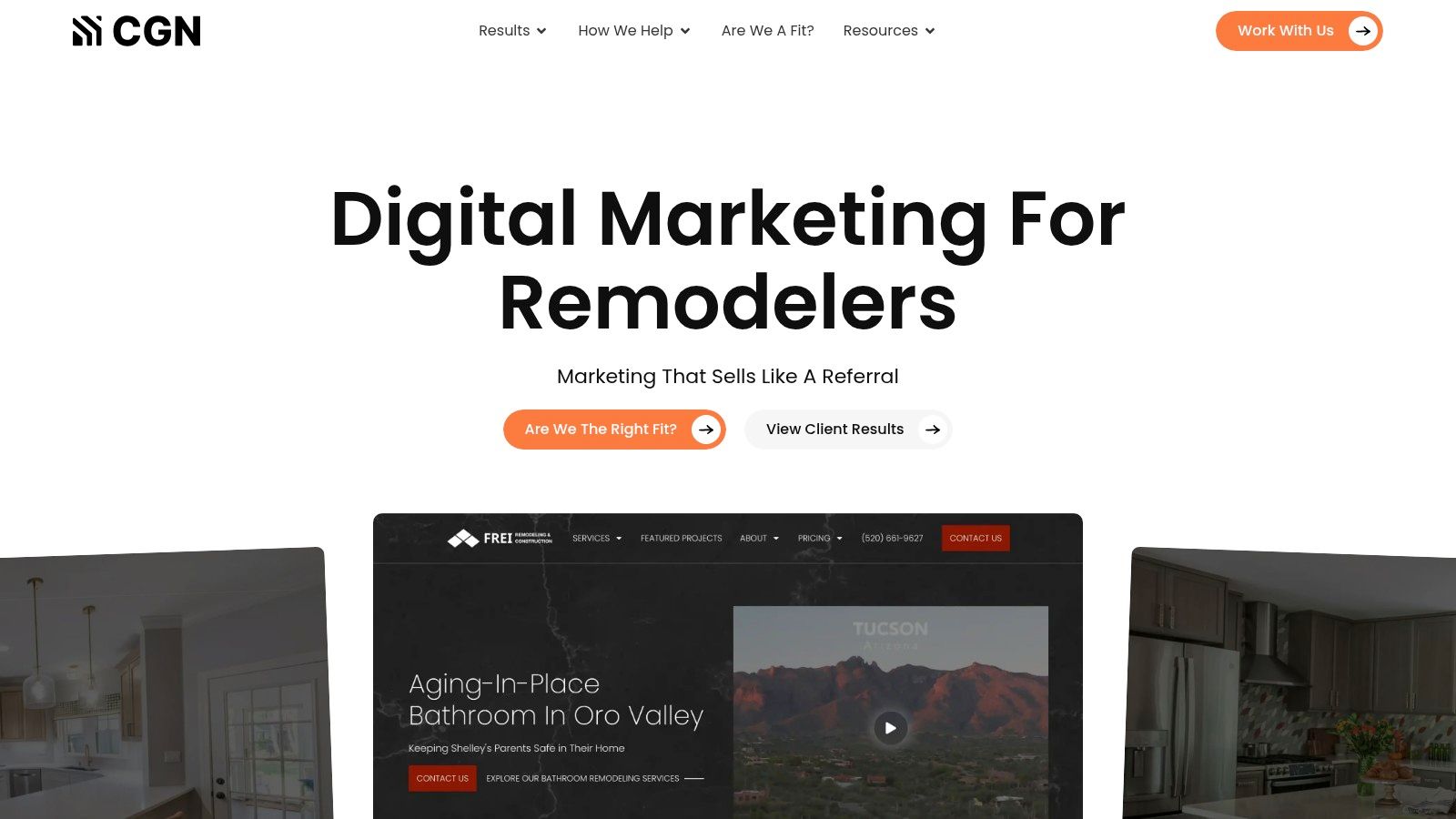
Contractor Growth Network, often called CGN, is good at structure. That may sound boring, but structure is what helps a website rank, qualify leads, and guide a homeowner to the next step.
A website's structure is like framing a house. Before cabinets and tile, you need walls in the right place. CGN pays attention to the bones of the site. Service pages, location pages, galleries, and content all have a job.
What stands out
CGN is a good choice if you care about organic traffic and want your website built around search from day one. That means pages for specific services, pages for specific cities, and content that speaks to the kinds of projects you want.
A lot of remodelers miss this. They build one “Services” page and hope Google figures it out. Google is more like a kindergartner than a genius. You have to label the toy box clearly. Kitchen remodeling goes here. Home additions go here. Bath remodels go here. Town pages go here.
If lead flow is the goal, their approach lines up well with this plain-English guide on lead generation for contractors.
Why this matters
The market doesn't move in a straight line, so reading demand matters too. Harvard's Joint Center for Housing Studies uses the Leading Indicator of Remodeling Activity as a short-term outlook for home improvement and repair spending, while the RMI tracks remodeler sentiment. If you know demand is heating up or cooling off, you can adjust your site offers, ad spend, and follow-up pace.
Key lesson: A good website isn't just built for today. It should match the kind of demand your market is likely to produce next.
CGN is best for remodelers who understand that SEO takes time and authority has to be built. If you're patient and want strong site architecture, it's a solid option.
- Best strength: Service-area SEO structure for remodelers.
- Good for: High-end interior remodelers and design-build firms.
- Watch-out: Best results usually need ongoing SEO, not just a website launch.
4. Blue Corona
Blue Corona is the big managed-solution choice on this list. If you want one company handling website design, hosting, analytics, call tracking, SEO, and paid media, it fits that lane well.
Some remodelers like that because they don't want to juggle five vendors. They want one dashboard, one team, and one place to ask, “Why did calls go up or down this month?”
Where Blue Corona helps
Blue Corona's strength is operational visibility. The website isn't treated as art on a wall. It's treated like a tool tied to reporting and performance management.
That's useful if you've ever had this problem. Your phone rings, but you don't know which campaign caused it. A lead form comes in, but you don't know whether the kitchen page, the ad, or the map listing did the heavy lifting. Blue Corona is built around untangling that.
For larger remodeling businesses, that kind of tracking becomes important as spend grows. It helps owners stop guessing and start seeing patterns.
Who should pick it
Choose Blue Corona if you want a full-service home-services marketing partner and you're comfortable with a managed program instead of a lightweight website build.
I wouldn't put it first for a small remodeler that only wants a simple site refresh. I would put it on the shortlist for firms that want serious reporting and broad channel support.
- Best strength: Managed website plus tracking and multi-channel support.
- Good for: Remodelers that want analytics and call tracking built in.
- Watch-out: It may be more system than a very small or price-sensitive company needs.
5. Contractor Gorilla
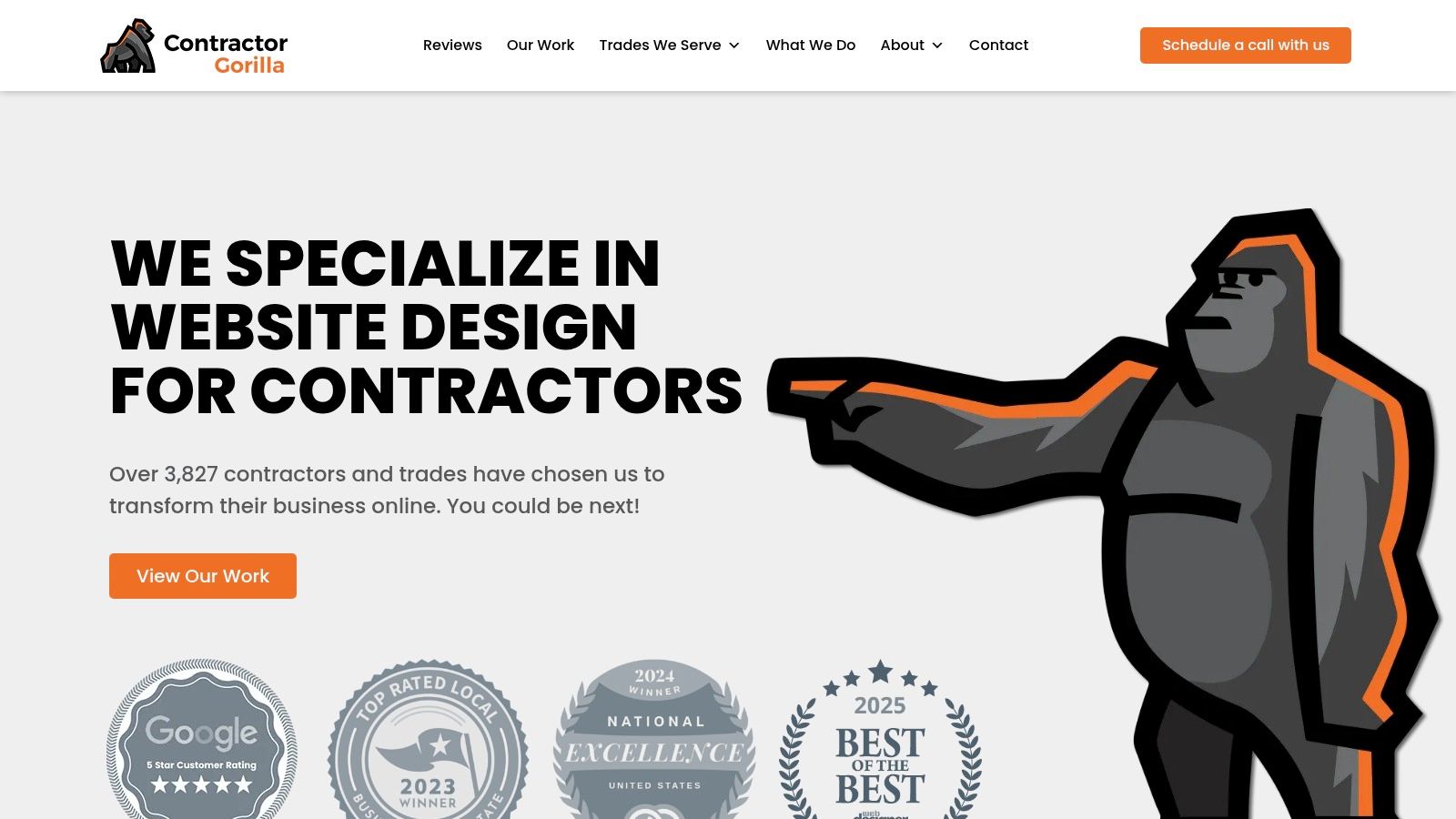
Contractor Gorilla is the branding-first contractor website option. If you need a cleaner look, clearer messaging, and a more professional first impression, it's worth a look.
Some remodelers don't need a giant marketing machine right away. They need to stop looking homemade. That's where a contractor-focused web design shop can help.
What makes it useful
Contractor Gorilla understands construction audiences, which saves time. You won't spend half the project explaining what a design-build firm does or why project galleries matter.
It also helps when branding and website work are bundled together. Your logo, colors, tone, and layout can all feel like one company instead of four different ideas taped together.
That matters more than people think. Homeowners make trust decisions fast. If your website looks polished and your work looks high-end, they assume your process is tighter too.
A sloppy website tells homeowners your jobs might be sloppy too, even if your field work is excellent.
Best use case
I like Contractor Gorilla for remodelers who need a contractor-first site and want help making the brand feel more buttoned up. It's a practical pick when your current site feels outdated, inconsistent, or generic.
- Best strength: Contractor-specific design and branding.
- Good for: Remodelers who want a cohesive presentation without starting from scratch.
- Watch-out: Make sure you confirm how deep the SEO and local landing-page strategy goes before signing.
6. Webrunner Media
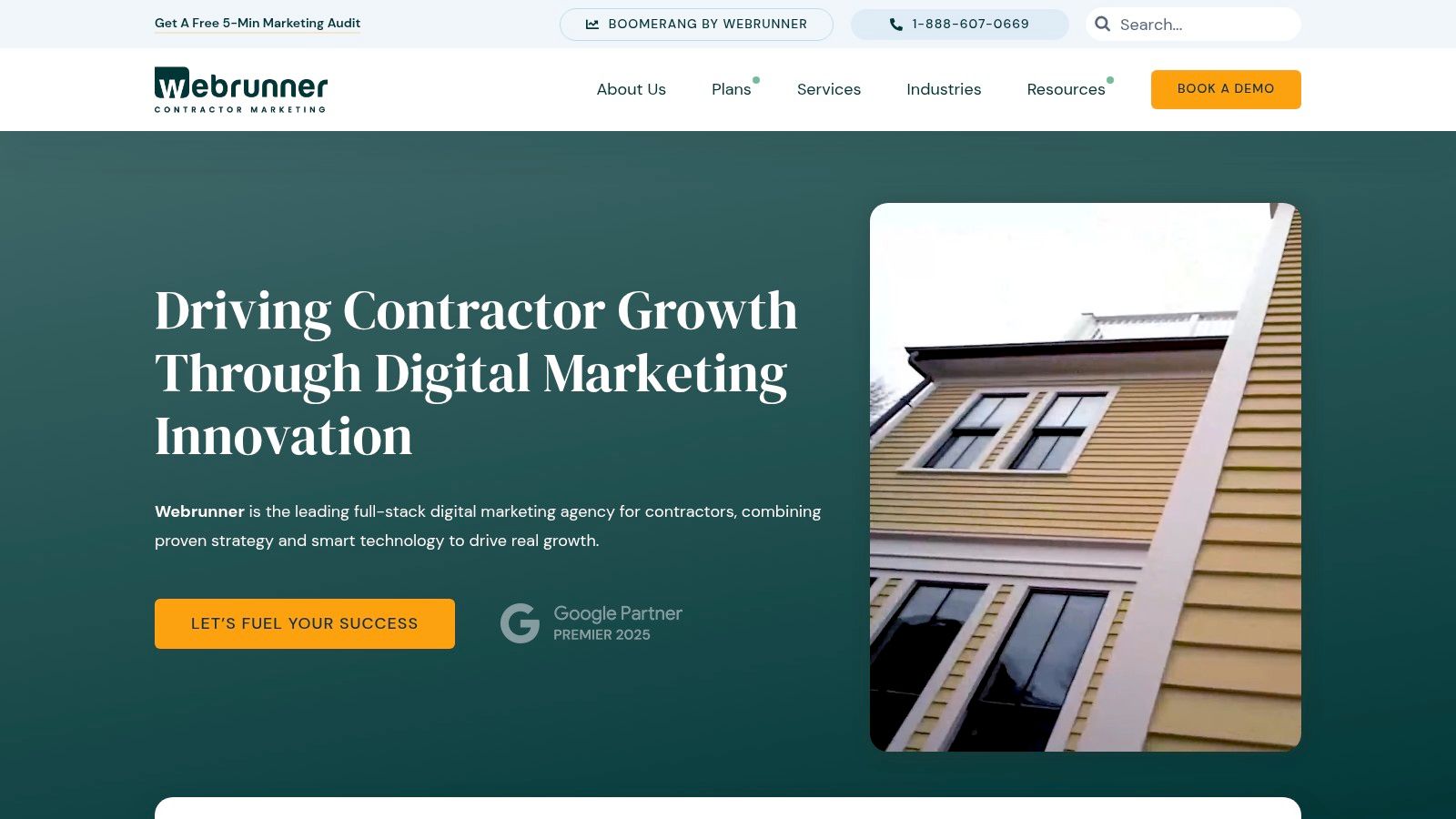
Webrunner Media makes the most sense when paid ads are already part of your growth plan. This is not just about building a website. It's about building landing pages, funnels, and automations that help ad traffic turn into booked appointments.
That's important because ad traffic is impatient. Organic visitors might poke around. Ad visitors are more like a kid looking for the right toy on the shelf. If they don't see it fast, they move on.
Why paid traffic needs the right site
A remodeler survey benchmark says top-quartile firms using digital lead gen platforms reported 27% year-over-year revenue growth versus 8% industry average. That same benchmark connects growth to technical website features like mobile-first design, strong Core Web Vitals, and embedded quote calculators.
That tells you something simple. Speed, clarity, and conversion tools matter. Websites for remodelers can't just be pretty. They have to catch the lead while the lead is hot.
Webrunner's angle fits that idea well. Fast pages. Better landing experiences. CRM and automation connected to the site. Good alignment for Google Ads campaigns.
Simple takeaway
Pick Webrunner Media if you already believe the website should be part of a funnel, not a stand-alone brochure. It's a good match for remodelers who want paid traffic and follow-up systems managed together.
- Best strength: Strong fit for ad-driven lead generation.
- Good for: Remodelers running Google Ads and wanting better landing-page performance.
- Watch-out: It's usually part of a broader program, not just a simple site build.
7. Footbridge Media
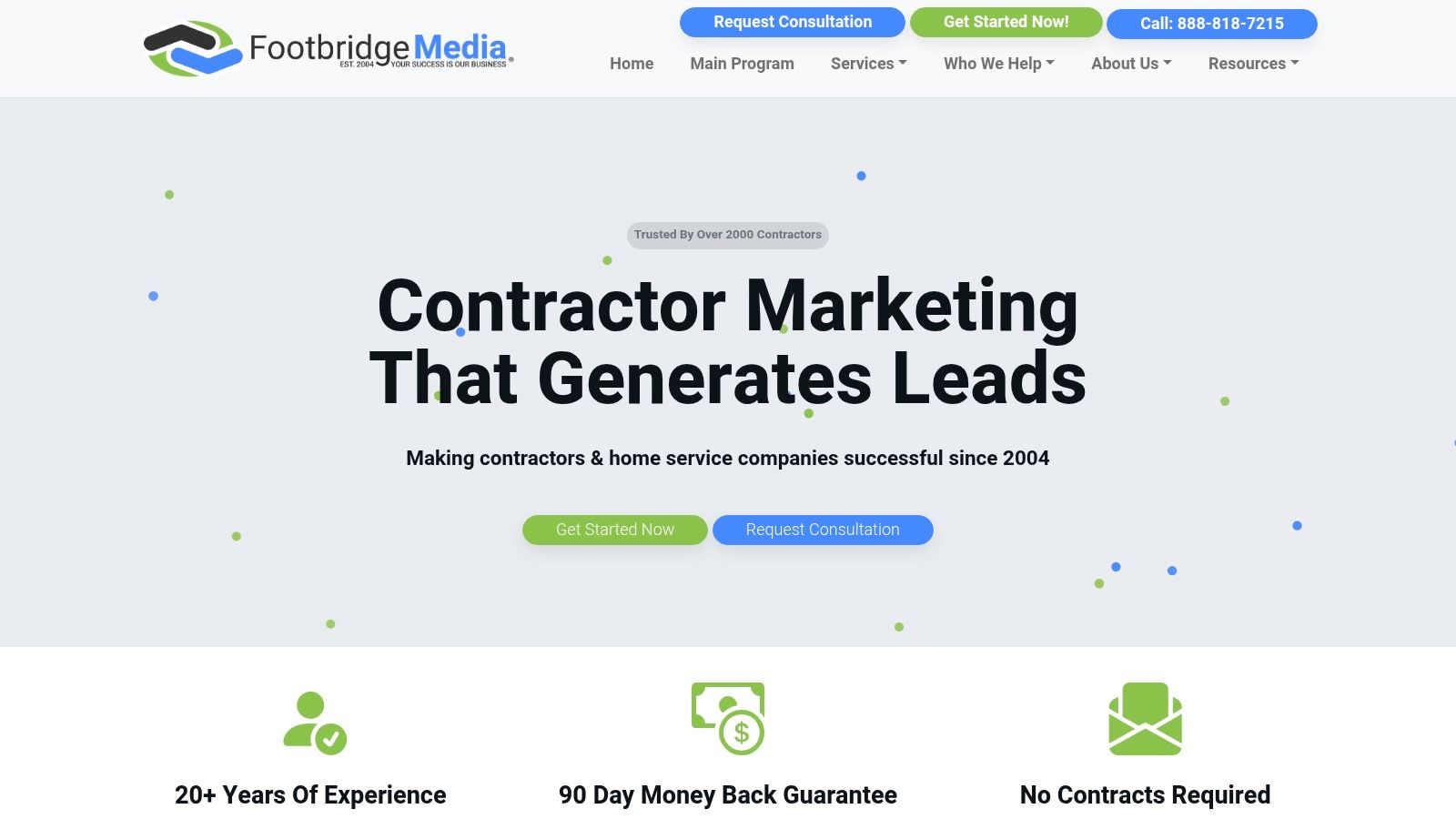
Footbridge Media is the practical budget-minded option. If you want a contractor website plus ongoing updates, local SEO basics, and a predictable monthly cost structure, this is the kind of service that appeals to smaller teams.
Not every remodeler needs a custom growth engine on day one. Sometimes you just need to replace the old site your nephew built in 2017 and get something clean, maintained, and contractor-friendly online.
Why some remodelers choose it
The biggest appeal is simplicity. The website is included in the ongoing service, and support is built in. That helps owners who don't want surprise costs or a giant upfront build fee.
It also works for remodelers who are still getting their marketing legs under them. A stable site, regular maintenance, and basic local visibility can be enough to get moving.
There's one caution. If you're a premium design-build firm going after high-ticket, design-led jobs, a templated feel can hold you back. High-end buyers notice polish.
Good choice or not
Footbridge Media is a good choice if your current website is weak and you want an easier, more affordable path to something better. It's not my first pick for firms trying to look like the top luxury remodeler in town.
- Best strength: Predictable monthly model with website and support together.
- Good for: Smaller contractors and remodelers upgrading from DIY sites.
- Watch-out: Premium firms may outgrow the design and strategy depth.
Top 7 Remodeler Website Providers: Comparison
Which provider fits the way you sell jobs?
Pick this the same way you pick tools for a punch list. A framing nailer and a finish nailer both drive nails, but they do different work. Website companies work the same way. Some are built for premium lead generation, some are built for content and SEO, and some are built to give you a decent site at a lower monthly cost.
Use the table below to match the provider to your goals, budget, and how much marketing help you want done for you.
| Provider | Implementation complexity | Resource requirements | Expected outcomes | Ideal use cases | Key advantages |
|---|---|---|---|---|---|
| Constructo Marketing | High, integrated Local+AI SEO, Ads, CRM | Moderate to high budget, market exclusivity per territory | Higher-value leads, stronger rankings in the near term, long-term growth systems | Remodelers pursuing $75K to $300K projects who want a systems-first partner | Market exclusivity, full lead-to-close system, CRM automation, coaching and community |
| Builder Funnel | Medium to high, site plus ongoing SEO, content, automation | Mid to upper monthly investment, ongoing content commitment | Steady inbound leads and stronger high-ticket project pipeline over time | Firms committed to ongoing content, SEO, and thought-leadership growth | Deep remodeler expertise, strong content process, clear messaging playbooks |
| Contractor Growth Network (CGN) | Medium, remodeler-focused site structure and SEO program | Proposal-based pricing, ongoing SEO and content needed for best results | Organic traffic growth and more qualified leads with clear progress markers | High-end interior remodelers and design-build firms seeking SEO-driven growth | Remodeler-specific structure, measurable SEO milestones, strong case studies |
| Blue Corona | High, full-service, multi-channel managed solution | Higher-investment engagements across SEO, PPC, analytics, and call tracking | All-inclusive, data-driven growth with call tracking and performance reporting | Firms wanting a managed, analytics-focused home-services solution | Scale, reporting systems, analytics, call tracking, proven home-services experience |
| Contractor Gorilla | Low to medium, contractor-focused web design with optional marketing | Custom proposals, variable marketing scope and depth | Cohesive branded websites that can convert well when paired with marketing | Contractors wanting fast contractor-first sites and bundled branding | Niche contractor focus, bundled branding and site options, faster delivery |
| Webrunner Media | Medium to high, sites built as part of paid funnels and automations | Proposal-based, often paired with ad spend and automation tools | Landing funnels built to increase booked appointments from paid traffic | Remodelers running paid ads who need funnel and automation alignment | Conversion-focused funnels, strong speed and UX focus, automation support |
| Footbridge Media | Low, subscription website plus marketing with templated builds | Low predictable monthly fee, no setup in many plans, dedicated consultant | Turnkey site with ongoing maintenance, basic SEO, review management | Smaller or budget-conscious contractors needing predictable upkeep | Clear pricing, ongoing updates and support, 90-day money-back guarantee |
Here's the plain-English version.
If you want a serious growth system, look hardest at Constructo Marketing, Builder Funnel, and CGN. If you want managed service and reporting across channels, Blue Corona belongs in the conversation. If you need a simpler website build or lower-cost starting point, Contractor Gorilla and Footbridge Media are easier fits. If paid ads are your main engine, Webrunner Media makes more sense than a content-first shop.
The key lesson is simple. Do not buy a website provider the way you buy a logo. Buy based on how leads are supposed to come in.
A good shortcut is this. If you rely on Google search, pick the company with the strongest SEO process. If you rely on paid ads, pick the company with the strongest landing page and follow-up setup. If you need both, choose the one that can connect your site, CRM, and sales process so leads do not fall through the cracks.
Your Turn Build a Website That Brings You Great Jobs
Want your website to bring you better jobs instead of tire-kickers?
A remodeler website works like a jobsite foreman. It should direct traffic, answer questions, keep things moving, and push the right people to the next step. If it only looks nice, it is a brochure with a pulse.
Start with the basics. Show the work you want more of. Use plain words to explain what you build, who you help, and what happens next. Put your phone number, form, and booking option where people cannot miss them. Then make sure someone follows up fast.
Here is the first grader version. If a homeowner lands on your site and feels confused, they leave. If they feel sure, they call. Clear beats clever every time.
The biggest mistake is weak follow-up. Analysts at Handoff found that remodelers lose a large share of leads because follow-up breaks down on contractor websites, especially when nobody replies fast after a form fill or missed call in their review of contractor lead generation websites. That works like drilling holes in the bottom of your bucket before you carry water home.
The second mistake is vague local pages. A strong site does not just say "we do remodeling." It says "we build kitchen remodels in this city, for this type of homeowner, with this kind of budget and process." That level of detail helps people trust you, and it helps Google understand where you belong.
Ask yourself four blunt questions. Does your site show the exact jobs you want? Does it answer the trust questions homeowners always have? Does it make contacting you easy on a phone? Does it keep working after hours with forms, text replies, or CRM follow-up?
If the answer is no, fix that before you worry about colors, fonts, or fancy effects.
A good website saves time and protects margin. The wrong leads back out early. The right leads come in warmer, clearer, and more ready to buy. That is the whole point.
If you want more ideas that help you run a stronger building business, these resources for builders and contractors are worth bookmarking.
Constructo Marketing is one option if you want a website tied closely to local search, paid traffic, and lead follow-up. Review the fit, compare it against your lead source, and choose the company that matches how you win work.