


A lot of remodelers already have happy clients. The problem isn't customer satisfaction. The problem is that future homeowners can't feel that satisfaction when they're staring at a proposal for a major project.
A written review helps. A good gallery helps too. But when someone is deciding whether to trust you with their kitchen, addition, or whole-home remodel, they want proof that feels real. They want to see a person in a real house, talking like a normal human, explaining what the process felt like and whether the result was worth it.
That's why customer testimonial videos work so well for high-ticket remodeling. They shrink the trust gap. They let your best customers do the selling for you, over and over again, long after the job is done.
Table of Contents
- Why One Happy Customer on Video Is Your Best Salesperson
- Your Game Plan Before You Ever Press Record
- Filming Day Made Simple Without a Big Budget
- Editing Your Video to Tell a Compelling Story
- Where to Post Your Video to Actually Get Leads
- How to Know If Your Videos Are Making You Money
Why One Happy Customer on Video Is Your Best Salesperson
A homeowner can like your design, like your team, and still freeze when it's time to sign. That's normal. Remodeling is expensive, disruptive, and personal. People aren't just buying cabinets or tile. They're buying trust.
A strong customer testimonial video acts like your best past client walking into the sales meeting with you. That client says, in plain English, “We were nervous too. We chose this company. The process went well. The finished space changed how we live.” That kind of proof lands harder than anything you say about yourself.
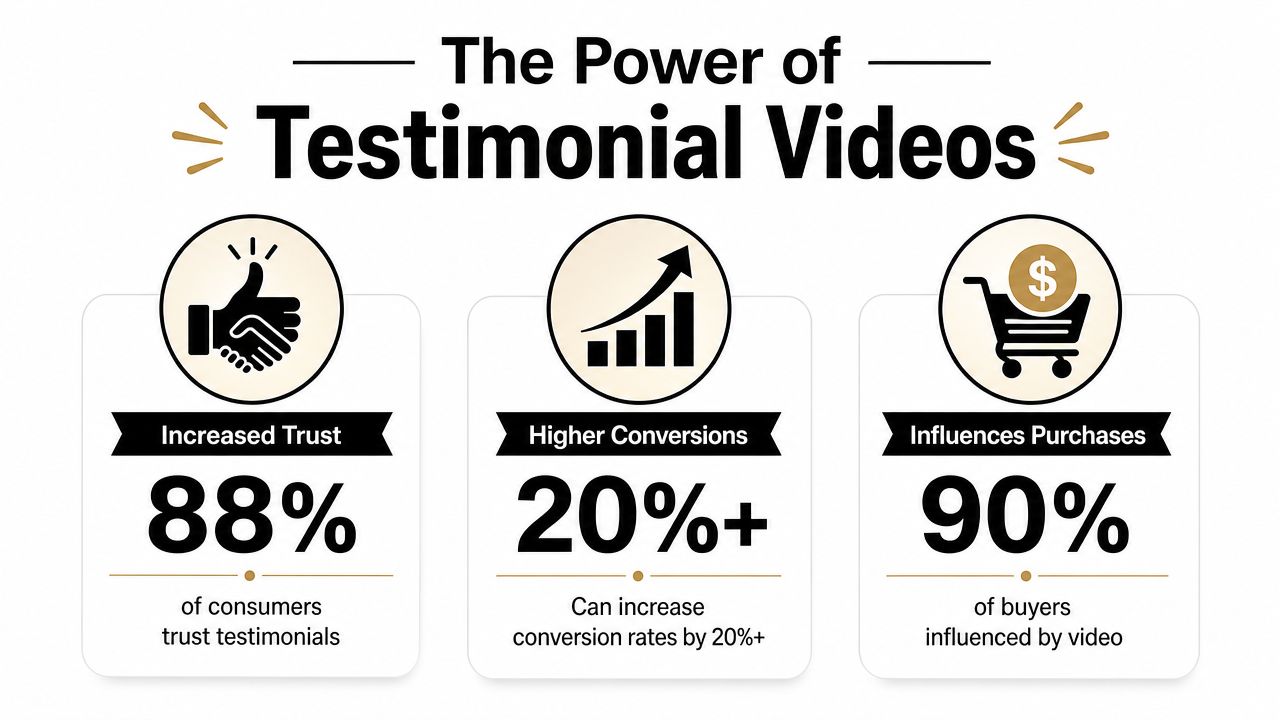
By 2026, 91% of businesses used video as a marketing tool, and 92% of consumers trusted a video testimonial more than a traditional ad, according to Wyzowl's video marketing statistics. The same source says using a video testimonial on a landing page increased conversions by an average of 34%. For a remodeler, that matters because trust is often the bottleneck, not awareness.
Why video beats a written review
A written review tells me someone was happy.
A video shows me their face, their voice, their home, and their comfort level. That's different. In remodeling, that difference is huge because buyers are asking quiet questions they may never say out loud.
- Can I trust this company inside my home
- Will the process feel organized or chaotic
- Do they serve homeowners like me
- Will the finished result feel worth the stress and money
A good testimonial video answers those questions without sounding like a sales pitch.
Practical rule: The more expensive and emotional the purchase, the more helpful real human proof becomes.
This is also why user-generated style content works. People respond to honest customer voices more than polished brand talk. If you want a broader view of that shift, Klap's powerful UGC insights are worth reading.
Why this matters for local reputation
Most remodelers already understand reviews. Video is the next layer. It adds depth to the same trust signal that makes review platforms valuable in the first place. If you already care about your reputation on Google, this fits right into that same machine, along with the local visibility benefits discussed in this guide on whether Google reviews help SEO.
The key point is simple. A customer testimonial video isn't fluff. It's proof with a pulse.
Your Game Plan Before You Ever Press Record
Most bad testimonial videos fail before filming starts. The homeowner is the wrong fit, the questions are lazy, or nobody decided what the video is supposed to help sell.
The fix is simple. Plan the story first. Then turn on the camera.
Pick the right homeowner, not just the nicest one
You don't need the happiest client in your history. You need the right client for the jobs you want more of.
If you want more kitchen remodels in older homes, film a kitchen client in an older home. If you want more design-build additions, don't lead with a bathroom refresh. Your testimonial should mirror the next buyer's problem.
Look for a homeowner who checks most of these boxes:
- Represents your target project type. Their job should match the kind of work you want in your pipeline.
- Explains things clearly. Some people are thrilled with your work but freeze on camera.
- Had a real before-and-after problem. Strong stories start with frustration, not generic praise.
- Feels comfortable being seen. They don't need to be polished. They do need to be willing.
Wistia recommends structuring the story around the challenge, why they chose the company, the implementation experience, specific results, and advice to others. Their guidance on creating a video testimonial strategy is solid because it keeps the video focused on a real transformation instead of empty compliments.
Use prompts that pull out a real story
The fastest way to ruin a testimonial is asking, “Were you happy with the job?” That gets you one-word answers and canned praise.
Ask questions that help the homeowner remember what life felt like before, during, and after the project. That's where the useful stuff lives.
| Question Type | Example Question to Ask |
|---|---|
| Initial challenge | What wasn't working in your home before the remodel? |
| Why they chose you | What made you feel comfortable choosing our team? |
| Experience during the project | What was communication and day-to-day progress like? |
| Specific results | What feels different now that the project is finished? |
| Advice to others | What would you tell another homeowner thinking about a similar remodel? |
Get permission in writing
This part is boring. It's also important.
Get a simple signed release that says you can use the video on your website, social media, ads, email, and sales materials. Don't rely on a text message and don't assume verbal permission is enough. If the relationship changes later, you'll be glad the paperwork is clean.
Ask for permission while the client is still excited about the project and proud of the finished space. That's usually the easiest moment.
If you need a simple way to collect and organize customer feedback, tools that help businesses get powerful testimonials can be useful for the intake side, even if you film the final version yourself.
Filming Day Made Simple Without a Big Budget
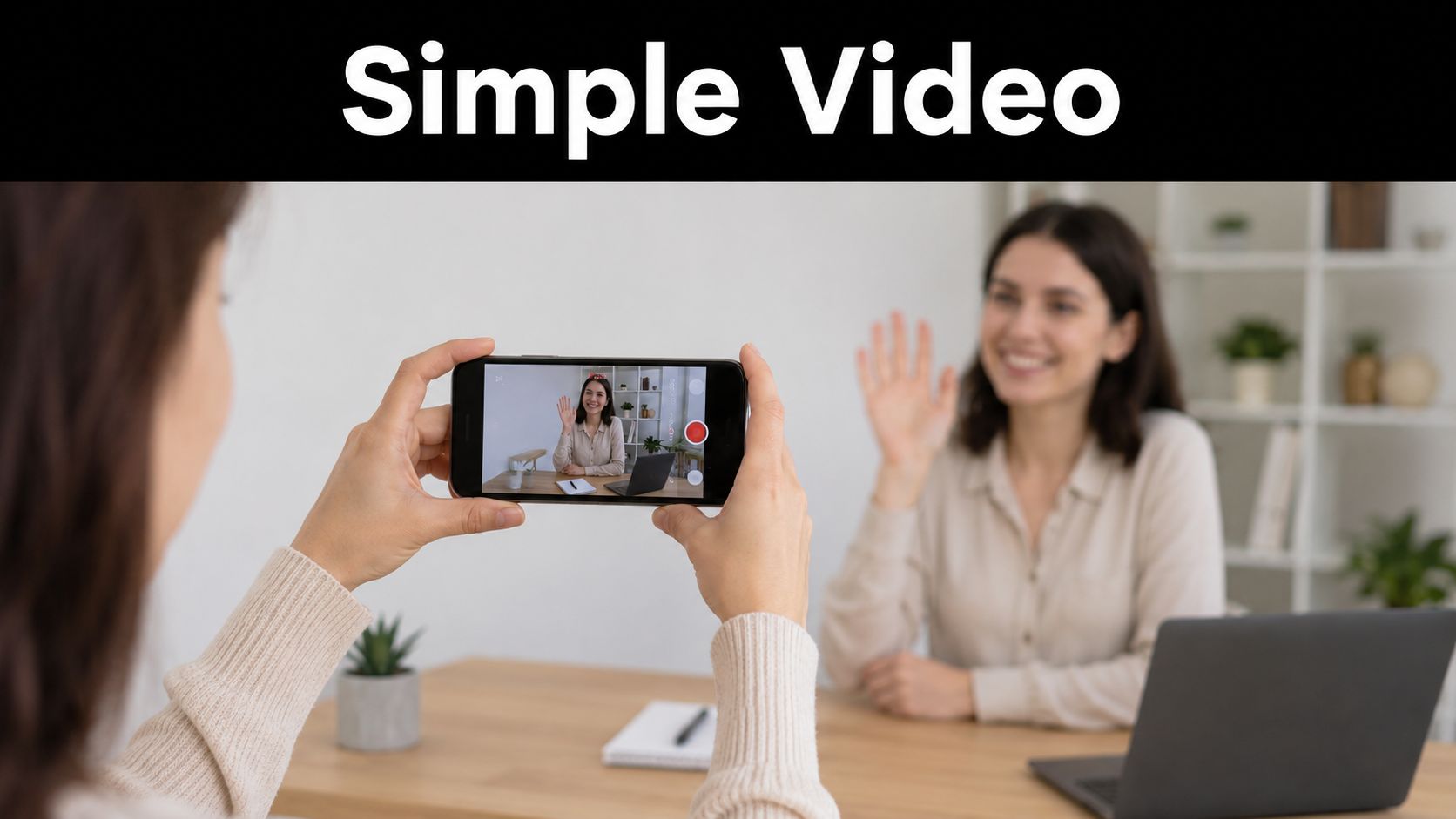
You don't need a production truck. You need a steady shot, clear audio, decent light, and a homeowner who feels relaxed.
That's it.
Keep the setup boring and clean
Use the phone you already have. Put it on a tripod. Clip a microphone on the homeowner if you can. Bad audio kills more testimonial videos than average video quality ever will.
A simple setup usually works best:
- Phone on a tripod. Shaky footage feels amateur fast.
- Clip-on mic. Clear voices matter more than cinematic visuals.
- Window light or soft room light. Put the homeowner facing light, not with a bright window behind them.
- Tidy background. Keep clutter, tools, and random distractions out of frame.
Don't put the homeowner dead center like a mugshot. Shift them slightly to one side and let the finished room help tell the story.
Capture three kinds of shots
You need more than the talking head. The extra footage is what saves the edit later.
Get these three shot types before you leave:
- The interview shot. A medium shot of the homeowner speaking.
- Detail shots. Hands on the new island, drawers opening, tile, fixtures, built-ins, lighting.
- Wide shots. Full views of the room so the viewer understands the space.
If the homeowner mentions a favorite feature, film that feature right away. If they talk about how the kitchen now works for hosting family, get a shot that supports that feeling.
Quiet rooms beat pretty rooms. Turn off loud fans, music, and anything that hums.
One more thing. Don't hand them a script. Talk with them. A natural answer with a small stumble beats a robotic perfect answer every time. If you want more ideas on how remodelers can use video in the first place, this list of video content ideas to attract remodeling clients is a good next read.
Editing Your Video to Tell a Compelling Story
Editing is where a pleasant interview becomes a sales tool. Raw clips don't persuade anyone on their own. The order does the work.
The simplest version is this. Start with the pain. Move into the decision. End with the result.
Build the story in the right order
Most remodelers make the same editing mistake. They open with generic praise.
“Working with them was amazing.”
“We love the result.”
“They were great.”
That sounds nice, but it doesn't create tension. Good stories need a before and after.
Use this sequence instead:
- Problem. What was frustrating, broken, outdated, cramped, or stressful before the remodel?
- Journey. Why did they choose your company, and what was the process like?
- Result. What changed in the home and in their daily life?
As the homeowner talks, cover cuts with B-roll from the finished project. If they mention better storage, show the pantry. If they talk about finally loving their kitchen, show the room in use.
A few editing habits help a lot:
- Cut long pauses and repeated phrases. Keep the energy moving.
- Leave natural language in place. Don't polish the life out of it.
- Add names and project type on screen. Simple lower-thirds are enough.
- Use captions or text overlays. Many people watch without sound at first.
If you're new to editing, a beginner-friendly guide on video editing and audio separation from Isolate Audio can help with the basics that usually trip people up first.
Cut versions for each channel
Don't stop at one finished video.
Recent guidance from TeraLeap is clear on this point. Modern distribution requires re-cutting the same story into platform-specific versions for Google Business Profile, paid social ads, and email follow-ups, and text overlays and dynamic edits help hold attention.
That matters because each platform asks for a different job.
- Full version. Best for your website and sales conversations.
- Short cut. Better for social ads and retargeting.
- Very short clip. Useful in email follow-up or as a quick proof point after an estimate.
Keep the long version tight. Then pull short clips from the strongest moments, especially lines that speak to fear, process, and outcome.
Where to Post Your Video to Actually Get Leads
A testimonial video sitting in a Dropbox folder has no value. Distribution is where the return starts.
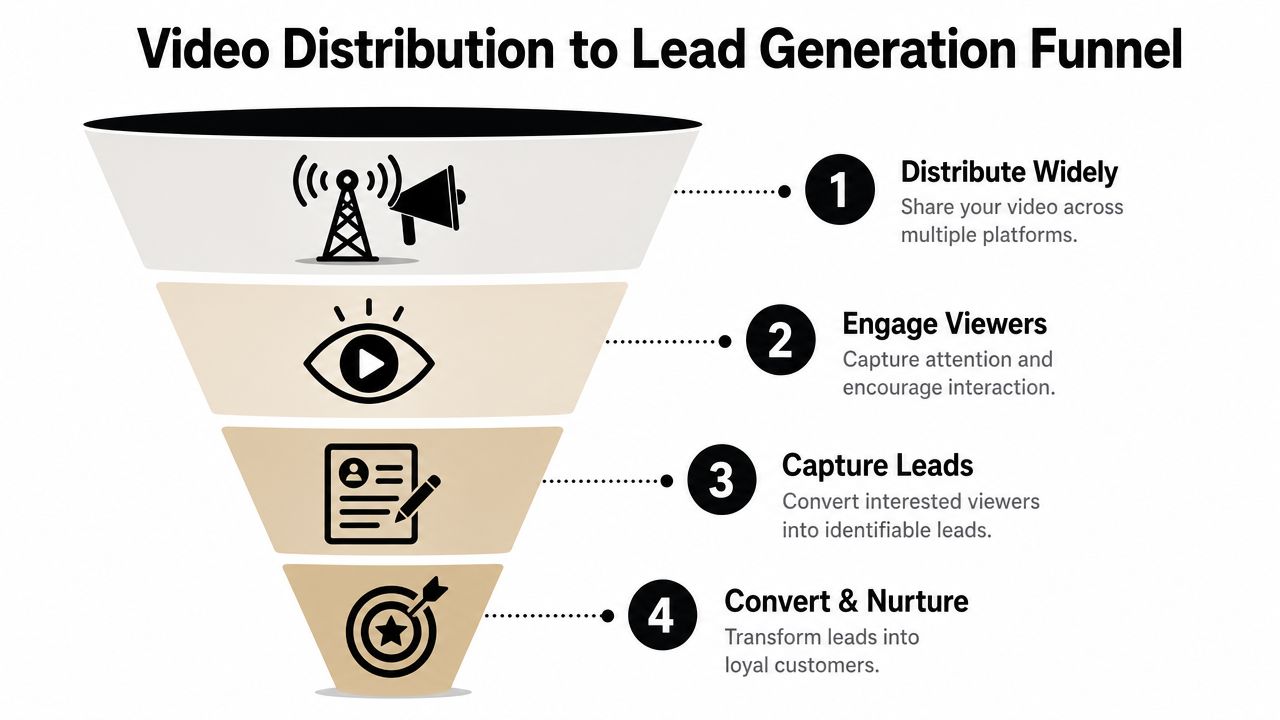
The smartest move is to treat one customer story like a small content system. One core video. Several placements. Each one with a job.
Your website is the home base
Put the strongest testimonial where buying decisions happen.
That usually means:
- Homepage. Good for first impression trust.
- Service pages. Match the testimonial to the service. Kitchen video on the kitchen page. Addition video on the addition page.
- High-intent landing pages. Use video near the form, offer, or call to action.
- Dedicated testimonials page. Build a library over time.
One 2025 analysis reported that pages with video testimonials saw 86% longer visitor duration, email campaigns with testimonial video links achieved 41% higher click-through rates, and adding a testimonial video to a landing page could increase conversions by up to 80%, according to Testimonial Star's roundup of video testimonial statistics. For remodelers, the lesson is simple. Put proof near action.
Google Business Profile helps local trust
Most remodelers underuse this. They post photos, maybe updates, and stop there.
Short testimonial clips can strengthen your local presence because they add proof directly around branded and local searches. Keep these versions short, easy to understand without sound, and centered on one simple message. Communication. Craftsmanship. Clean jobsite. Finished result. Pick one.
This isn't the place for a two-minute mini documentary. It's the place for a fast confidence boost.
Ads and email do the follow-up work
A homeowner rarely converts the first time they see you. Testimonial videos help after that first touch.
Use them in:
- Paid social retargeting. Good for people who visited your site but didn't contact you.
- YouTube or video ads. Useful when paired with project-type targeting and local geography.
- Sales follow-up emails. A rep can send the right testimonial after an estimate.
- Lead nurture sequences. Match the video to the homeowner's project interest.
A testimonial video works best when it answers the specific fear holding the buyer back right now.
If someone is worried about disruption, send the story that talks about communication and cleanliness. If they're worried about whether the investment is worth it, send the story that shows daily-life improvement in the finished home.
How to Know If Your Videos Are Making You Money
Views are not the goal. Compliments are not the goal. The goal is better leads, more trust in the sales process, and more signed projects.
That means you need to judge customer testimonial videos like an owner, not like a content creator.
Track business outcomes first
Dock makes the right point here. The question isn't whether the video looks good, but what business outcome it should prove. For high-ticket services like remodeling, the useful KPIs are things like lead quality, close rate, and conversion lift, not just engagement.
That changes how you measure success.
Instead of obsessing over views, ask:
- Did the page with the video produce more inquiries
- Did prospects mention the video during the sales process
- Did leads who watched it move faster or ask better questions
- Did that project-type page convert better after the video was added
- Did the sales team use it consistently in follow-up
Those are business questions. They point to revenue.
Use a simple scorecard
You don't need fancy reporting to start. Use a basic scorecard in your CRM or spreadsheet and review it monthly.
| What to track | What to look for |
|---|---|
| Lead source notes | Whether new leads mention a specific customer story or video |
| Landing page performance | Whether pages with a testimonial video convert better than before |
| Sales follow-up usage | Whether the team actually sends videos after consultations or proposals |
| Lead quality | Whether inquiries tied to the video are a better fit for your project minimums |
| Close rate | Whether prospects exposed to testimonial proof sign at a higher rate |
If you run ads, separate campaigns that use testimonial creative from campaigns that don't. If you send proposals through a sales platform, include the relevant testimonial and note whether those opportunities progress differently. If your team asks, “How did you hear about us?” add another question: “Did you watch any of our customer videos before reaching out?”
The best testimonial video is not the one with the prettiest edit. It's the one your sales team keeps using because it helps hesitant homeowners move forward.
One more important point. Don't judge too fast. A testimonial video often does its best work in the middle and bottom of the funnel. It helps people say yes after they already know your name. That influence is real, but you need clean follow-up and decent lead tracking to see it.
If you want a clearer way to think about this financially, this guide on how to calculate marketing ROI is useful for tying your content efforts back to revenue instead of guesswork.
Customer testimonial videos work best when they're treated like a system. Pick the right client. Ask better questions. Film directly. Edit for story. Distribute with intent. Track whether the work helped produce stronger opportunities and better close rates. That's how one happy client turns into a repeatable sales asset.
If you want help building that kind of system, Constructo Marketing works with remodelers who want more than random marketing activity. The focus is simple: better local visibility, stronger lead flow, cleaner follow-up, and proof that your marketing is helping you win the right projects.