


You're probably reading this between interruptions. One lead called while you were with a homeowner. Another rang while you were in the truck. A third came in while the crew needed an answer right now. You missed the call, told yourself you'd call back in a bit, and by then that homeowner had already moved on.
That's the core problem. Not “communications.” Not “follow-up optimization.” Just lost jobs.
If you run a remodeling company and you're trying to win serious projects, missed call text back software isn't a cute feature. It's a lead-loss prevention system. It gives a homeowner a fast, simple sign that a real business is on the other end, even when you can't pick up.
Table of Contents
- Stop Losing Six-Figure Jobs to Voicemail
- Why Every Missed Call Is a Remodeling Lead Crisis
- Choosing the Right Missed Call Text Back System
- Setting Up Your System and Writing Texts That Work
- Beyond the Text Connecting Automation to Your Sales Process
- Measuring Success and Avoiding Common Mistakes
Stop Losing Six-Figure Jobs to Voicemail
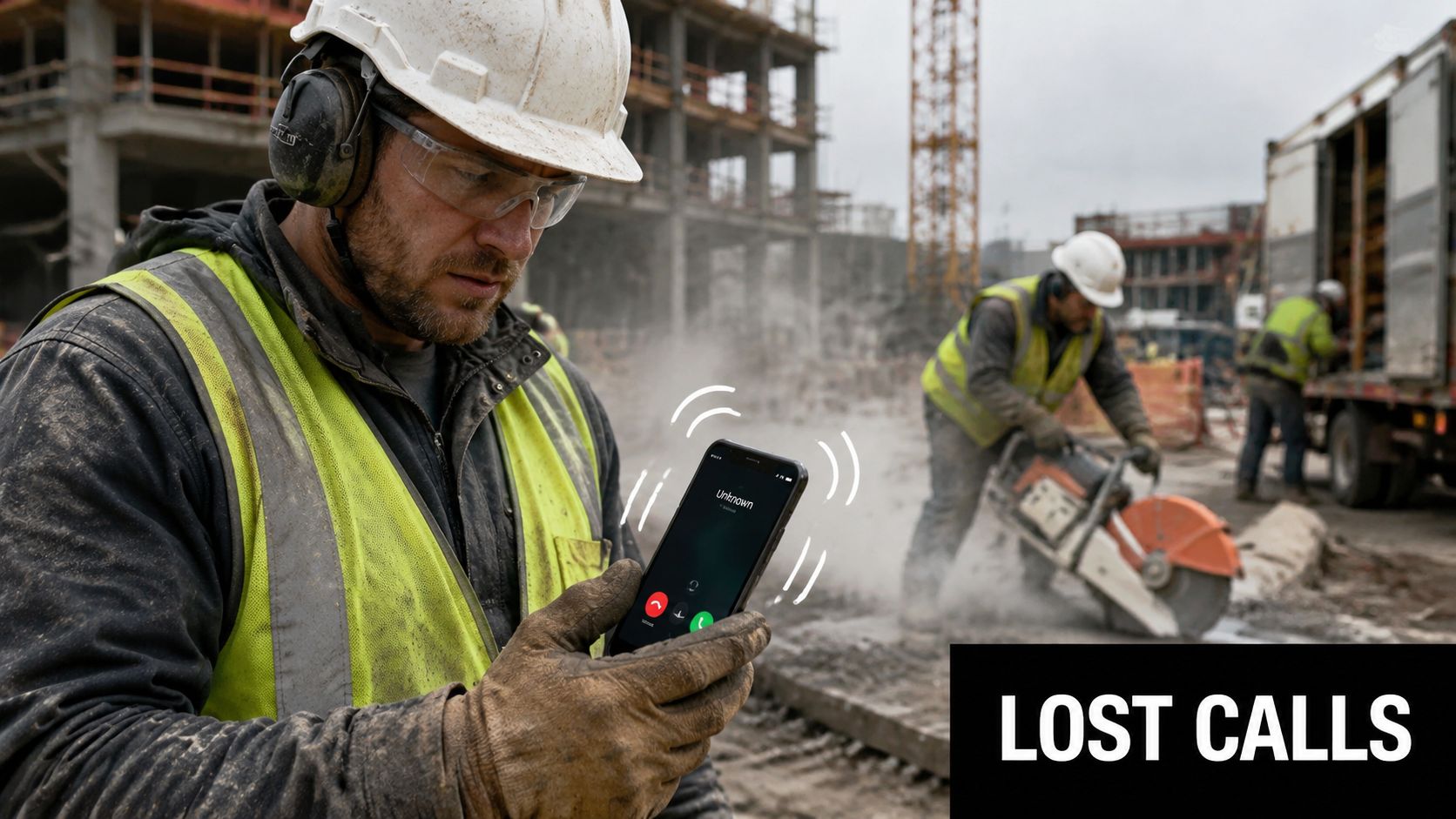
You're on-site. The table saw is running. A client is asking about cabinet heights. Your project manager needs a decision. Your phone lights up with a number you don't know.
You let it ring because you have to.
That one missed call might be a homeowner ready to talk about a kitchen, an addition, or a whole-home remodel. Not a tire-kicker. Not a “just getting ideas” browser. A real person looking for help right now.
What the software actually does
Missed call text back software is simple. Someone calls. You don't answer. The system sends an automatic text fast enough to acknowledge the call while the homeowner is still paying attention.
One industry guide describes it as a text sent within about 30 to 60 seconds after an unanswered call, often with the ability for the caller to reply and start a two-way conversation through the same thread, as explained in this missed call text back overview.
That matters because the text says three things without making the homeowner work for it:
- We saw your call
- We're not ignoring you
- You can reply right now
That's your safety net.
Why voicemail keeps failing
Voicemail asks too much from a busy homeowner. They have to listen for the beep, explain the project, trust that you'll call back, then wait. Most won't bother. One source says 62% of calls to small businesses go unanswered, and 85% of those callers never call back in its guide on missed calls for small businesses.
Practical rule: If a stranger calls your remodeling company, they are raising their hand. If nobody answers and nobody responds fast, they lower it and call somebody else.
For remodelers, this gets expensive fast. You're not selling a low-ticket service. One missed opportunity can be a project that fills your schedule for months.
If you want to tighten the front end even further, your phone process should connect back to your ad spend. A good place to start is learning how to improve Google Ads with call tracking so you can see which campaigns produce calls you want.
Why Every Missed Call Is a Remodeling Lead Crisis
A missed call isn't just admin clutter. It's a sales failure.
Remodeling owners sometimes shrug this off because they're busy doing real work. Fair enough. You build things. You solve site problems. You manage budgets, trades, permits, and clients. But the homeowner calling you doesn't care why you missed the call. They care who talks to them first.
The first conversation usually wins
This is the part too many software vendors skip. Speed matters because early response changes qualification odds. Independent research on 7.5 million leads found that firms responding within an hour were about 7 times more likely to qualify that lead than firms that waited longer, according to this lead response summary.
That doesn't mean an automated text closes a remodel. It means a fast first response keeps you in the game long enough to have the actual sales conversation.
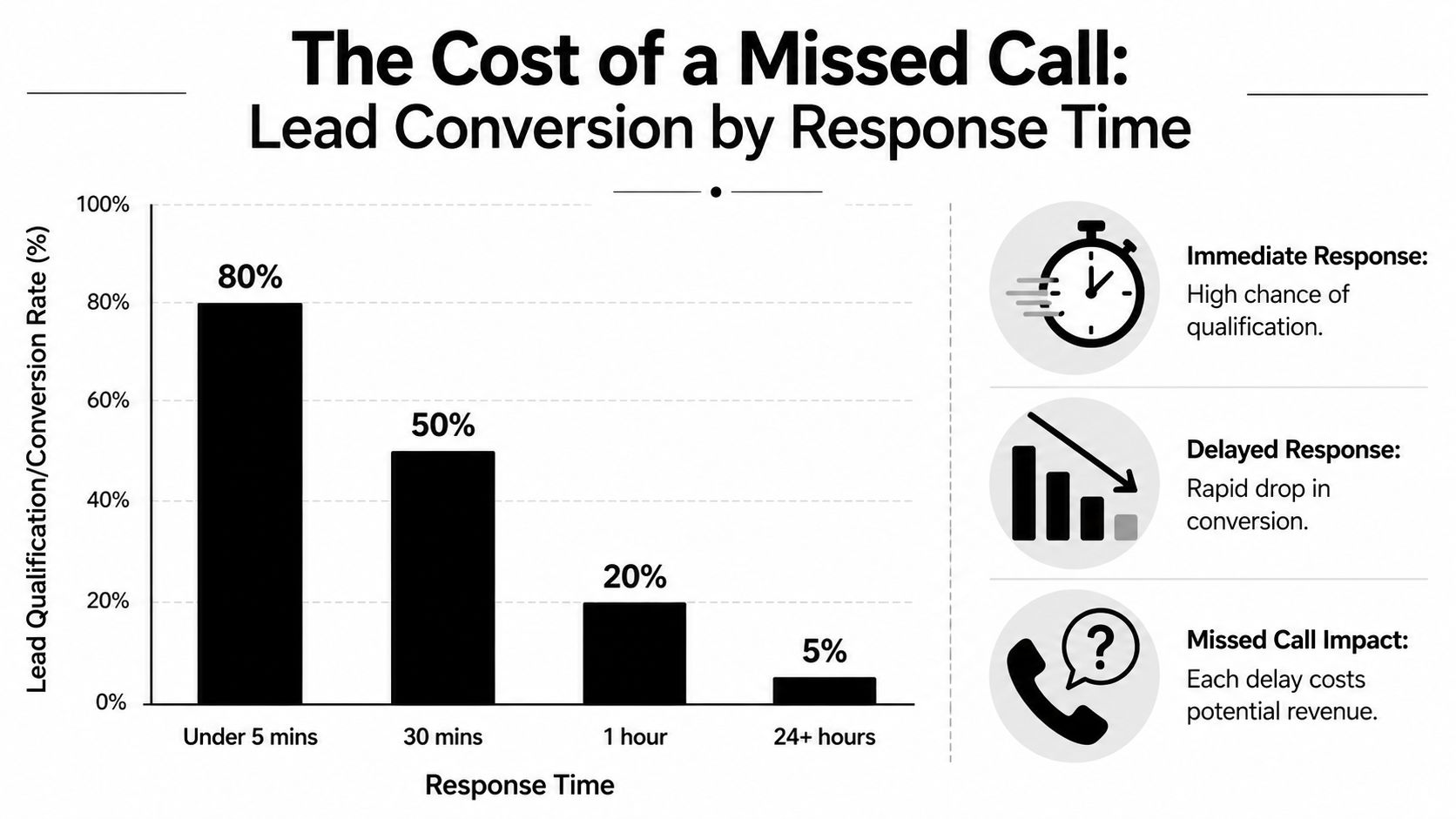
A missed call is not a minor inconvenience when you sell high-value work. It's the moment a homeowner starts deciding whether your company feels available, organized, and trustworthy.
That's why I push remodelers to think about phone handling as part of lead generation, not as a back-office nuisance. If you want a broader look at where call response fits into acquisition, review this guide to lead generation for contractors.
Homeowners call when they want movement
People don't usually call a remodeler for fun. By the time they pick up the phone, they want answers, availability, or a next step. If they hit silence, they keep moving.
A decent phone setup helps, too. If your current line setup is clunky, old, or hard to route, look into Hosted Telecommunications VoIP solutions so your business number is easier to manage across devices and team members.
Here's the blunt version:
- A call is high intent. Calling takes more effort than filling a form.
- Delay kills momentum. Once the caller starts shopping around, your advantage drops.
- Text is a bridge. It holds attention just long enough for your team to step in.
- Human follow-up still decides the outcome. The text opens the door. Your sales process has to walk through it.
If your average project size is large, every missed call should bother you more than a bad click or a weak impression count. Those are vanity problems. A missed live lead is a pipeline problem.
Choosing the Right Missed Call Text Back System
A homeowner calls about a kitchen addition, nobody picks up, and your software sends a text. Good start. If that text lands in a disconnected app, nobody sees the reply, and no one owns the follow-up, you did not save the lead. You just automated the first few seconds of losing it.
That is the standard you should use when comparing platforms. Remodelers do not need another shiny feature. You need a lead recovery system that protects high-ticket opportunities when your team is on job sites, in sales meetings, or off the clock.
Buy for follow-up ownership
The right system puts the missed call, the outgoing text, the homeowner's reply, and the next assigned action in one place. Your coordinator should know who called. Your salesperson should see the conversation history. Your estimator should not be guessing whether someone already responded.
If the tool only fires off a canned message, it creates more work. You are left checking multiple inboxes, forwarding screenshots, and hoping someone remembers to call back. That breaks down fast when the job at stake is worth $75,000 or more.
Personalization matters less than accountability. A plain text that gets a fast human response beats a polished automated message that dies in a side inbox.
What to look for
Use this checklist and be strict:
- Shared inbox or CRM visibility. Everyone handling leads should see the missed call and reply history without hunting for it.
- Two-way texting. Homeowners need to reply and get a real answer. One-way auto texts are weak.
- Assigned ownership. Every missed call needs a person attached to it, not a vague “team inbox.”
- Basic routing rules. You should be able to control when the text fires and which calls should trigger it.
- After-hours handling. Your process at 8:30 p.m. should not look the same as your process at 11:00 a.m.
- Easy testing. If your team cannot test the workflow in a few minutes, problems will sit unnoticed while leads leak out.
Here is the practical difference between common options:
| Option | Good fit | Watch out for |
|---|---|---|
| CRM-based automation | Remodelers who want lead tracking, texting, and task ownership in one system | Needs clean setup and someone to manage it |
| VoIP platform with text-back | Teams fixing phone coverage and call routing first | Often lighter on pipeline visibility and sales follow-up |
| Standalone missed-call app | Small shops that need a temporary patch | Replies get missed, and handoff usually stays manual |
Choose based on what happens after the text, not on the text itself.
If you are also looking at tools to build AI customer support agents, keep that separate in your mind. AI can help handle inbound conversations. It does not replace a missed-call process that routes replies to the right person and pushes the lead into your sales workflow.
Constructo Marketing also offers missed-call text-back inside its CRM setup for remodelers. That matters if you want the feature tied directly to lead tracking and follow-up instead of bolted onto a separate app.
Setting Up Your System and Writing Texts That Work
A homeowner calls during lunch. Your estimator is in the field. The office misses the call. Two minutes later, that homeowner is calling the next remodeler on their list.
You already know how this works on the jobsite. Details matter. Setup matters too. If your missed call text back system is sloppy, it does not protect high-value opportunities. It just sends a polite message before the lead disappears.
Start with the setup. Keep it tight.
The basic setup that makes sense
Use the same business number homeowners already call. Let the phone ring long enough for a real pickup attempt, then send the text fast enough that the caller still remembers why they reached out.
For most remodeling companies, a short ring window works best. Don't fire the text after one ring. Don't let the caller sit in limbo either. Pick a reasonable timeout, test it, and adjust based on how your office answers calls.
Use this setup logic:
Turn the feature on for your main inbound line
Homeowners should not have to learn a second number just to text you.Set a realistic ring timeout
Give your team a fair chance to answer. Then send the text quickly if they can't.Write one version for business hours
Tell the caller who you are, acknowledge the missed call, and ask for one simple reply.Write one version for evenings and weekends
Set the expectation for when your team will respond. That matters when the project is worth real money.Test the full path from an outside phone
Call in, miss the call, confirm the text arrives, reply to it, and make sure that reply lands where your team will see it.Check any personalization fields before you trust them
If the system inserts the wrong name or blank fields, your text looks careless.
If your CRM setup is still messy, fix that before you get fancy with automation. A missed call tool works better inside a CRM system built for builder and remodeler sales follow-up, where replies, tasks, and lead ownership stay connected.
Write texts that sound human and move the lead forward
Bad templates usually fail in one of three ways. They sound automated. They ask for nothing. They give the homeowner no reason to reply.
That is a problem when the person calling may be planning a kitchen, addition, or whole-home remodel. You are not trying to sound clever. You are trying to keep a serious prospect engaged long enough for your team to step in.
Here's a simple test. If the text sounds like a phone tree, rewrite it.
| Bad Template (Avoid) | Good Template (Use This) |
|---|---|
| Sorry we missed your call. | Hi, this is [Business Name]. Sorry we missed your call. We're with a client right now. Reply with a quick note about your project and we'll follow up soon. |
| We are unavailable at this time. Leave a message. | Thanks for calling [Business Name]. We got your call. Text us your project type and best time to reach you, and our team will get back to you. |
| Your call is important to us. | Hi, this is [Business Name]. Sorry we couldn't answer. If you're reaching out about a kitchen, bath, addition, or other remodel, reply here and we'll connect with you. |
| Office closed. | Thanks for calling [Business Name]. We're currently away from the phone, but we received your call and will follow up when we're back. Reply with your name and project details here. |
The best texts do four things well:
- Identify your company
- Acknowledge the missed call
- Ask for one easy reply
- Set a clear expectation
Keep the wording plain. Homeowners do not need polished brand language. They need reassurance that a real company saw their call and will respond.
Ask for one thing, not three. “What kind of project are you planning?” works. “Send photos, budget, address, timeline, and scope” does not.
Match the message to the sale you want. If your average project is large, write like you expect real inquiries, not random tire-kickers. A short, confident text beats a cute one every time.
What to avoid:
- Sending a paragraph
- Dropping in multiple links
- Promising an exact callback time your team will miss
- Using stiff corporate language
- Asking too many questions in the first text
Your automated reply has one job. Keep a valuable lead from going cold before a salesperson can take over.
Beyond the Text Connecting Automation to Your Sales Process
Most contractors get it wrong. They install the software, the text goes out, and they think the problem is solved.
It isn't.
The automated text is the seatbelt, not the driver. It keeps the lead from flying out of the vehicle. Your team still has to steer.
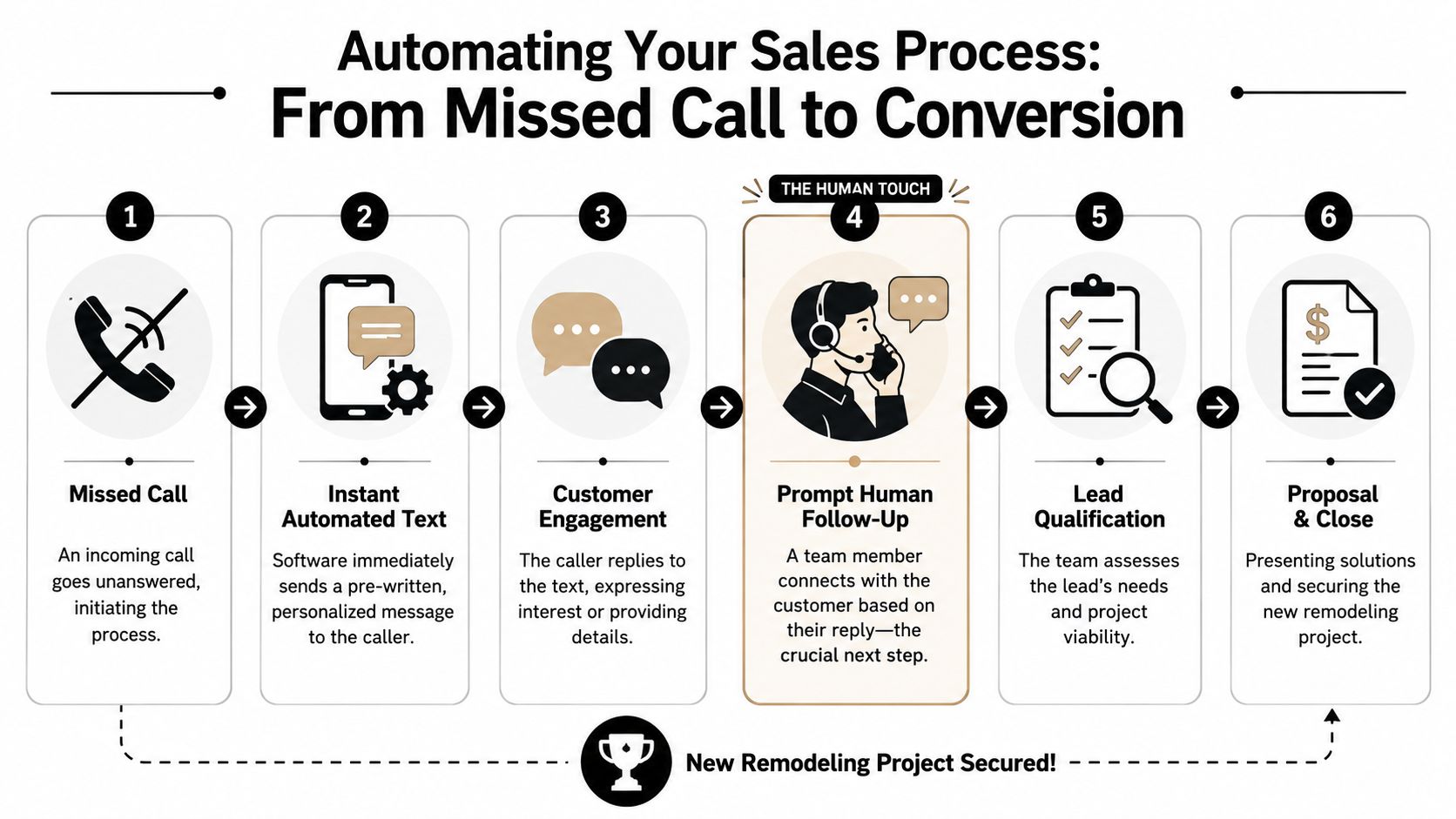
The text buys time, it does not book the job
A homeowner replies, “Looking to remodel our master bath.” That's not a win yet. It's an opening.
The software did its job by keeping the conversation alive. Now your business has to do its job. Somebody needs to respond, qualify, and move that person toward the right next step.
If your follow-up is loose, the automation becomes a fancy delay message.
The software should remove silence, not replace sales.
That's why I tell remodelers to connect this feature to the same lead management process they use for every serious opportunity. If your sales workflow is still scattered, this overview of CRM software for builders is worth reading.
A simple handoff process that works
Your process after the text should be boring and repeatable:
The call is missed
The system sends the text automatically.The homeowner replies
They share project type, timing, or a question.Your team gets alerted
One person owns the next move. Not “everyone.” One person.A human responds quickly
Confirm receipt. Ask the next useful question. Offer the next step.You qualify the lead
Project type, location, fit, timing, and readiness.You book the consultation
That's the goal. Not endless texting.
The handoff matters most. If the reply comes in and no one touches it, the lead goes cold with a little more politeness than before.
For high-value remodeling work, your text thread should move toward a phone conversation or consultation quickly. You're not trying to run the whole sale inside SMS. You're trying to prevent drop-off, create contact, and give your team a clean runway to do what they already do well.
Measuring Success and Avoiding Common Mistakes
A missed call text back system earns its keep only if it helps you book real jobs. For a remodeling company, that means qualified consultations, solid opportunities, and projects worth chasing. If you are not measuring that chain, you are paying for software and hoping for the best.
Start with one question. Did this system help us recover high-value leads we would have lost to voicemail?
Track the numbers that matter
Use a simple monthly scorecard. Keep it tied to revenue, not activity for its own sake.
Missed calls that triggered a text
This shows how often the backup system had to step in.Replies to those texts
This tells you whether your message started a real conversation.Appointments booked from those replies
Now you are measuring movement, not just interest.Qualified opportunities from those appointments
A kitchen remodel lead in your service area matters. A random price shopper outside it does not.Closed jobs connected to missed-call recovery
This is the number that matters to an owner deciding whether the system stays.
Do not stop at reply rate. A fast text response feels productive, but a remodeling business wins on booked consultations and closed projects. If you want to tie those results to actual return, use a clear process for calculating marketing ROI.
A good scorecard also shows you where leads stall. Plenty of replies but few appointments usually means your team is too slow after the first text. Plenty of appointments but weak close rates usually means low-quality intake, poor qualification, or a broken handoff to sales.
Mistakes that undermine results
The biggest failures are rarely technical. They come from sloppy operations.
You measure replies and ignore revenue
Reply rate is an early signal, not the finish line. If those conversations do not turn into qualified consultations for real remodeling work, the system is underperforming.You let every missed call trigger the same text
New lead, current client, vendor, recruiter, spam. Those are different callers and should not get identical treatment. RingCentral's overview of automatic missed call text response setup points out that your message and routing rules need to match the call type.Nobody owns the reply queue
Software can send the first text. It cannot take responsibility. One person needs to own inbound replies during business hours, or good leads sit there until the homeowner moves on.You never test the workflow
Teams assume the text fired, the alert worked, and the reply landed in the right place. Then they learn weeks later that messages were misrouted or ignored. Test the system like you would test a jobsite process. On purpose. On a schedule.Your text sounds like software wrote it
Homeowners planning a major remodel are already comparing contractors. A cold, generic message makes you easy to dismiss. Plain language gets more responses.
Review this workflow the same way you review production numbers or sales pipeline. Small failures stack up fast. One missed handoff turns into a lost consultation. A few lost consultations can mean one less $75,000 project this quarter.
Done right, missed call text back software protects leads you already paid to generate. Done badly, it creates the appearance of follow-up while expensive opportunities keep slipping out the back door.
If you want a tighter system that connects lead generation, CRM follow-up, and missed-call recovery for remodeling leads, talk to Constructo Marketing. They help remodelers build integrated marketing and follow-up systems so serious opportunities don't disappear between the first call and the first conversation.