


Most omnichannel advice is bad for remodelers.
It tells you to be everywhere. Post on every social platform. Chase every new app. Add more channels, more software, more noise. That's how you get a busy marketing mess and a silent phone.
A real omnichannel marketing strategy for a remodeling company is much simpler. It means a homeowner can find you, trust you, contact you, and hear back from you without friction. That path might start with Google Search, move to your website, continue through a form fill or phone call, and end with consistent follow-up that leads to an estimate and a signed contract.
That's the game. Not “being everywhere.” Being connected.
For high-ticket local services, the winner usually isn't the loudest brand. It's the one that makes the process easiest for the homeowner and easiest for the owner to manage.
Table of Contents
- Build Your Foundation First
- Find Homeowners Where They Actually Search
- Connect Your Channels So They Work Together
- Automate Your Follow-Up Like a Perfect Employee
- Measure What Actually Matters for Your Business
- Your 90-Day Omnichannel Action Plan
Build Your Foundation First
What omnichannel is not
Omnichannel is not “we made an Instagram account.”
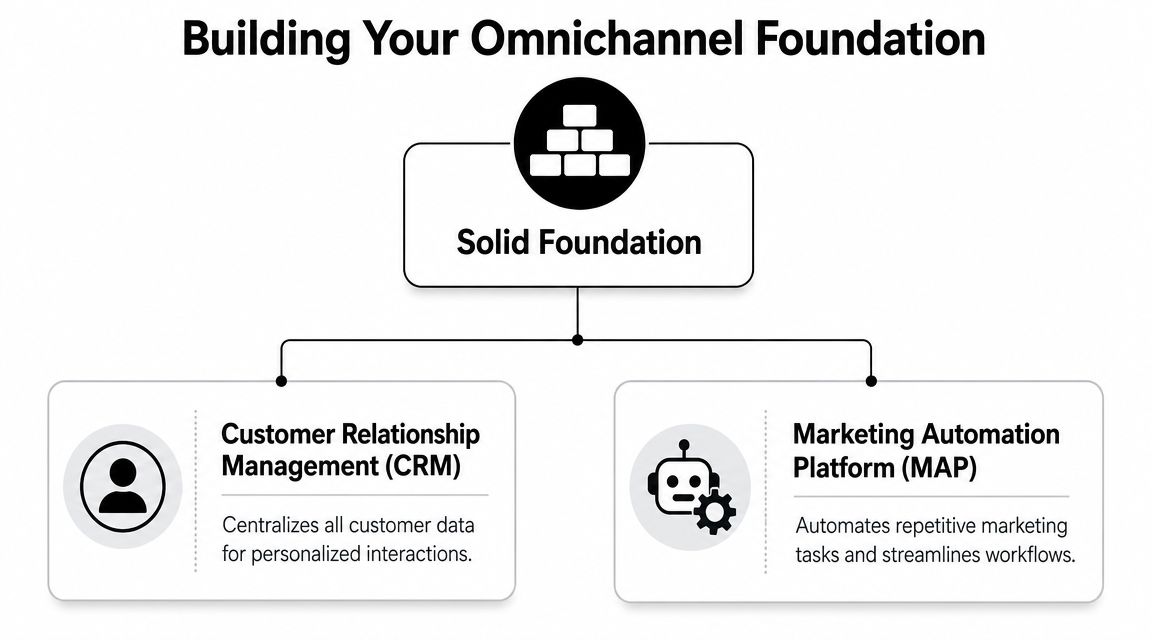
It's not a pile of random marketing jobs either. A lot of remodelers have a website from one company, ads from another, leads in someone's inbox, missed calls on a cell phone, and follow-up notes on sticky pads. That isn't a system. That's scattered lumber on a driveway.
McKinsey reporting summarized by Adobe says omnichannel customers spend more and are more loyal, but many brands still struggle because operations are fragmented. That's the part remodelers need to pay attention to. Fragmented operations kill trust fast.
Practical rule: Don't add channels until the channels you already have can hand off leads cleanly.
Your website is the showroom
Your website is your digital showroom. Homeowners walk in, look around, and decide whether you feel expensive in a good way or risky in a bad way.
If the site is slow, confusing, outdated, or thin on proof, your ads won't save you. Neither will your referrals. People check you online before they call. That's normal buyer behavior now, especially for projects that cost real money and disrupt a home.
A strong remodeling website needs a few things working together:
- Clear service pages: One page for kitchen remodeling, one for bath remodeling, one for additions, and so on.
- Proof of work: Real project photos, not stock images.
- Trust builders: Reviews, service areas, process, warranties, and team credibility.
- Simple conversion paths: Call buttons, short forms, and scheduling options that don't make people work.
If your site looks like it was built for search engines instead of homeowners, fix that first. A good place to see what that should look like is this guide to contractor website design.
Your CRM is the brain
Your CRM is the brain of the whole operation. It remembers what you forget when you're on a job site, in a client meeting, or driving between estimates.
Without a CRM, leads leak out in boring ways. Someone fills out a form. Nobody calls them back. A prospect calls after hours. The call gets missed and forgotten. An estimator promises to follow up next week. Next week gets busy.
That's not a marketing problem anymore. That's a system problem.
Here's what the CRM should hold in one place:
| Tool | What it does |
|---|---|
| Website forms | Sends lead info into one central record |
| Call tracking | Logs inbound calls and call outcomes |
| Notes | Keeps project details attached to the lead |
| Pipeline | Shows where each opportunity sits |
| Automation | Sends texts, emails, reminders, and tasks |
A remodeler doesn't need a fancy stack to start. You need one reliable website and one CRM that keeps the handoffs tight. Build that first. Then every dollar you spend on visibility has somewhere useful to go.
Find Homeowners Where They Actually Search
Fish where the fish are
You don't need more channels. You need the right pond.
For remodeling, the highest-intent homeowners usually aren't browsing random social content hoping to discover a contractor. They're searching because they already have a project in mind. They want to compare options, check reviews, look at photos, and decide who feels trustworthy enough to invite into their home.
That means your two biggest battlegrounds are Google Search and Google Maps.
Google Maps captures local intent
Google Maps matters because local service buying is local trust buying. If someone searches “kitchen remodeler near me,” the map pack is often the first serious shortlist they see.
Local SEO earns its keep by helping your company show up in the places homeowners use when they're actively looking for a contractor in your service area.
Here's a simple perspective:
- Google Maps is the long game: You build visibility over time through a solid Google Business Profile, reviews, local relevance, and website support.
- It filters for geography: You don't want clicks from homeowners outside your service area.
- It supports trust fast: Reviews, location, and business details help people decide whether to call.
If you want the nuts and bolts, this guide on how to rank higher on Google Maps breaks down the practical work.
Homeowners don't care whether your lead came from SEO or ads. They care whether you showed up, looked credible, and responded.
Google Ads is the fast lane
Google Ads is different. It's the express lane.
If Local SEO is like building a strong reputation in town, Google Ads is paying for the best billboard right when someone needs a remodeler now. You can target high-intent searches, send people to the right landing page, and get in front of homeowners while they're still deciding.
The mistake is treating SEO and ads like enemies. They do different jobs.
| Channel | Best use |
|---|---|
| Local SEO | Builds durable local visibility and trust |
| Google Ads | Captures immediate demand from active searchers |
Use both if your budget allows. But don't spread yourself thin across five weak channels when two strong ones can carry the load.
A remodeler chasing TikTok trends while barely showing up on Google is fishing in a parking lot.
Connect Your Channels So They Work Together
A real homeowner journey
A real omnichannel marketing strategy starts to earn its keep.
Retail research summarized by Uniform Market reports that 73% of shoppers are omnichannel shoppers and that they interact with about 6 touchpoints on average before making a purchase. For a remodeling job, that path can be even more trust-heavy because the stakes are bigger.
A homeowner might search for “bathroom remodeler near me,” click a Google Ad, land on a service page, browse your project gallery, leave, come back later from an organic search, read reviews, and then finally submit a form. If your systems don't connect those moments, the experience feels choppy.
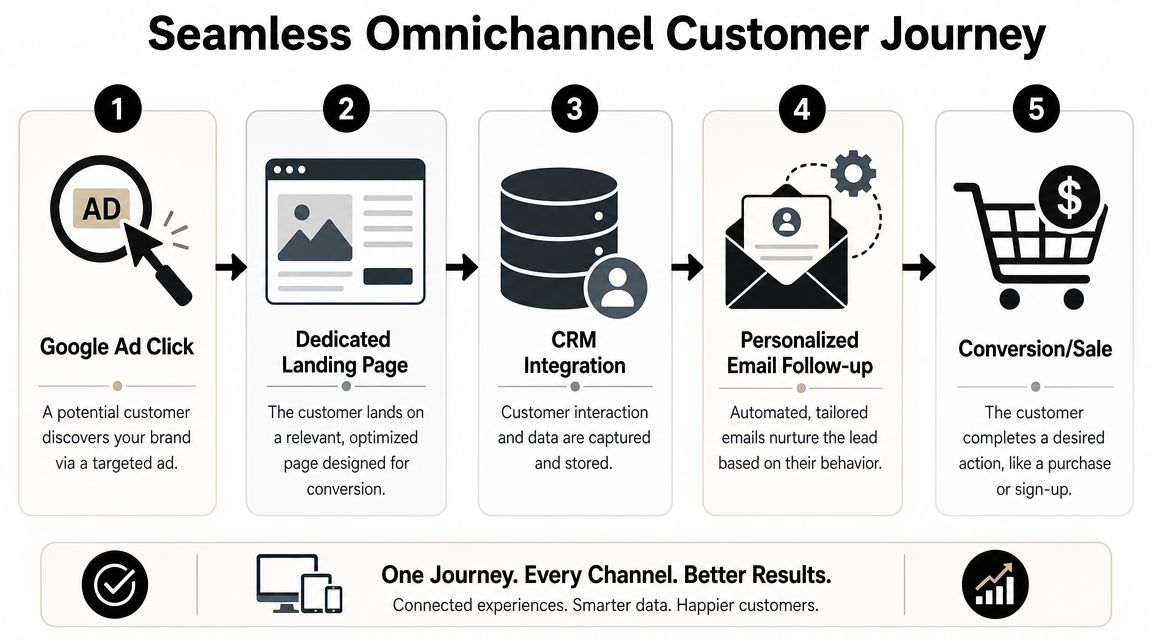
Here's the clean version of that journey:
- They click the ad because the message matches what they need.
- They land on a relevant page that shows the exact service, photos, process, and next step.
- They fill out a form or call because the offer feels credible and easy.
- Their info goes into the CRM immediately so nobody has to re-enter anything.
- They get a quick follow-up by text, email, or phone while your company is still top of mind.
That feels simple to the homeowner. Good. It should.
Where remodelers drop the baton
Most companies don't lose leads because the ad was terrible. They lose leads in the handoff.
The ad works. The site works. The homeowner fills out the form. Then nothing happens for half a day because everyone's busy. Or the office manager copies the wrong phone number. Or the estimator calls with no idea what service page the lead came from.
That break in context matters.
A connected system should pass along useful details like:
- Source: Did they come from Google Ads, organic search, or Maps?
- Service interest: Kitchen, bath, addition, roofing, outdoor living.
- Page viewed: Which service page or landing page convinced them to act.
- Timing: When they reached out and how fast the team responded.
A smooth customer journey feels professional before anyone on your team says a word.
If you want more signed contracts, make every handoff boring. Boring is good. Boring means reliable.
Automate Your Follow-Up Like a Perfect Employee
Automation fixes the speed problem
The best employee in your marketing system doesn't call in sick, forget to reply, or leave sticky notes in a truck. It's automation.
This isn't about sounding robotic. It's about responding while the lead is still warm. Someone just searched, clicked, looked through your work, and raised their hand. That's not the moment to wait until after lunch or after the crew meeting.
Research cited by Infuse says an Omnisend study found omnichannel campaign engagement at 18.96%, and that customers exposed to omnichannel campaigns spent up to 13% more than single-channel customers. For a remodeler, the lesson is straightforward. Consistent follow-up across channels keeps people engaged and moves better opportunities forward.
A simple workflow that keeps leads alive
Start with a few automations that solve obvious leaks. Don't build a spaceship. Build guardrails.
The most useful one for many contractors is a missed-call text-back. If a homeowner calls and nobody answers, your system sends a polite text right away. That one move can keep a lead from calling the next remodeler on the list.
You can also build basic form follow-up that does three jobs:
- Confirms receipt: “We got your request.”
- Sets expectations: “Someone from our team will reach out.”
- Keeps trust alive: “Here's what happens next.”
A sample workflow looks like this:
| Time | Action |
|---|---|
| Immediately after form fill | Send confirmation email |
| Immediately after missed call | Send missed-call text-back |
| Same day | Assign lead to team member for personal follow-up |
| Next day if no contact | Send second text or email reminder |
| Later if still unresponsive | Send a helpful check-in message |
A sample that doesn't sound robotic
You don't need clever copy. You need clear copy.
A missed-call text can be as simple as this:
“Hi, this is [Name] from [Company]. I'm on a job site but saw your call. Can I call you back in 15 minutes?”
That works because it sounds human and gives the homeowner confidence that a real person is on it.
If you're comparing systems, this overview of CRM software for builders is a practical starting point.
The mistake is waiting until your pipeline is full to automate. You need automation before things get busy, not after.
Measure What Actually Matters for Your Business
Stop staring at vanity metrics
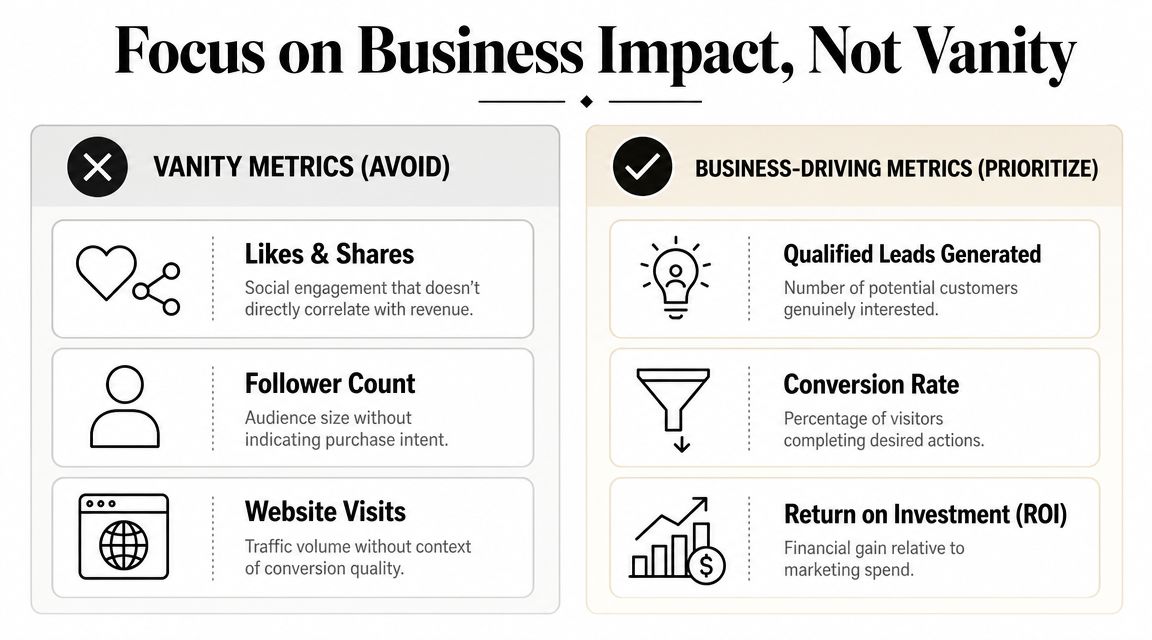
Likes don't pay for cabinets. Followers don't fund payroll. Website traffic by itself doesn't tell you whether your marketing is healthy.
A lot of remodelers get stuck because they're looking at channel reports instead of business results. One vendor says the ads are getting clicks. Another says SEO impressions are up. None of that matters if you can't connect marketing activity to qualified leads, sold jobs, and profit.
Experts summarized by monday.com advise treating omnichannel measurement as a system design problem. That's exactly right. You need to evaluate the journey, not isolated clicks.
Track the money path
Your marketing numbers should answer plain questions:
- How much does it cost to generate a lead?
- How many of those leads are qualified?
- How much does it cost to acquire a customer?
- Which jobs came from which channels?
- What happened after the lead came in?
That's why connected systems matter. If your website, ads, calls, and CRM all talk to each other, you can follow the trail from spend to lead to appointment to estimate to signed contract.
A simple scorecard looks like this:
| Ignore these | Watch these |
|---|---|
| Likes | Qualified leads |
| Follower count | Appointments booked |
| Raw traffic | Sales conversations |
| Channel-by-channel bragging | Closed jobs and ROI |
If a metric doesn't help you decide where to put the next dollar, it's probably not a priority metric.
The goal isn't to admire dashboards. The goal is to know which part of the system needs work. Maybe the ads are fine and the landing page is weak. Maybe leads are good and follow-up is the bottleneck. Maybe Google Maps is producing stronger-fit prospects than paid search. You can't fix what you can't see.
Your 90-Day Omnichannel Action Plan
A remodeler understands phased work. Marketing should run the same way. Don't try to build everything at once.
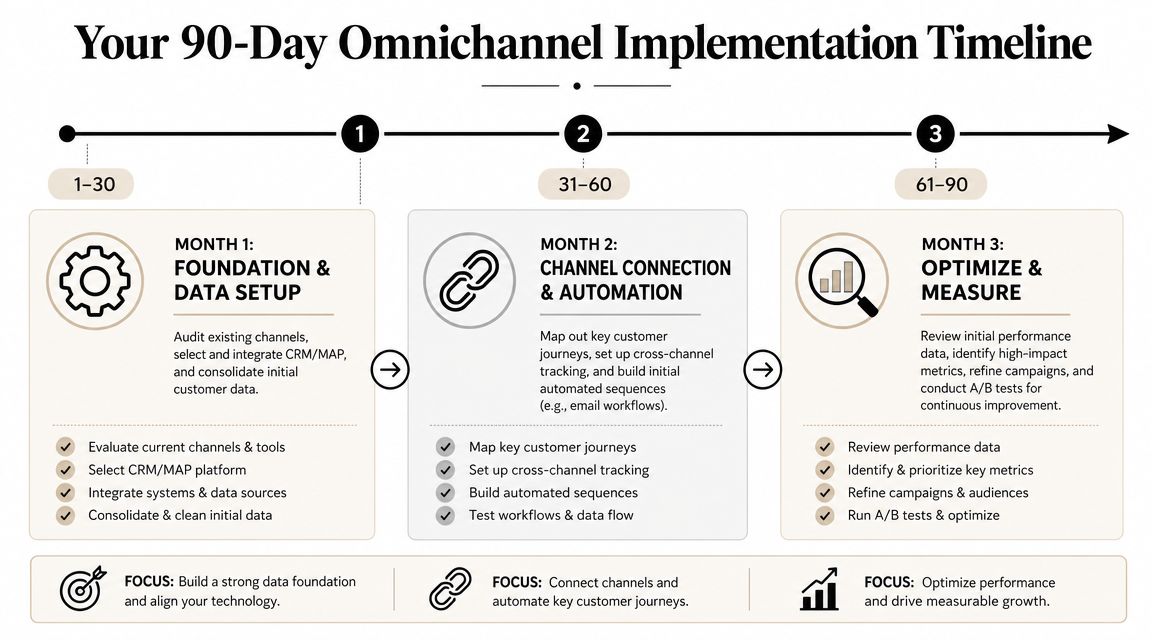
Days 1 through 30
Get the base layer right.
Audit your website. Make sure each core service has its own page. Tighten the calls to action. Remove dead ends. Then choose a CRM and make sure every form, call, and lead source feeds into it.
Use this checklist:
- Website cleanup: Service pages, trust elements, forms, click-to-call.
- CRM setup: Pipelines, lead stages, user access, notifications.
- Lead routing: Decide who owns new leads and how fast they respond.
Days 31 through 60
Turn on visibility where intent is strongest.
Focus on Google Maps and Google Ads. Tighten your Google Business Profile. Start collecting and organizing reviews. Launch a focused ad campaign for your best service lines and best service areas.
Keep it narrow. One service category done well beats six weak campaigns.
Days 61 through 90
Connect and automate.
Build your missed-call text-back. Add instant form confirmations. Set reminder tasks for your sales team. Review where leads are coming from and where they stall in the process.
Then make small fixes, not dramatic ones:
- If lead quality is poor: Tighten keywords or page messaging.
- If response is slow: Improve alerts and automation.
- If appointments don't hold: Improve your follow-up and pre-qualification.
- If leads don't close: Check whether the sales process matches the promise your marketing made.**
A good omnichannel marketing strategy doesn't feel flashy. It feels solid. A homeowner finds you, likes what they see, reaches out, gets a fast response, and moves forward without confusion.
That's how bigger jobs get won.
If you want help building that kind of system, Constructo Marketing works with remodelers to connect the pieces that matter most: Google visibility, conversion-focused websites, CRM automation, and lead tracking that shows what's driving revenue. If your current marketing feels scattered, they can help you turn it into a system that gets the phone to ring and helps you close better jobs.